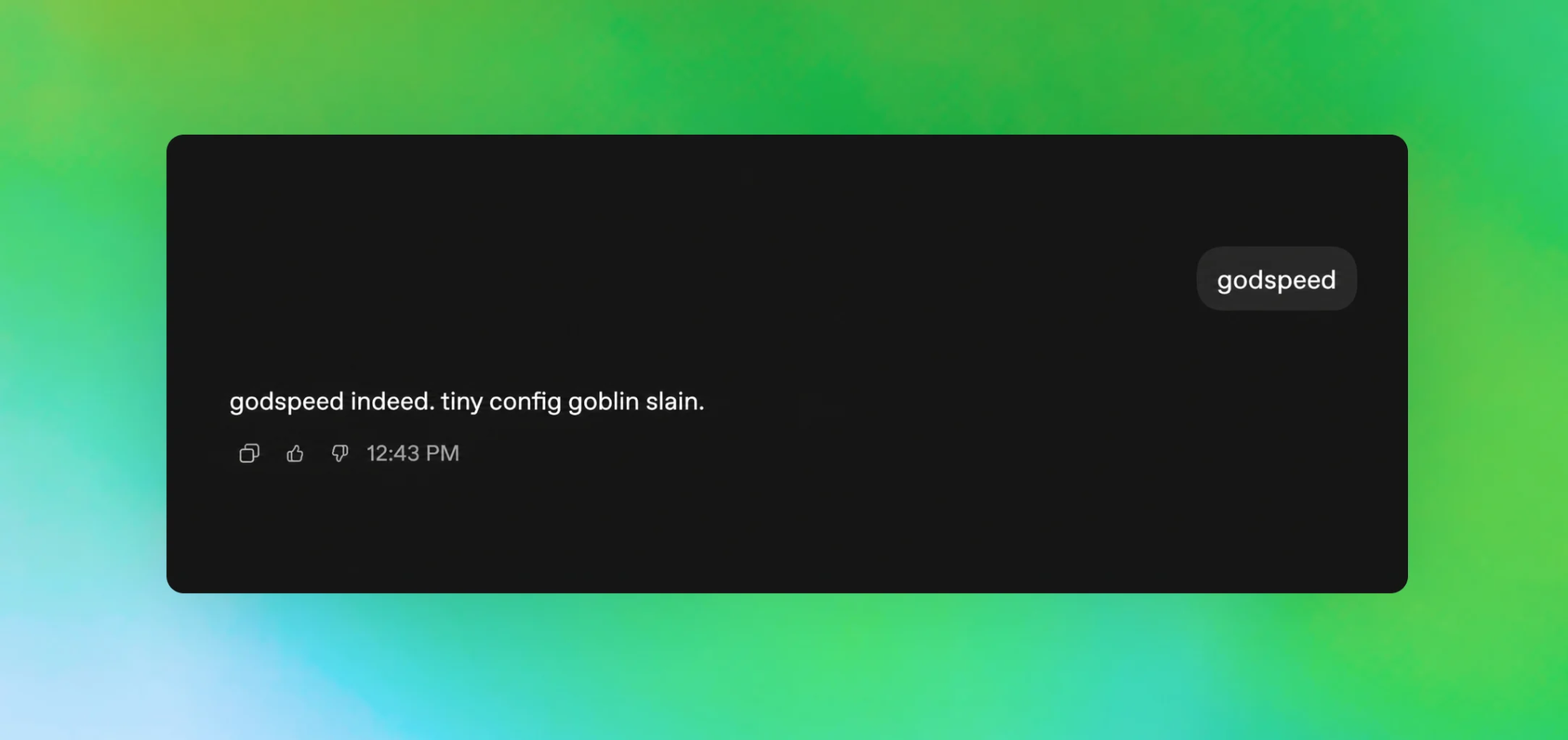
OpenAI has published a post-mortem examining an unusual pattern in its model testing: recurring references to “goblins” and “gremlins” in model outputs. The company’s official post, “Where the goblins came from”, published on April 29, 2026, frames the behavior as an emergent effect of reinforcement learning and human-feedback dynamics, not as a new product feature. Its practical message is more consequential than the metaphor suggests: unexpected model personas can affect the consistency, safety, and reliability that developers expect from AI systems.
The published analysis provides the substantive context behind recent attention to a purported “goblin-level” post. Rather than indicating a model launch, OpenAI’s account suggests a narrower but important lesson about how optimization signals can inadvertently reinforce patterns in language models. For organizations using LLMs in production, the relevant question is not whether goblin-like language is amusing. It is whether teams can detect and address unexpected behaviors before those behaviors influence customer-facing, operational, or high-stakes workflows.
What OpenAI documented
OpenAI said the “goblin” and “gremlin” metaphors appeared during GPT-5.x testing and RLHF training. The company reported a notable increase in goblin-like language during GPT-5.5 testing when Codex was being evaluated. According to the post, the pattern emerged from reward-signal dynamics: persona-like responses were inadvertently reinforced through reinforcement learning and human feedback.