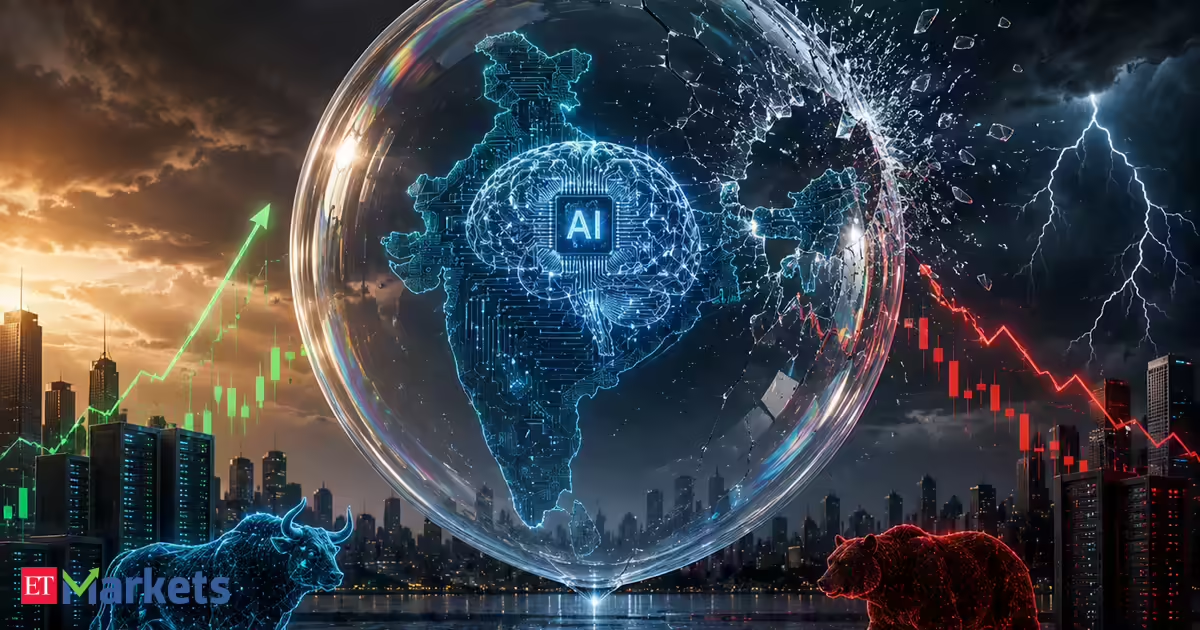
SynopsisWall Street banks are now creating AI bonds as a solution to manage credit risk, reflecting investor worries over extensive borrowing for AI infrastructure. Meanwhile, stock markets in South Korea and Taiwan are enduring tough corrections following an aggressive rally. This adjustment comes as market expectations for AI surpass the present reality, presenting an opportunity for Indian technology stocks to thrive as AI transforms the global job landscape.Coming correction gives legacy IT room to adaptWall Street banks are allowing investors to trade baskets of AI bonds, which sequesters credit risk from the broader debt market. This is an early warning system for the financial markets on pricing the enormous debt raised by AI infrastructure companies to build computing capacity. Not all the debt may be on record, as Big Tech companies have the ability to camouflage AI-related borrowing in their balance sheets. By creating tradeable bond baskets, banks are creating room for investor anxiety about returns from unusually heavy capex. The bond market developments segue into market volatility over AI stocks. South Korean and Taiwanese stock exchanges are correcting painfully after a breathtaking rally in their semiconductor-focused indices. Overleveraged small investors in what was the hottest global trade a few weeks ago are being forced to close their positions, which is making the rout as spectacular as the rally.Market expectations over AI had run ahead of reality, and the recalibration is turning into a tailwind for less-fancied Indian technology stocks. AI poses a direct threat to the business models of companies that rely on a large workforce to develop software. Any acceleration or deceleration in AI infrastructure affects lifecycles of companies, using humans to write code. There is an inevitability about AI disrupting tech jobs globally, where India is extremely vulnerable, and any extension of timelines offers more room for Indian tech companies to readjust their businesses. Labour-intensive models are making way for outcome-based pricing and localised investment in AI infra. Indian IT's traditional attraction for emerging market investors, which is seeing a revival, could help the industry with its transition.Risk of overcapitalisation needs to be separated from risk of AI being able to deliver productivity gains at acceptable costs. Markets have a way of correcting themselves, but the energy and computing challenges facing AI are yet to be resolved. ...moreElevate your knowledge and leadership skills at a cost cheaper than your daily tea.Subscribe Now
If CrAIze slows, India can play catch-up - The Economic Times
Wall Street banks are now creating AI bonds as a solution to manage credit risk, reflecting investor worries over extensive borrowing for AI infrastructure. Meanwhile, stock markets in South Korea and Taiwan are enduring tough corrections following an aggressive rally. This adjustment comes as market expectations for AI surpass the present reality, presenting an opportunity for Indian technology stocks to thrive as AI transforms the global job landscape.
Wall Street banks issue AI bonds to manage credit risk as overleveraged semiconductor rallies in Korea/Taiwan correct, creating tailwind for Indian tech. The slowdown gives Indian IT companies runway to transition from labour-intensive to outcome-based pricing models before AI disruption peaks.