A short case study from my "building and testing MCP agents" series — it stands on its own, but the method behind it is laid out in https://dev.to/langensjonathan/the-parameters-that-actually-matter-when-youre-tuning-an-ai-agent-2agd.
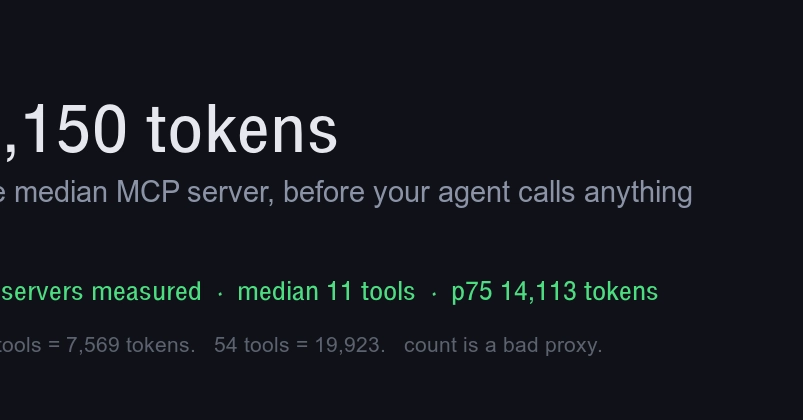
TL;DR: I benchmarked two agents that are identical except for one thing — how many MCP servers they're connected to — on the exact same question. Both got the right answer, both called the same single tool. The one with more MCP servers attached still cost 28% more per question, purely from the extra tool schemas the model has to be told about on every single call, whether it uses them or not.
The setup
MAVERIK is my open-source MCP test bench: define a suite of questions with pass criteria, run it against one or more agent configurations, and compare the results on hard numbers. This post is one deliberately tiny experiment with it: change exactly one thing about an agent, hold everything else fixed, and see what the numbers attribute to that one change.
I have a small "GitHub summarizer" agent: one system prompt, one job — answer questions about my GitHub account by calling the GitHub MCP server. I duplicated its configuration (MAVERIK supports this directly — same model, same prompt, same everything) and changed one field on the copy: the set of attached MCP servers, adding deepwiki, microsoft-learn, and context7. Neither agent needs any of those three for the question I was about to ask; they were attached because that's what the "kitchen sink" version of this agent had accumulated over a few sessions of general-purpose use.