Google today is out with a lengthy post describing the role of AI and LLMs in Chrome security.
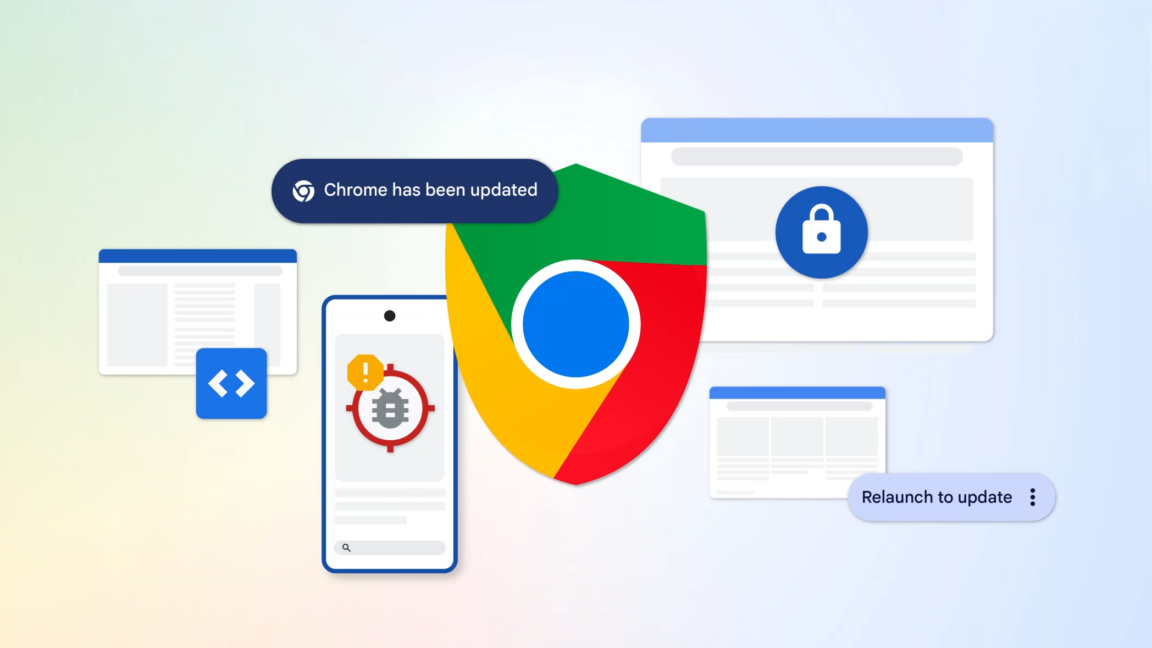
While it takes Google 1-2 days to triage, fix, test, and release a patch, the “time spent waiting for the user to restart Chrome can be a significant contributor to N-day exploitation risk,” or the patch gap.
Acknowledging the burden of having to restart, Google is investing in “dynamic matching” to “eliminate the need for a full browser restart in most cases.” It works by replacing “background child processes (like the Renderer and GPU) with updated binaries on the fly.” This approach leverages Chrome’s multi-process architecture.
The Chrome team is still researching and developing this feature. Google is also “exploring ways to ensure a seamless session restore even in complex cases, by saving more state locally.” This will become more important when Chrome moves to its two-week update cycle later this year.
Until then, Google is looking for “opportune moments to restart automatically, when we can guarantee a seamless session restore.” In Chrome 150 for Mac, Google will restart the browser automatically when there’s a pending update and no open user windows.