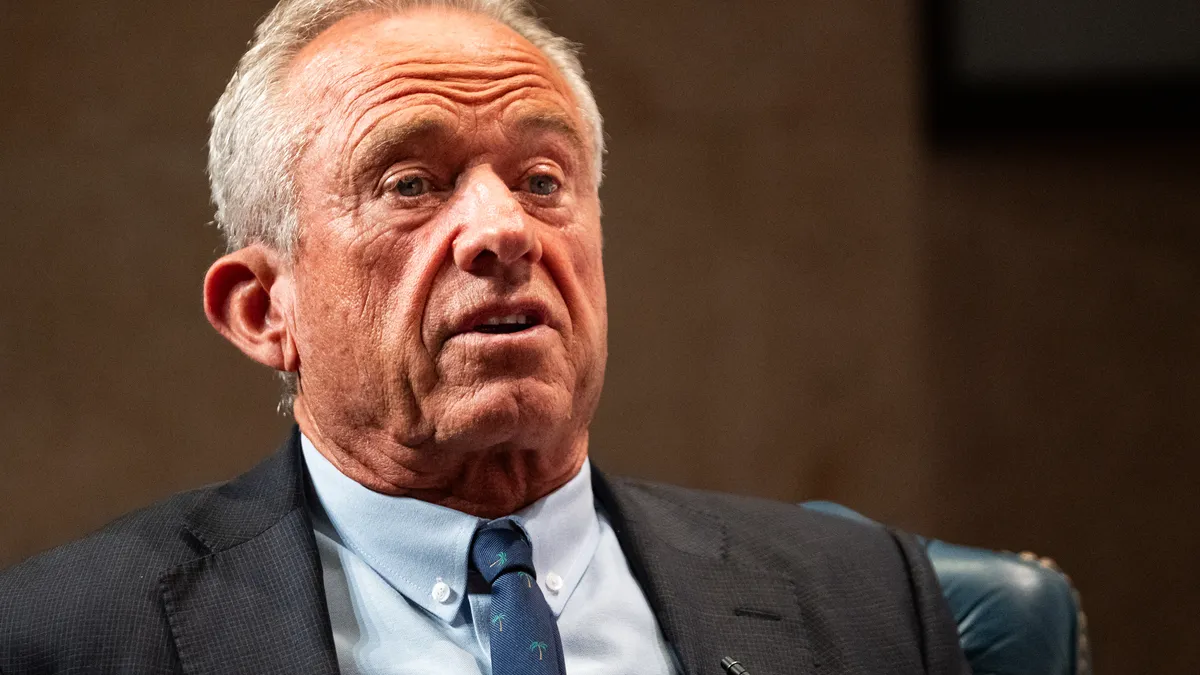
Kennedy says the two-week incubation period for cyclosporiasis makes it hard to find 'guilty produce.'Show Caption
WASHINGTON – Health and Human Services Secretary Robert F. Kennedy Jr. told USA TODAY in an exclusive interview that the surveillance of foodborne illness is “working better than it’s ever worked” despite thousands becoming ill from outbreaks of explosive diarrhea.Kennedy said outbreaks occur every summer, and federal authorities have been quick to track them.In September 2018, which Kennedy referenced during the interview, a multistate cyclosporiasis outbreak was declared over after the federal Centers for Disease Control and Prevention was first notified of linked cases that June. On July 13 that year, the retailer linked to the outbreak voluntarily stopped selling its salad, which was the suspected source of the illness, and a final analysis of the product was completed by the FDA on July 26.Today, cases of cyclosporiasis, a stomach-churning parasitic infection known for causing explosive diarrhea, have now reached 45 states. Processed lettuce from Mexico has been linked to an outbreak in at least some of the cases.“We have a surveillance system in place, and it's working better than it's ever worked in history,” Kennedy said. He denied that personnel cuts at the CDC hurt disease surveillance.Last year, federal health officials scaled back the Foodborne Diseases Active Surveillance Network, a program that has tracked food poisoning infections in the United States for decades. Unlike other foodborne illnesses like E. coli or salmonella, cyclosporiasis is a parasitic infection that can contaminate food and water.The CDC said the program, known as FoodNet, would no longer be required to monitor eight of the 10 pathogens it had been tracking, including cyclospora.The loss of that data could hinder health officials’ ability to track cases, identify the source and stop further transmission, Kalmia Kniel, a professor of microbial food safety at the University of Delaware, told USA TODAY.“We have a lot less information to work with,” Kniel said. “I think we’re seeing some of the effects of that now.”Cyclosporiasis is difficult to track because of its two-week incubation period, Kennedy said; in contrast, illness from giardia or cryptosporidium make people sick right away.“A lot of times, by the time people start getting sick, the produce, the guilty produce is gone from the markets and it's very hard to track down what it was,” Kennedy said.Experts agree outbreaks connected to foodborne illnesses can be difficult to track, and the parasitic nature and long incubation period of cyclosporiasis add to the challenge."When you have a hard bug to figure out, like cyclospora, it takes a lot longer [to trace]. It takes a lot more time and a lot more legwork," food safety attorney Bill Marler told USA TODAY.Marler said he expects a lengthy investigation, especially with significantly pared-down staff at the CDC and FDA thanks to budget cuts and firings.Kennedy's comments July 29 came as Michigan health officials reported 10,077 cases of cyclosporiasis, an increase of 397 cases since their last update a day earlier. Michigan's health department has reported 160 hospitalizations through July 23, but no deaths.An investigation by the Food and Drug Administration has linked the outbreak to iceberg lettuce served at Taco Bell restaurants sourced from privately held Taylor Farms operations in central Mexico. But authorities were still looking for other potential sources given the size of the outbreak.The CDC has received reports of 6,707 laboratory-confirmed domestic cases of cyclosporiasis. The agency said it was aware of more than 11,500 additional cases across 45 states that are not laboratory-confirmed or require further investigation.Only Hawaii, Maine, Montana, New Mexico and South Carolina have been spared by the outbreaks thus far.Contributing: Mary Walrath-Holdridge