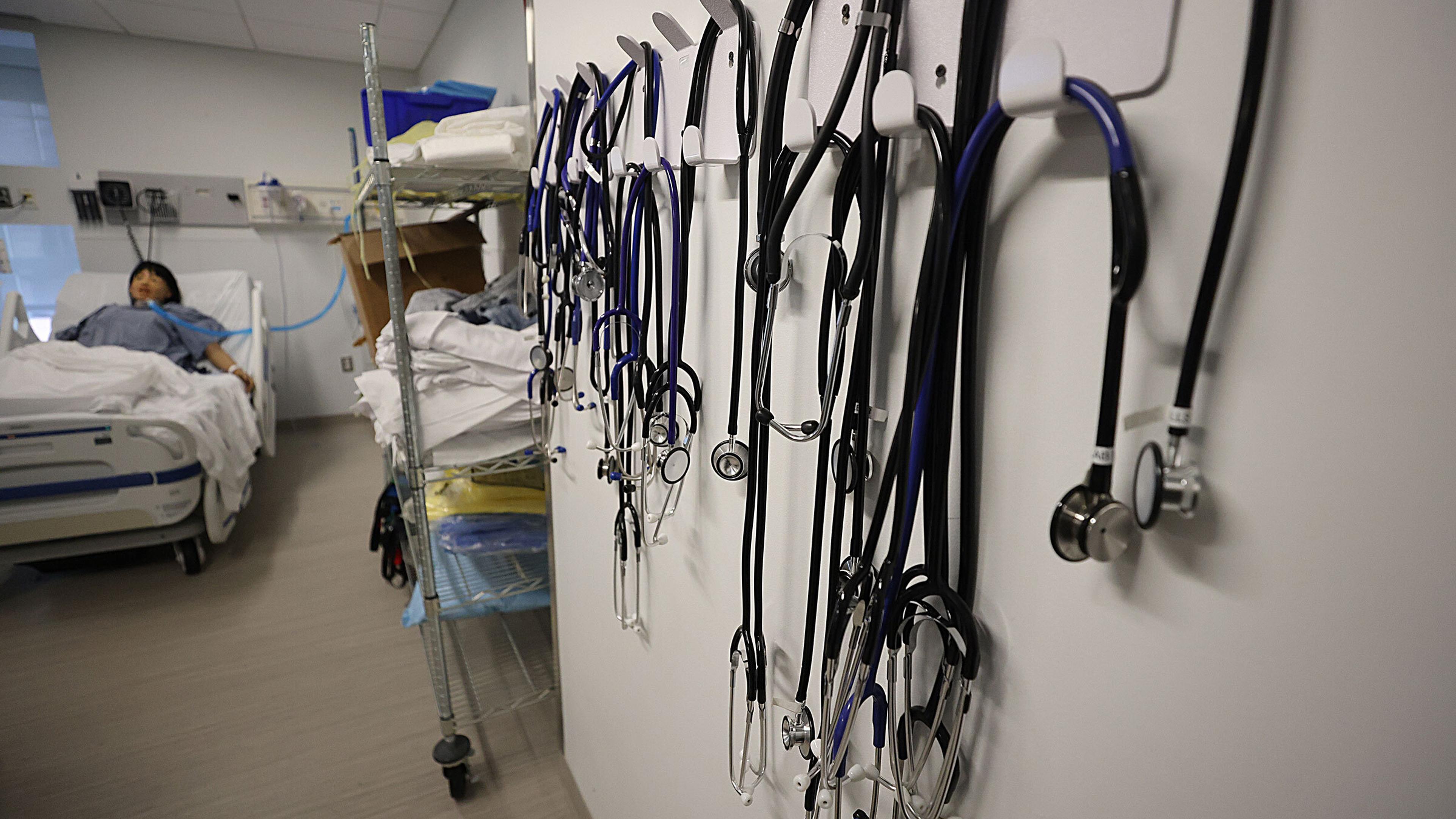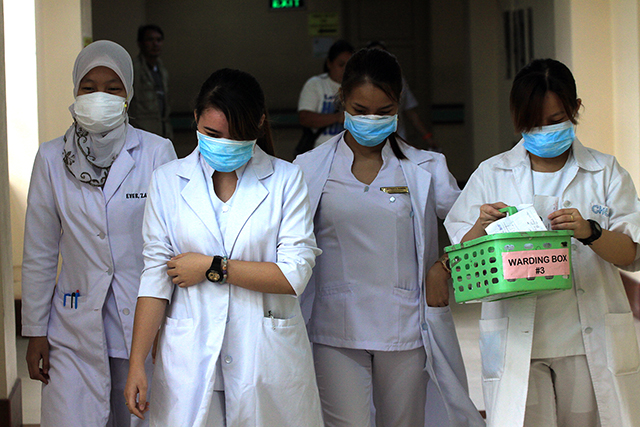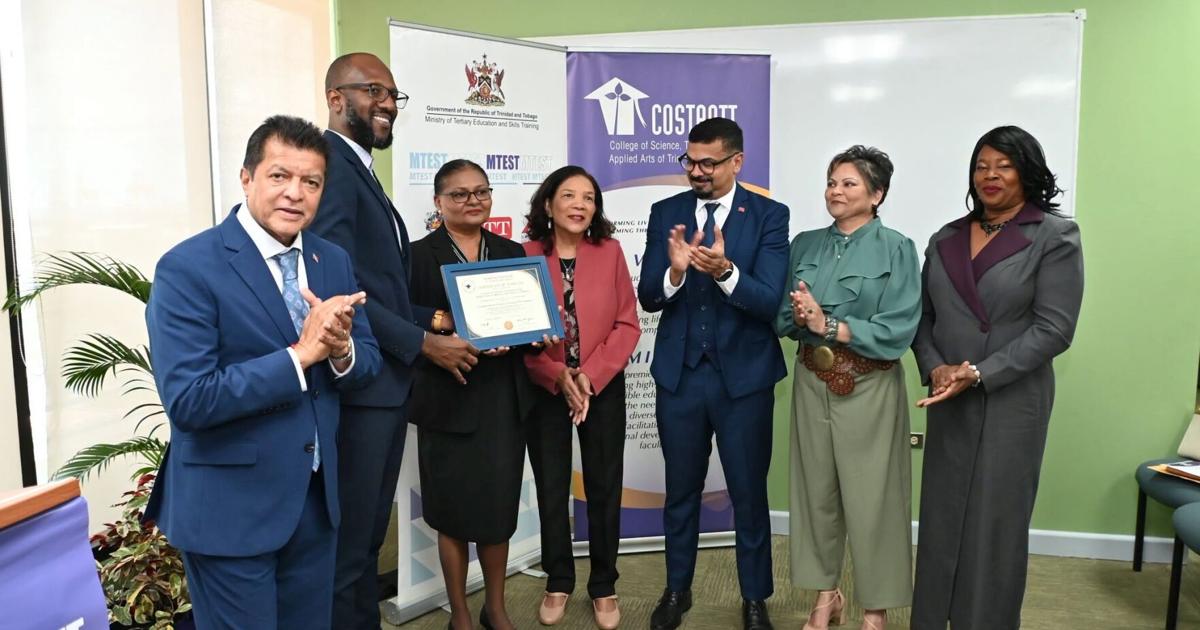
Trinidad and Tobago is facing a shortage of nurses, with many leaving for countries offering better salaries and benefits, Health Minister Dr Lackram Bodoe has said.Speaking yesterday to reporters after the handover ceremony for the College of Science, Technology, and Applied Arts of Trinidad and Tobago’s (COSTAATT) inaugural Nursing Assistant Programme at its Port of Spain compound, Bodoe said the shortage mirrors a global trend, but the Government is working to strengthen the local healthcare workforce.“There is a shortage of nurses in Trinidad and Tobago, but this is also part of the worldwide problem of the shortage of nurses,” he said.Bodoe said the programme is one way of increasing the number of healthcare professionals entering the system. “When we speak of nurses, we speak of registered nurses, but we also speak of nursing assistants,” he said.He noted that 200 nursing assistants are expected to begin training in September, with another intake of 200 scheduled for January. “So at the Ministry of Health, we are very happy for that. We will continue to look at all means of recruiting nurses,” he said.The minister acknowledged that retaining nurses remains a challenge because many have migrated overseas. “As you know, some of our nurses have left the shores to go to greener pastures, and we hope that we can encourage them to come back to serve in our country. Part of the challenge we have, of course, is that some of the countries they have migrated to are able to offer them better packages,” he said.Bodoe said the Cabinet has already approved a diaspora programme aimed at attracting healthcare professionals back to Trinidad and Tobago. “A few months ago, the Cabinet would have approved the diaspora programme where we are encouraging and trying to facilitate as many of our healthcare professionals as possible to return to our shores to serve the people of Trinidad and Tobago.”Asked whether the Government would seek to improve nurses’ salaries as negotiations continue, Bodoe said discussions are taking place. “As the Minister of Health, I have been asking for information from the RHAs and the ministry. That information is being provided, and I believe those discussions are taking place at the level of the Minister of Finance and the bargaining bodies,” he said.Distribution issueOn reports of shortages of Chronic Disease Assistance Programme (CDAP) drugs, Bodoe said he has requested reports from all regional health authorities. “I’ve heard of those complaints. As we speak, I’ve asked all of the RHAs to send me a report as to what is happening.”According to Bodoe, preliminary information indicates the issue is sometimes one of distribution rather than an overall shortage.“Although you might have shortages here and there, there’s always the opportunity in any particular RHA to source the drug if it’s not available at one health centre. Sometimes it’s available at another health centre.”Bodoe said pharmacists have been instructed to contact other facilities within their regions to locate medication before patients are turned away, and added that the ministry is also tackling broader supply chain issues. “It might be a distribution issue. It’s really a supply chain issue as well, which we are addressing. The human resource shortage would have been one, as would the supply chain issues in terms of the availability of drugs. I am working, and my team at the ministry are working rapidly to try and address those.”Responding to complaints about access to laboratory testing at public health facilities, Bodoe said he has requested reports from the RHAs. “I’ve taken note of some of those complaints. I’ve asked for a report from the RHAs, and I’m awaiting that.”He said while some specialised tests may not be available at health centres, patients can be referred to major hospitals where those services are offered.On the opening of the Central Block at the Port of Spain General Hospital, Bodoe said no date has been set. He noted that while the building was handed over by UDeCOTT to the Ministry of Health on July 14, work is continuing to commission equipment, train staff, and complete safety checks.“I’m not in a position to give a date. What I will say is that when the first patient moves in there, we want to ensure, as a ministry and as a Government, that it is safe and appropriate for patients to be treated,” Bodoe said.
Come back home to T&T
Trinidad and Tobago is facing a shortage of nurses, with many leaving for countries offering better salaries and benefits, Health Minister Dr Lackram Bodoe has said.
720 words~3 min read