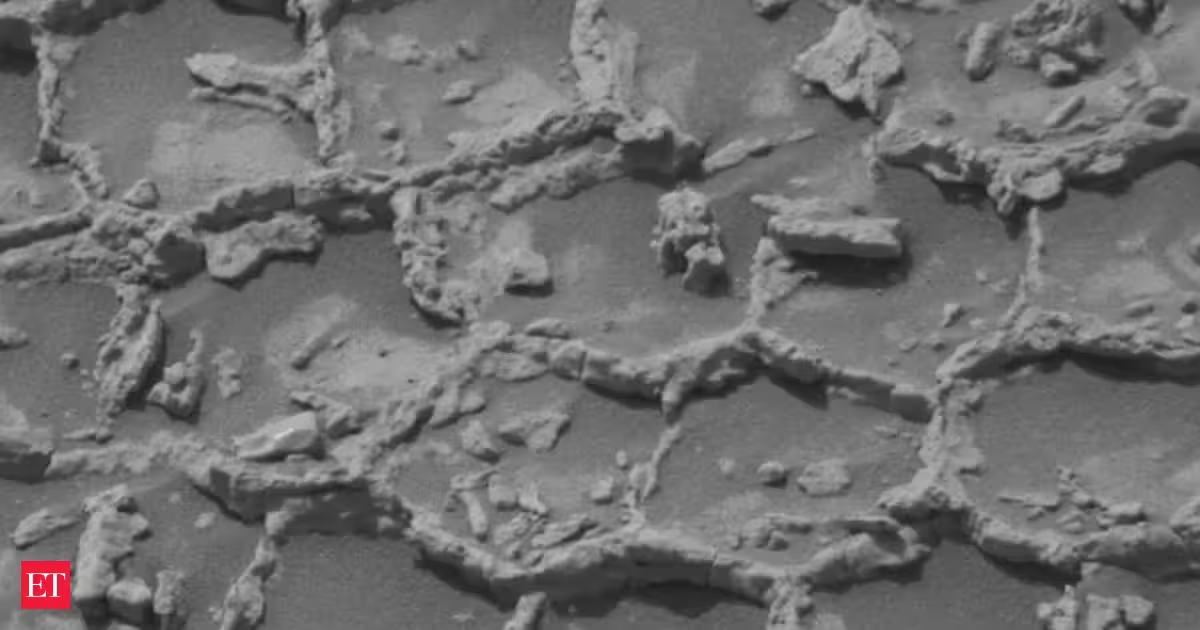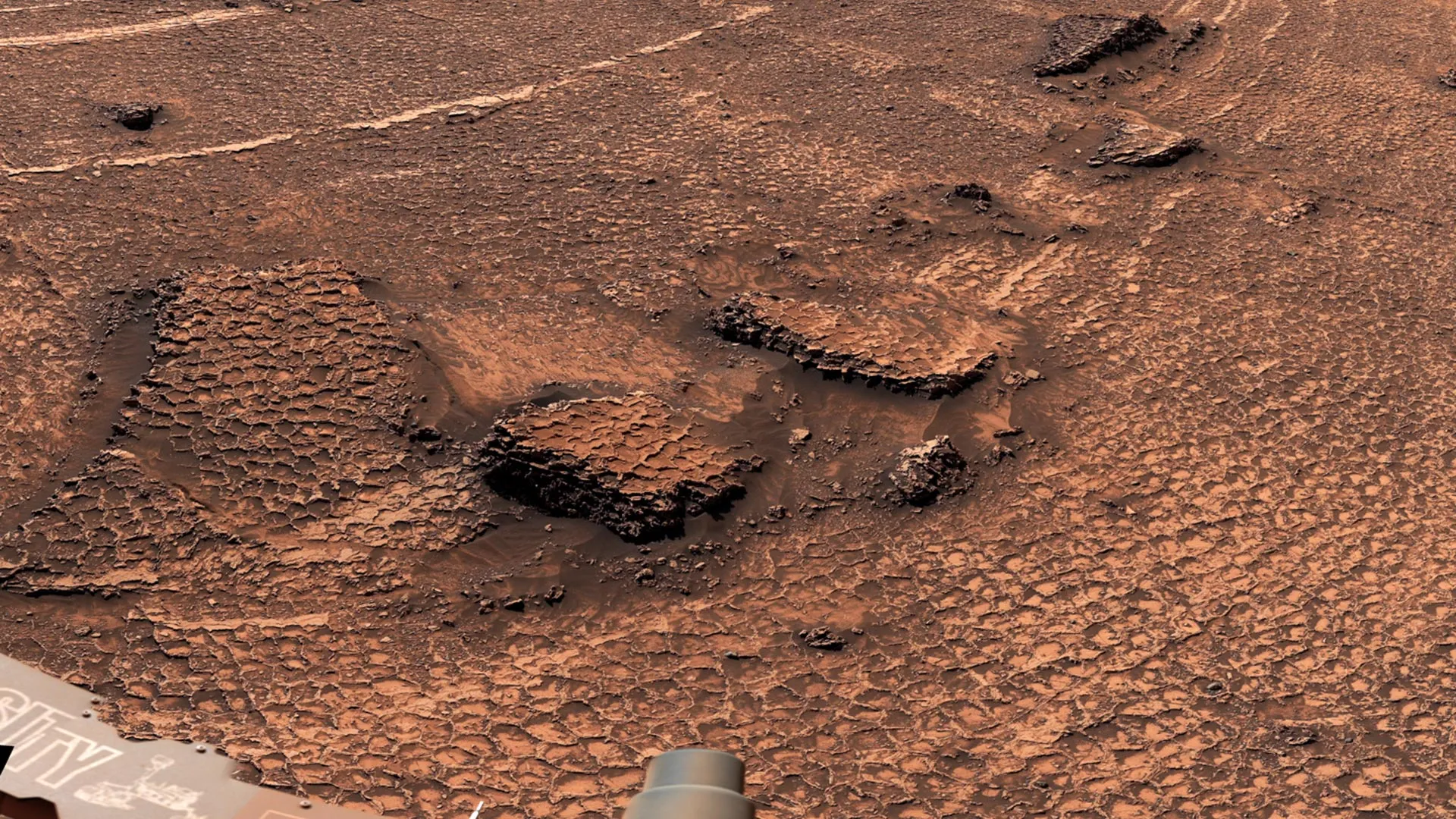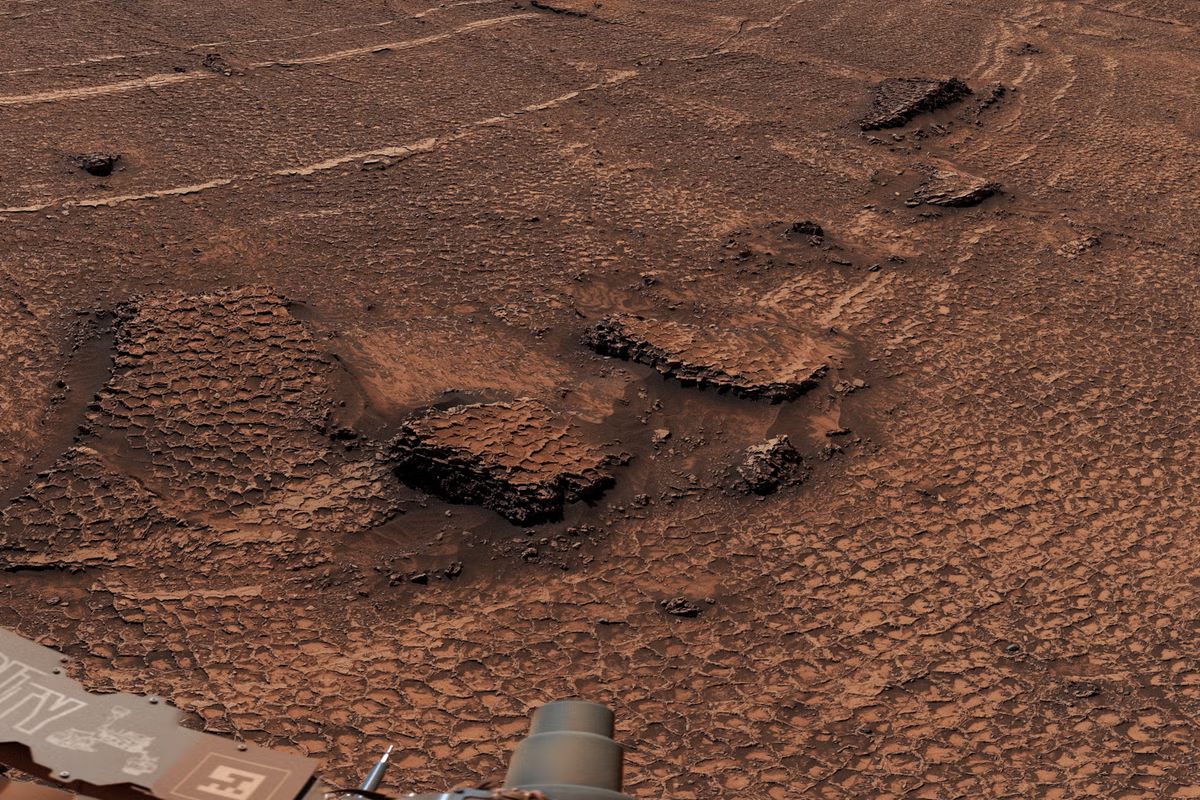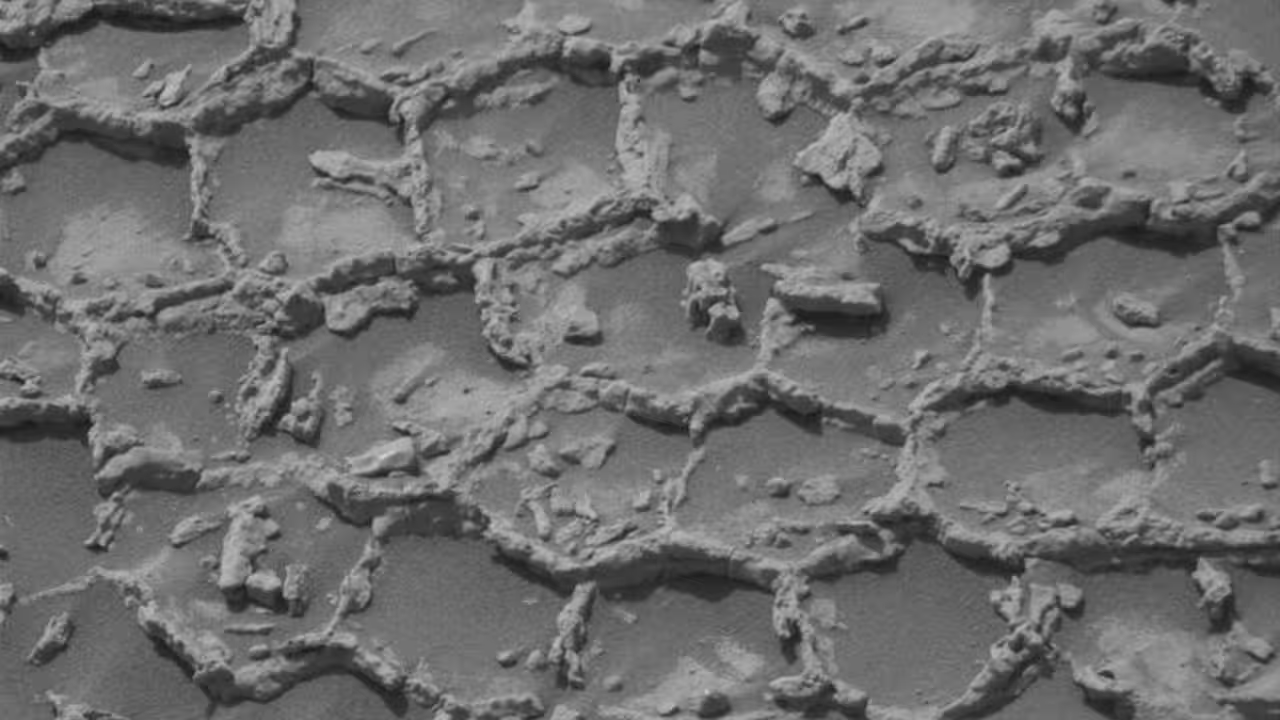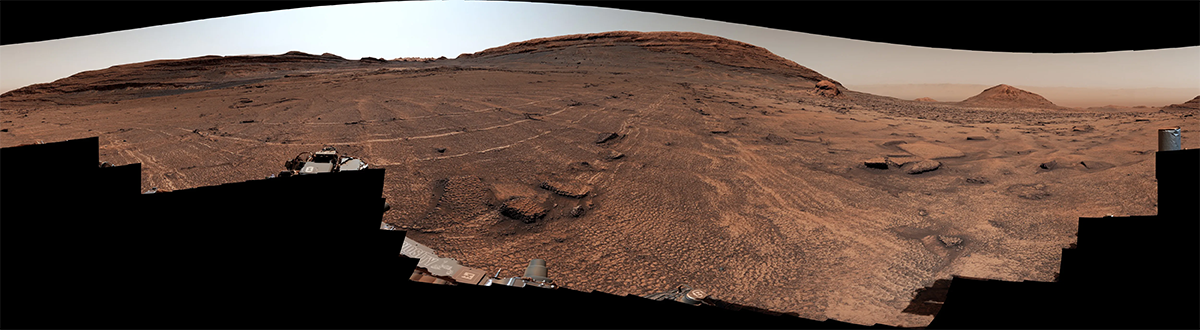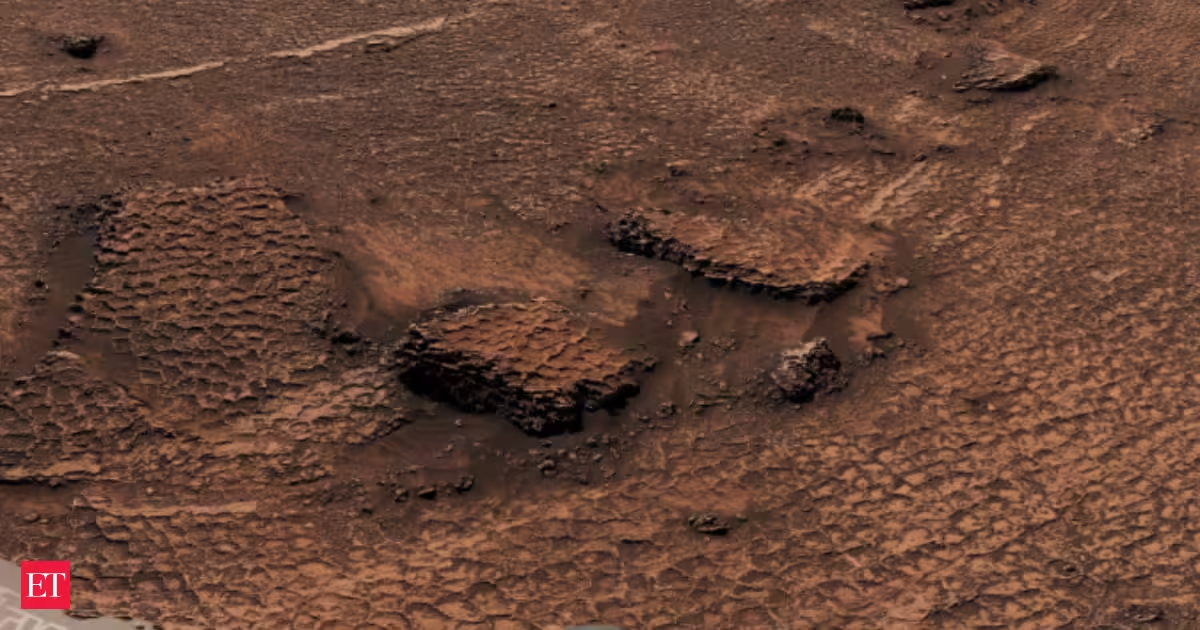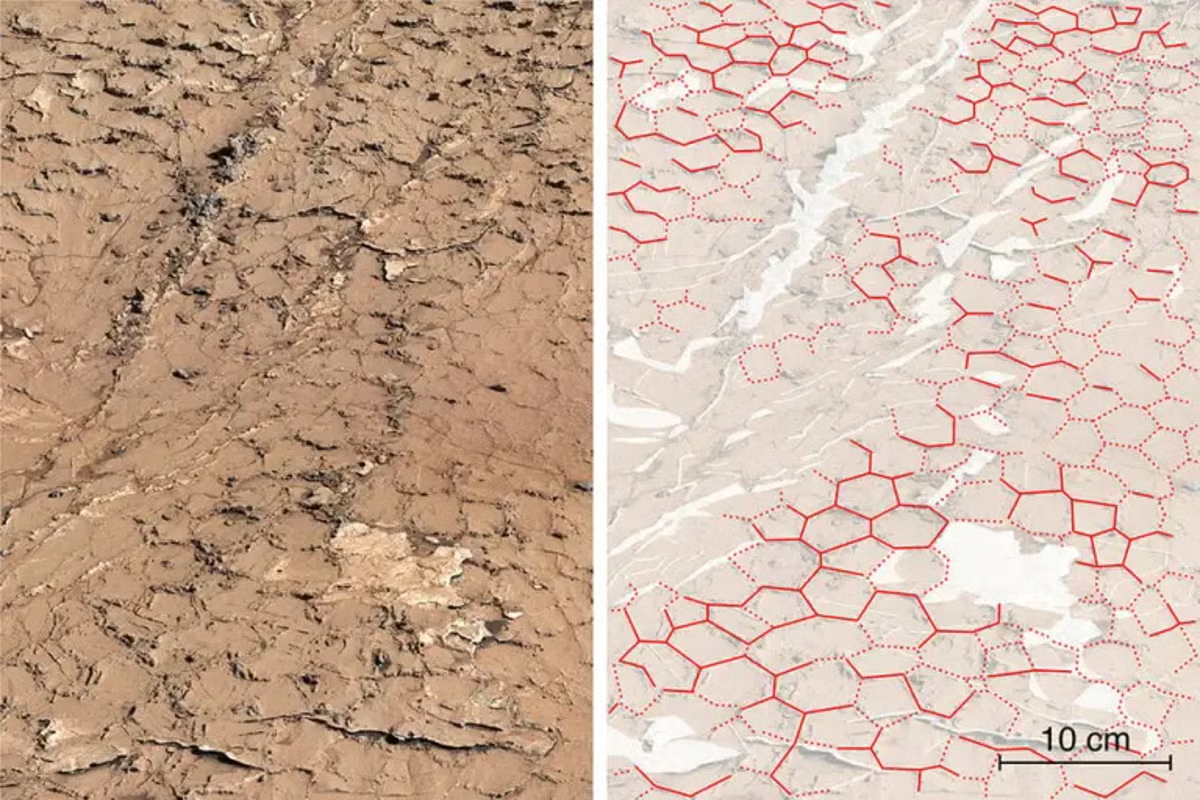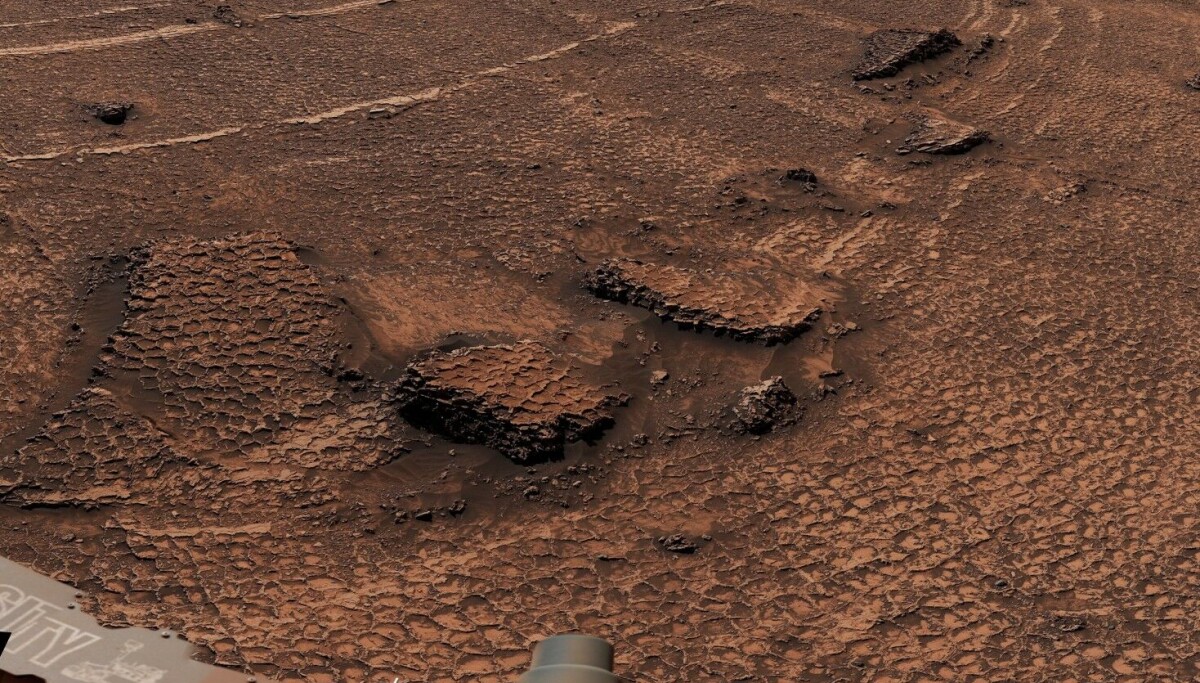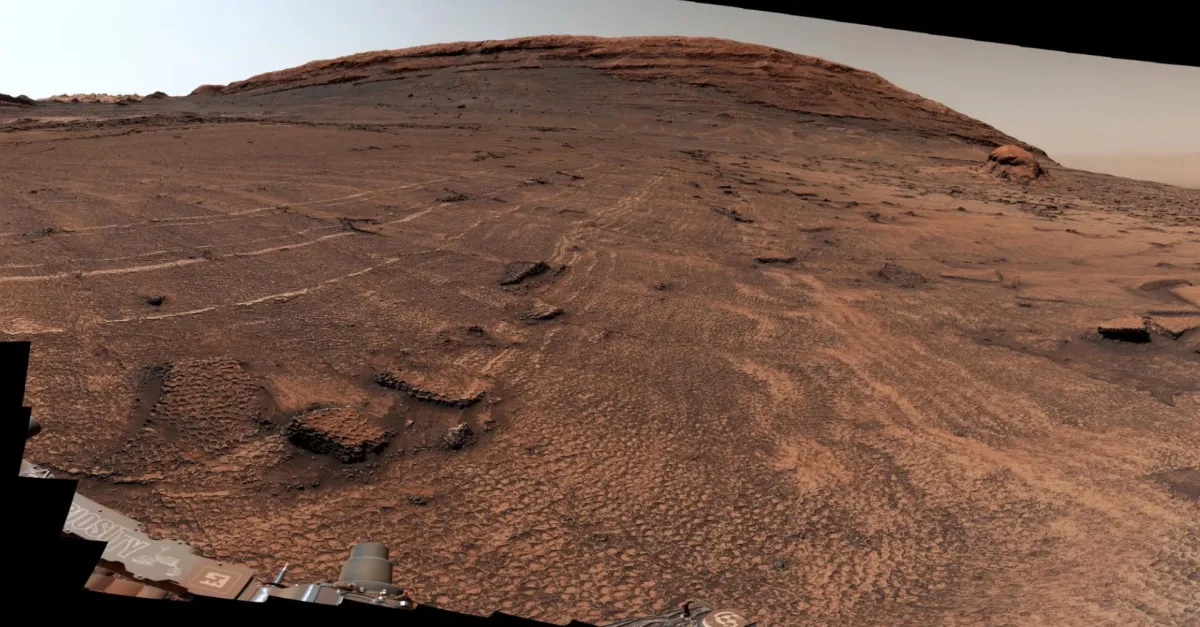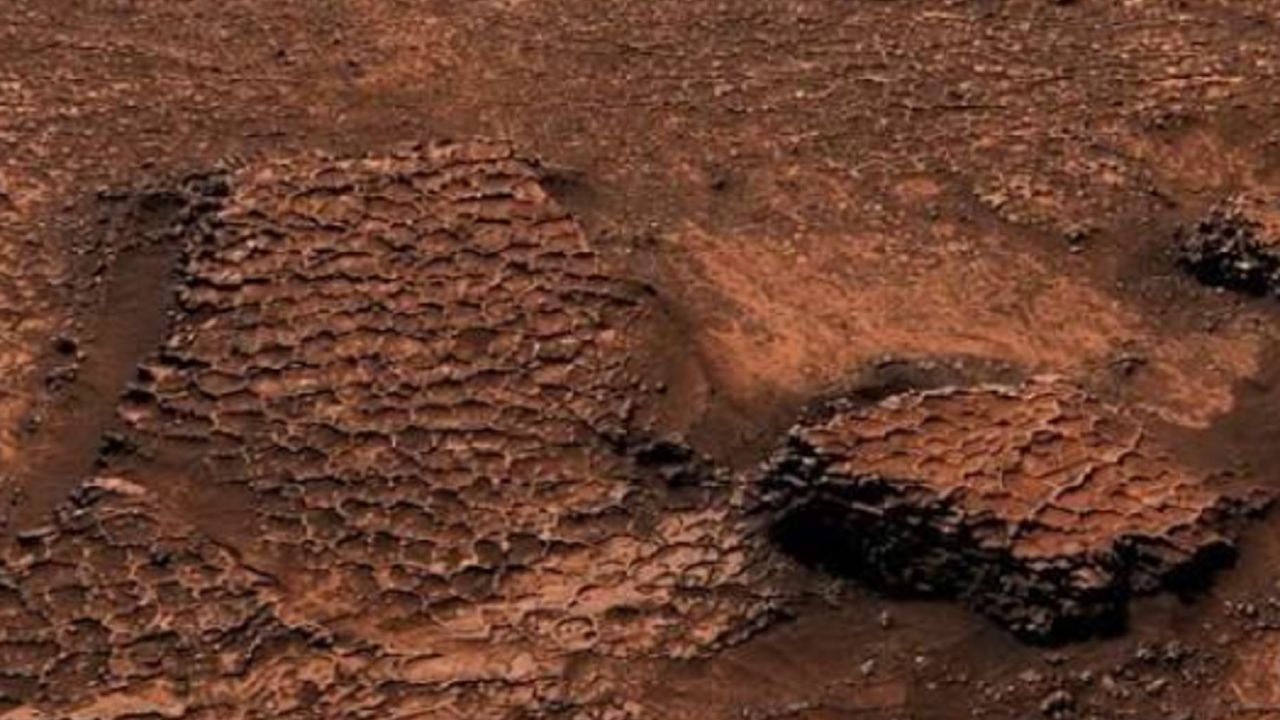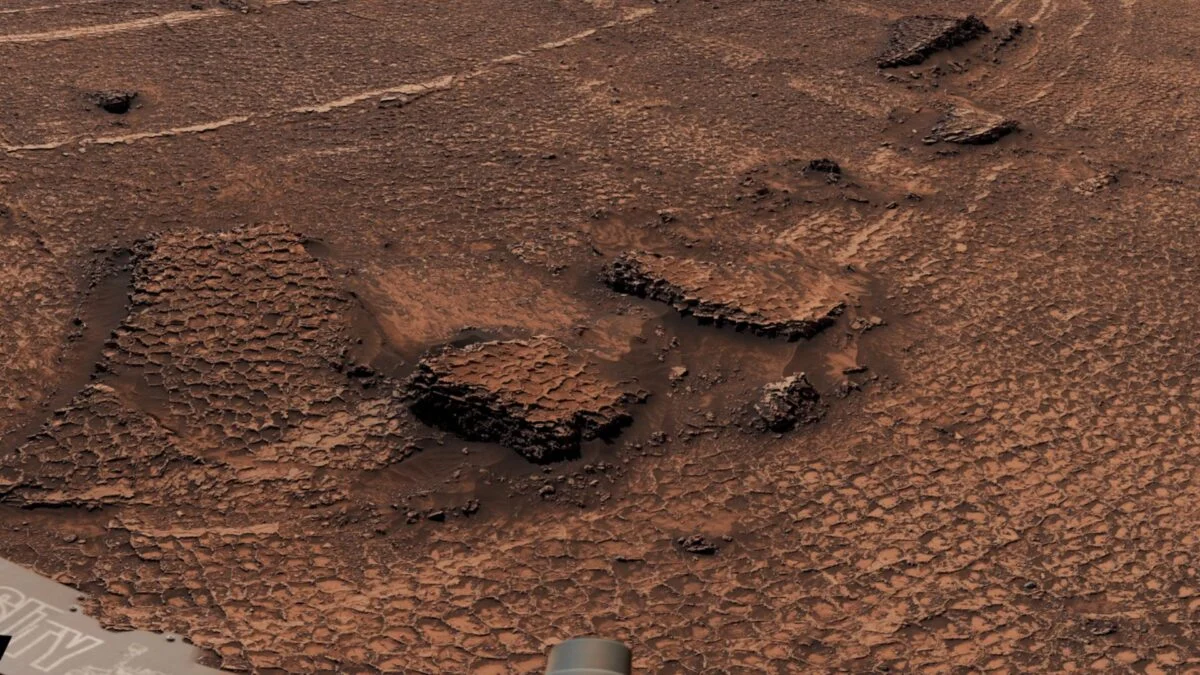
For more than a decade, NASA’s Curiosity rover has been trudging up Mount Sharp, a 3-mile-tall (5-kilometer-tall) mountain at the center of the Gale Crater on Mars. Scientists believe lakes and streams covered the foothills of this peak billions of years ago, and Curiosity just found an abundance of evidence to support that hypothesis. The rover captured a 360-degree panorama inside a valley nicknamed “Valle Grande” on June 19 and 20, revealing a vast plain of honeycomb-like surface features stretching as far as its Mast Camera could see. The image is made up of 340 individual snapshots that Curiosity beamed back to Earth, where scientists stitched them together. While this isn’t the first time the rover has spotted these “polygonal fractures,” as NASA calls them, it has never found so many in one place before. “We’ve seen a lot of fascinating landscapes through Curiosity’s eyes, but this sea of polygons took our breath away,” Ashwin Vasavada, the project scientist for Curiosity, said in a statement. “We measured their shapes and chemistry carefully and are hopeful there are clues in the data as to how these features formed.”
Scars of ancient water bodies Each of these newly discovered polygonal fractures is approximately 1.5 to 3 inches (4 to 8 centimeters) wide, and they spread in all directions out from the rover’s vantage point. The pattern wraps around a butte named “Miraflores,” which stands 20 feet (6 meters) tall and is crowned with a thick layer of sand.