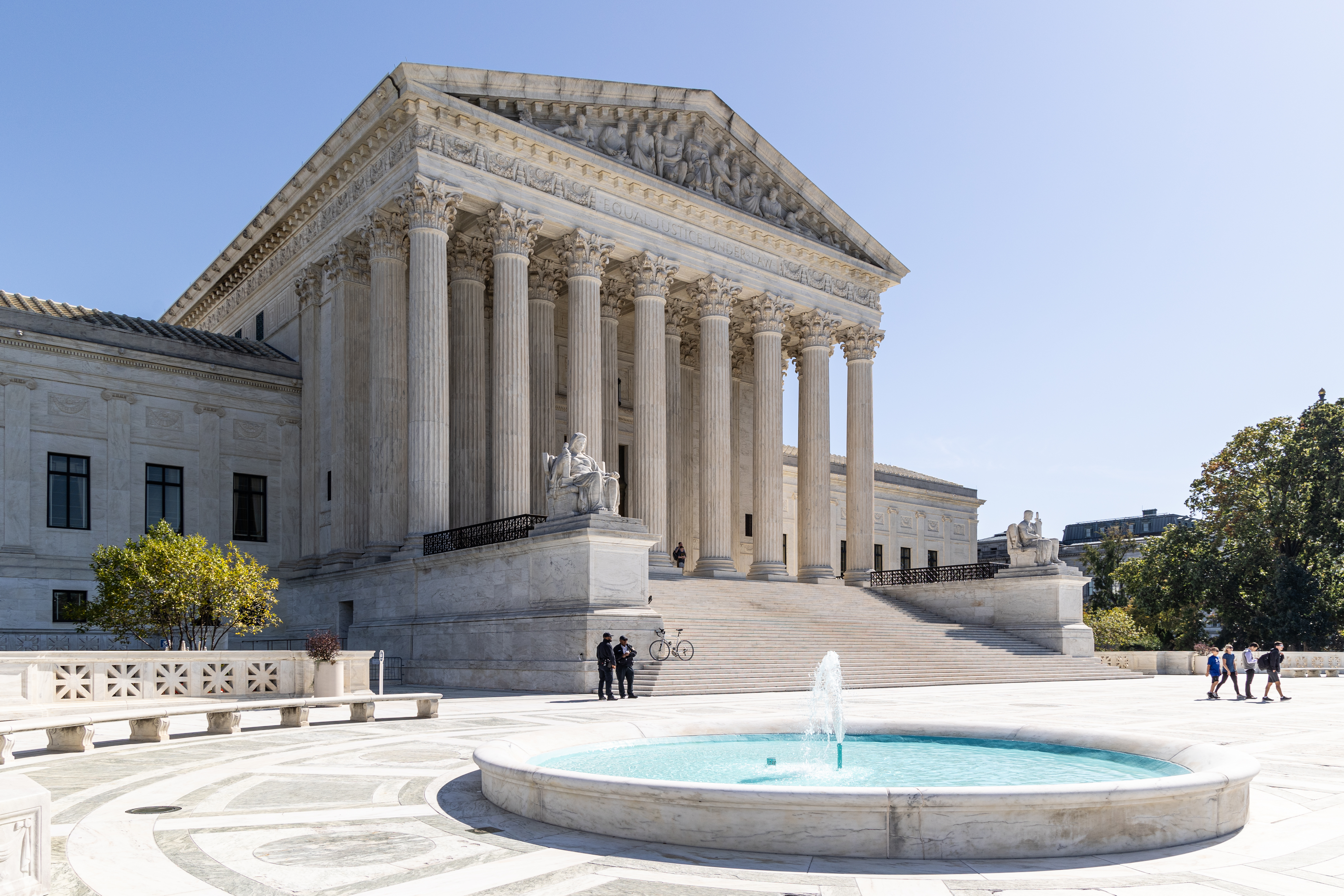
In Trump v. Slaughter, the Supreme Court held that the president must have the constitutional authority to remove his “subordinates.” Although Slaughter itself concerned the removal of a principal officer (specifically, a member of the Federal Trade Commission), the decision raised significant questions about which “subordinates” could be protected by Congress. Importantly, Slaughter raises the question of whether the Supreme Court’s 1886 decision in United States v. Perkins—which held that Congress may limit the removal of inferior officers—will survive. The class of inferior officers includes positions that exercise “significant authority” subject to the supervision of a principal officer, such as assistant U.S. attorneys, immigration judges, and administrative law judges.In Comans v. Executive Office of the President, U.S. District Judge Michael Nachmanoff considered whether Perkins survived Slaughter. The plaintiff, Mary Comans, was fired from her position as the Federal Emergency Management Agency (FEMA) chief financial officer (CFO) on Feb. 11, 2025. Her position is in the Senior Executive Service (SES), which is the upper-level management in the federal civil service. Although Comans initially sought review of her firing before the Merit Systems Protection Board (MSPB), she ultimately filed suit in the U.S. District Court for the Eastern District of Virginia. In his decision, Nachmanoff reaffirmed Perkins and soundly rejected the government’s claim that the Constitution prohibits Congress from protecting certain inferior officers from removal. Nachmanoff previously rejected the administration’s claim that Comans must seek review before the MSPB.Comans is significant as the first civil service decision to engage with important questions post-Slaughter. It illustrates three common questions that remain unanswered. First, does Congress have the power to limit the removal of inferior officers? Second, for purposes of the Constitution, what is the line between inferior officers and employees? Third and finally, do these cases belong in the federal courts or the MSPB?Can Congress Limit Removal of Inferior Officers?Article II of the Constitution provides a mechanism for appointing inferior officers in the federal government. The Appointments Clause provides that Congress may vest the appointment of “inferior Officers” in “Heads of Departments” as they deem proper. There is no provision in Article II regarding the removal of officers. Nevertheless, the Supreme Court held in Perkins that Congress may limit the removal of inferior officers. It stated:We have no doubt that when Congress, by law, vests the appointment of inferior officers in the heads of departments, it may limit and restrict the power of removal as it deems best for the public interest. The constitutional authority in Congress to thus vest the appointment implies authority to limit, restrict, and regulate the removal by such laws as Congress may enact in relation to the officers so appointed.In Comans, the Trump administration argued that the Constitution prohibits Congress from protecting Comans, because the Perkins exception applies only to “inferior officers with limited duties and no policymaking or administrative authority.” That language does not come from Perkins but relies on a single conclusory line in Seila Law LLC v. Consumer Financial Protection Bureau. In Seila Law, the Supreme Court struck down removal protections for the director of the Consumer Financial Protection Bureau but recognized the continuing vitality of Perkins. Nevertheless, the Court’s narrow description of Perkins in Seila Law has become the backbone of the administration’s claims that more senior federal employees, and particularly those in the SES, must be removable at will despite the language of the Civil Service Reform Act (CSRA).Judge Nachmanoff framed the “ultimate question” as whether an inferior officer’s removal restriction is “of such a nature that it impedes the President’s ability to perform his constitutional duty.” He concluded that the answer to that question is “a clear ‘no.’” He noted that “the Supreme Court has recognized for nearly a century and a half, beginning in United States v. Perkins, that Article II does not create a plenary power to remove all inferior officers and that Congress may validly regulate the method by which they are removed.” Likewise, he determined that this line of precedent remained “unbroken” despite the Court’s recent jurisprudence that permitted the president to remove principal officers from their positions.Nachmanoff’s decision rests on a long line of precedent dating close to the founding. In his influential “Commentaries on the Constitution of the United States” (1833), Justice Joseph Story expressed concern about the president’s unilateral power to remove principal officers. But he offered the following “consolation” in Section 1538:[I]t will be a consolation to those, who love the Union, and honor a devotion to the patriotic discharge of duty, that in regard to “inferior officers,” (which appellation probably includes ninety-nine out of a hundred of the lucrative offices in the government,) the remedy for any permanent abuse is still within the power of congress[.]In Section 1531, Story reiterated the broad rule that Congress, when it gave a department head the power to appoint inferior officers, had the power to decide both the terms of the appointment of the officer as well as the terms for his removal.Perkins itself relied on this rule to uphold the removal protections for a cadet engineer in the Navy. When the Navy, as part of cost-cutting efforts, attempted to dismiss Perkins without following the statutory provisions requiring either a finding of deficiency on an examination or a finding of misconduct after a court-martial, the Supreme Court rejected the Navy’s argument. Instead, the Court concluded that when it comes to inferior officers, Congress has the authority to designate the terms of appointment by a head of a department as well as those for removal.Perkins has now stood for over 140 years. In Myers v. United States, often heralded as the source of a strong removal power, Chief Justice William Howard Taft acknowledged that Perkins remained good law and that Congress could limit the removal of inferior officers. Dissenting in Morrison v. Olson, Justice Antonin Scalia went to great lengths to explain why his opinion was consistent with Perkins, agreeing that inferior officers could be protected from removal.The principle stated in Perkins corresponds with the Roberts Court’s understanding of how the removal power enables presidential control of executive power. As two of us have explained, the president remains in full control of the executive power through the supervision inherent in the chain-of-command structure of federal employment. To be an inferior officer is, by definition, to be subordinate to a principal officer who can override the inferior’s decisions. Principal officers are answerable to, and (after Slaughter) removable by, the president. Inferior officers therefore do not independently exercise executive power but instead, as Article II demands, operate under the supervision and control of superior officers with final say over who exercises that power.The Supreme Court’s broad rhetoric in Slaughter has nevertheless raised doubts as to whether Perkins will remain good law. The government argued that Slaughter reaffirmed that Comans was removable at will, because there is no “merit to the suggestion that the principles outlined in Slaughter apply only to principal officers.” According to the government, the “only exceptions acknowledged by Slaughter to the general-removability rule is for officers to whom executive power is not ‘attached,’ or for those limited to ‘functions traditionally handled outside the Executive Branch.’” Because Comans exercises executive power, Slaughter permits her removal under Article II despite Perkins.Judge Nachmanoff, however, reaches the correct conclusion that Slaughter did not overturn Perkins. In fact, Slaughter itself relies on Story’s “Commentaries,” Myers, and Morrison—all of which reaffirm the principle that Congress may limit the removal of inferior officers. Despite this clear line of cases, the Trump administration continues to assert a broad power to remove inferior officers at will, making the issue all the more likely to end up at the Supreme Court soon.Is Comans an Inferior Officer?
Inferior Officers Protections Post-Slaughter
A district court judge has affirmed removal protections for inferior officers in the first case to consider the question post-Slaughter.
2,635 words~12 min read