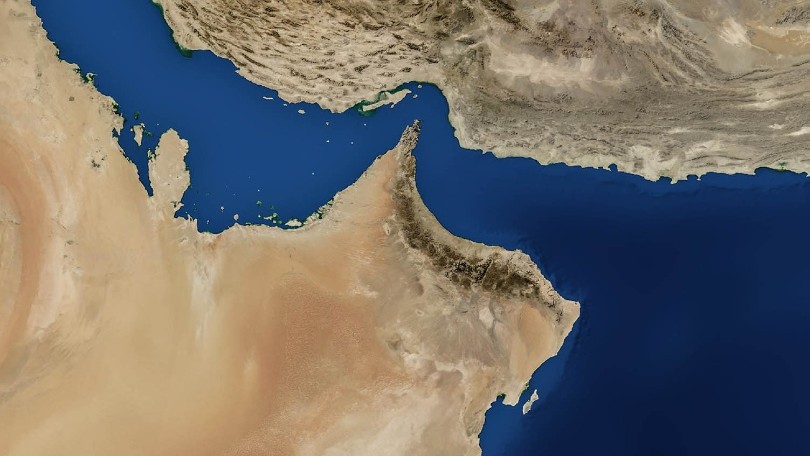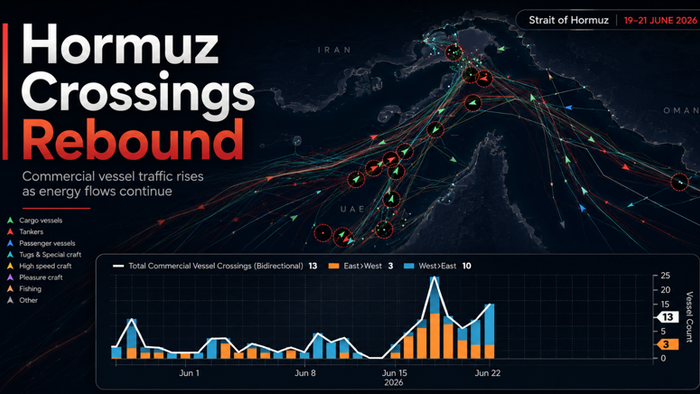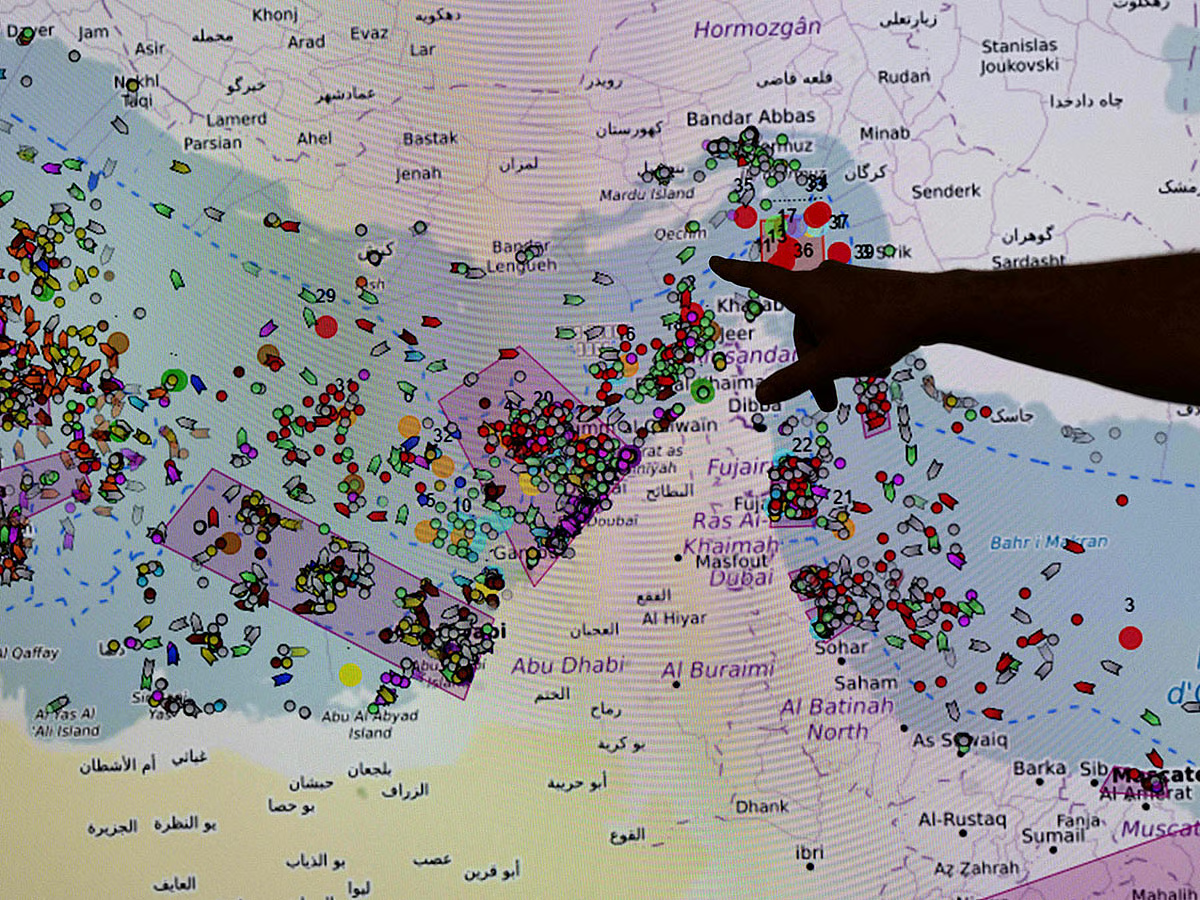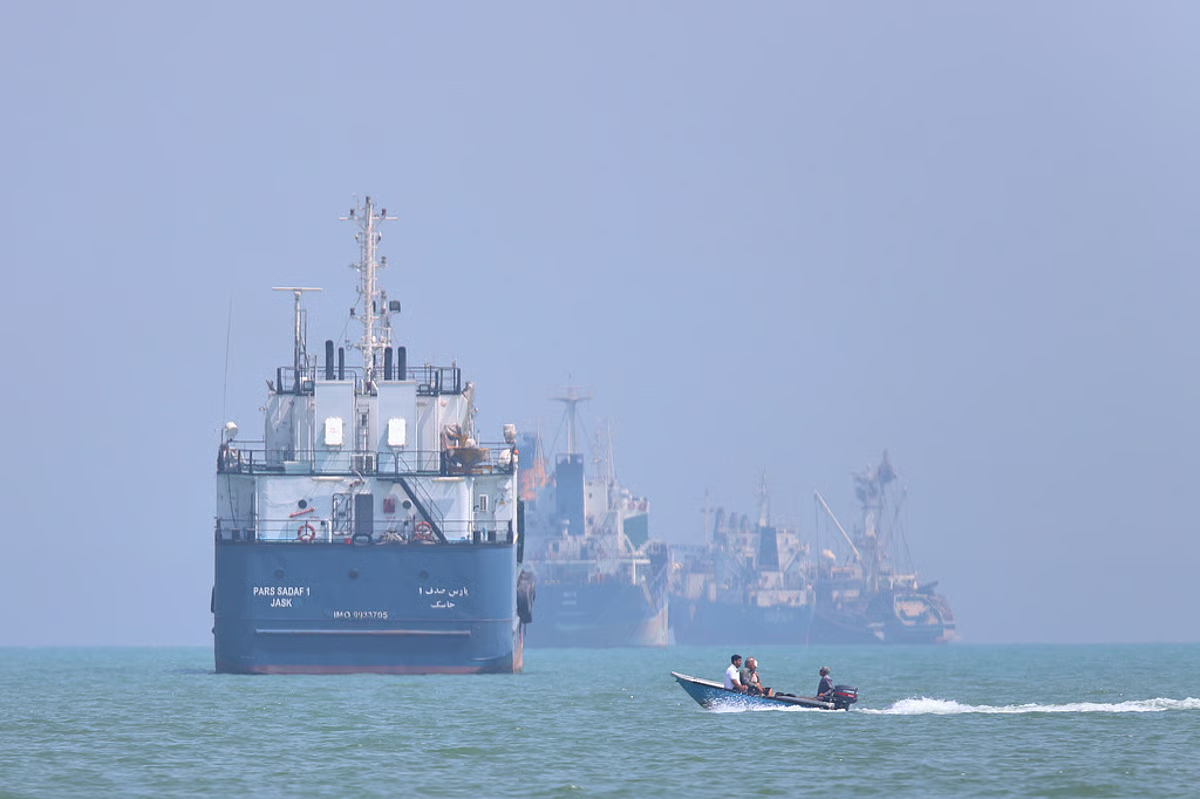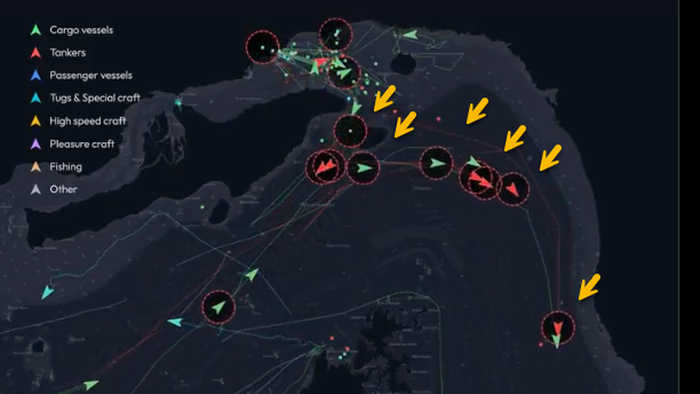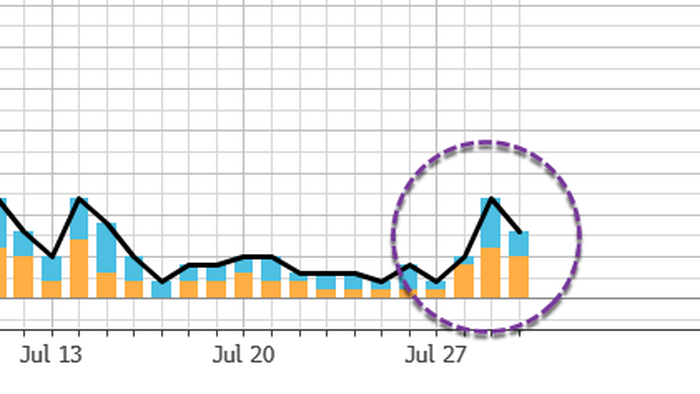
Shipping traffic through the Strait of Hormuz slightly increased as US-Iran negotiations remained ongoing in an effort to restore peace after the memorandum of understanding collapsed amid two weeks of tit-for-tat strikes, according to Pakistan's Foreign Ministry spokesperson Tahir Andrabi, who provided no further details.Still, the security situation in the Gulf deteriorated overnight after the US launched a new wave of strikes on Iran following attacks on US forces in Jordan. Additionally, reports emerged that a US-owned LNG vessel was struck at an Egyptian port.Bloomberg cited Kpler data showing that fourteen commodity vessels transited the Hormuz chokepoint in both directions on Wednesday, up from single digits the previous week.Kpler wrote on X:Hormuz shipping bottleneck enduresA four-day pause in US strikes on Iran has done little to restore Middle East Gulf crude exports. Confirmed clearance remained close to recent lows, while Gulf loading activity fell by more than half for the first time in six weeks. The crude backlog has shifted between the Gulf and the Gulf of Oman rather than disappeared. Persistent maritime security risks, war risk insurance costs and Iranian interdiction now appear to be the main barriers. Offshore ship to ship transfers are helping manage inventories, but not expanding export capacity. For energy markets, physical shipping data remain a clearer measure of supply conditions than geopolitical headlines.Hormuz shipping bottleneck endures
Hormuz Ship Traffic Edges Higher, But Kpler Warns Gulf Crude Exports Remain Impaired
"Hormuz shipping bottleneck endures..."
631 words~3 min read