A critical vulnerability in the open-source AI agent platform Ruflo could allow unauthenticated attackers to take control of enterprise AI environments by exploiting an exposed Model Context Protocol (MCP) bridge, according to research published by Noma Security.
The flaw, tracked as CVE-2026-59726 and dubbed RufRoot, carries a maximum CVSS score of 10.0 and affects Ruflo versions prior to 3.16.3, Noma Security wrote in a blog post.
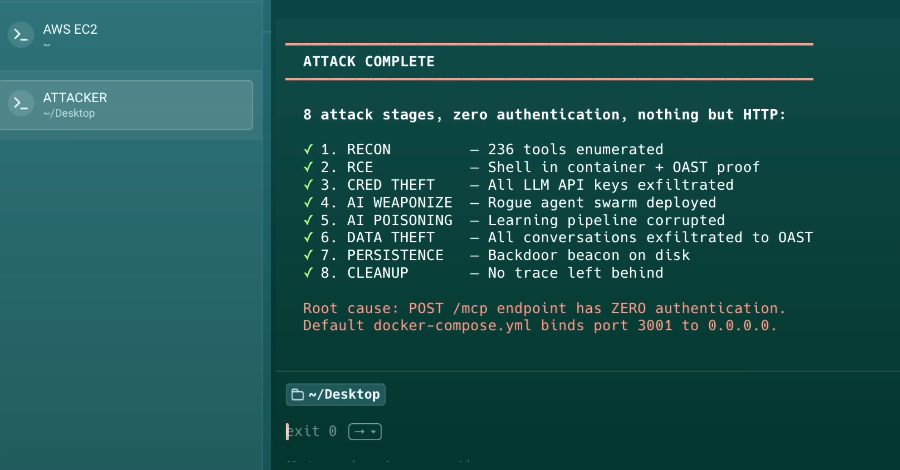
The vulnerability allows attackers to execute arbitrary code, steal large language model (LLM) API keys, access user conversations, hijack AI agents, and manipulate the platform’s persistent AI memory through a single HTTP request.
The researchers said the issue stems from an unauthenticated MCP Bridge that is exposed by default and provides direct access to the tools AI agents use to interact with enterprise systems.
“The MCP Bridge isn’t a random auxiliary debug interface; rather, it is Ruflo’s central nervous system. Every tool call, every agent action, every memory operation goes through the MCP bridge,” the researchers wrote. “Mistakenly giving unauthenticated access to the MCP Bridge means giving unauthenticated access to everything.”