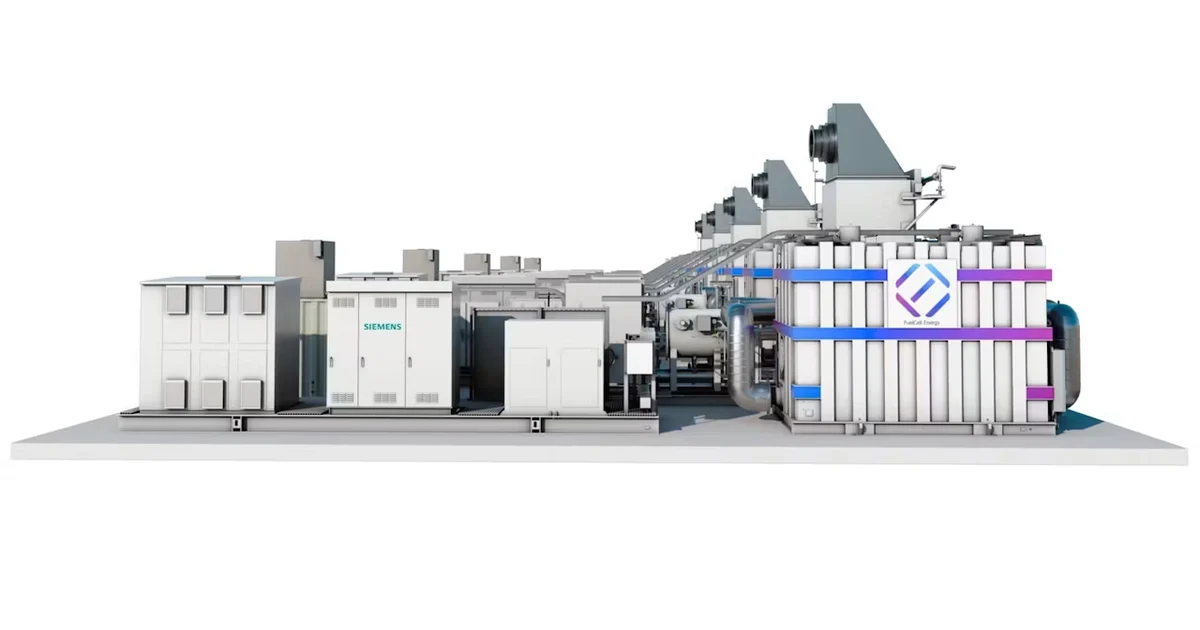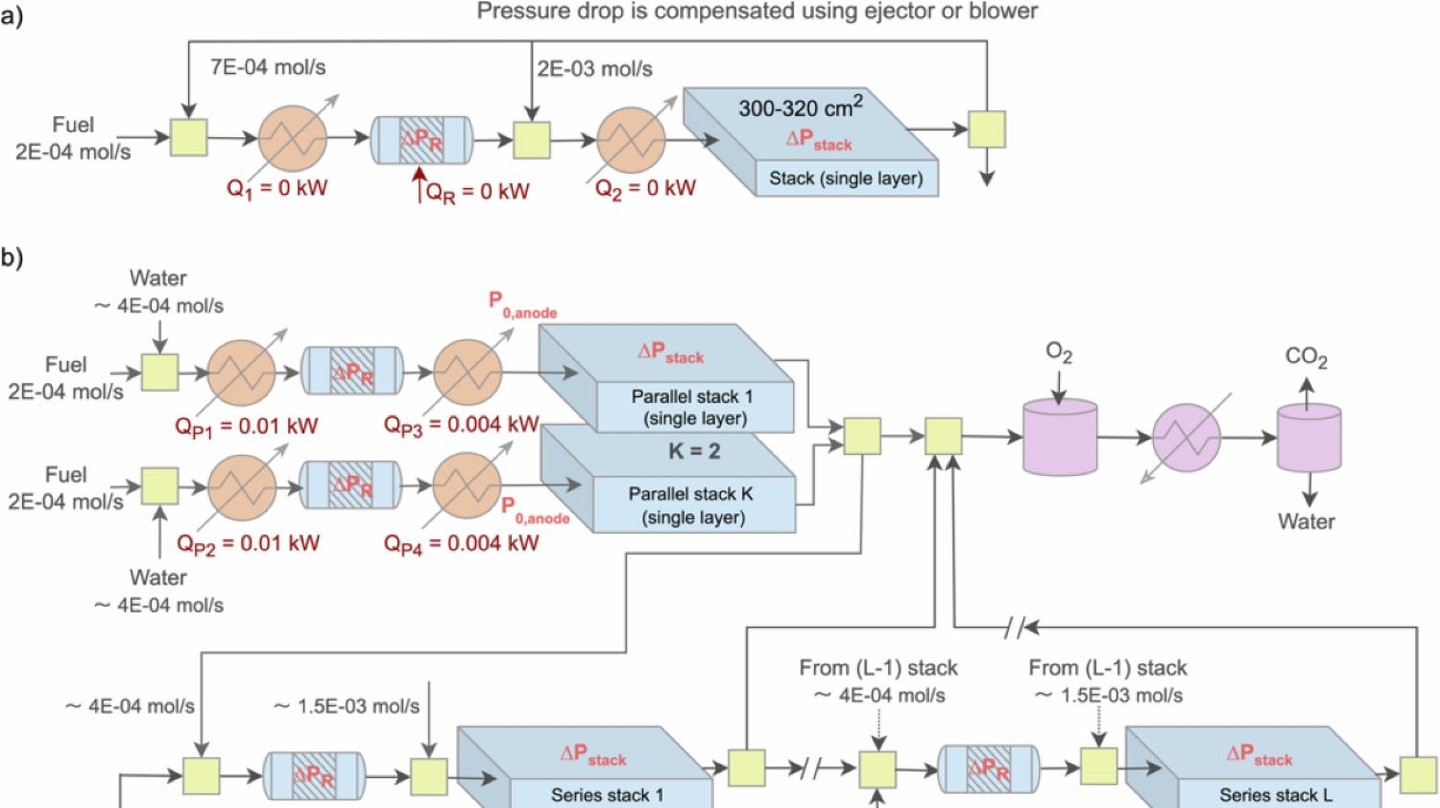
Unlike engines or turbines, that scale by volume, fuel cell systems are by nature modular : MW-size installations have to be assembled by connecting together base units of, here, 10 kW stacks, fed by fuel and air streams in an optimal way.
The first study published in Feb 2026 comes up with an innovative parallel/series configuration hybrid design how to connect the 10 kW base units, targeting to minimize both fuel consumption and system cost, by minimizing the connection components.Scalable modular design of solid oxide fuel cell systems for enhanced large-scale power generation - Nature CommunicationsWith the rise of PV and wind power, electricity storage is a must. Whereas daily/weekly wind power can be stored in batteries, seasonal PV requires a long-term large-scale power-to-gas storage : here, reversible Solid Oxide Cells are used. The second study published in June 2026 adresses these storage deployment strategies across European countries.Optimizing reversible solid oxide cell technology for long-term energy storage in Europe’s decarbonized frameworks - Nature CommunicationsFundingX.W. discloses support for the research of this work from the AMON project, supported by the Clean Hydrogen Partnership and its members under Grant Agreement No. 101101521 and co-funded by the European Union. J.V.H. discloses support for the research of this work from the Innosuisse Flagship project STORE [Project No. 108.230 FS-EE] and the RCH4 project funded by the Valais Energy Demonstrators Fund. F.M. and S.S. disclose support for the research of this work from the SusEcoCCUS project and the EPFL Solutions4Sustainability initiative (S4S). All authors disclose support for the research of this work from Fuel Cell Innovations, South Korea.