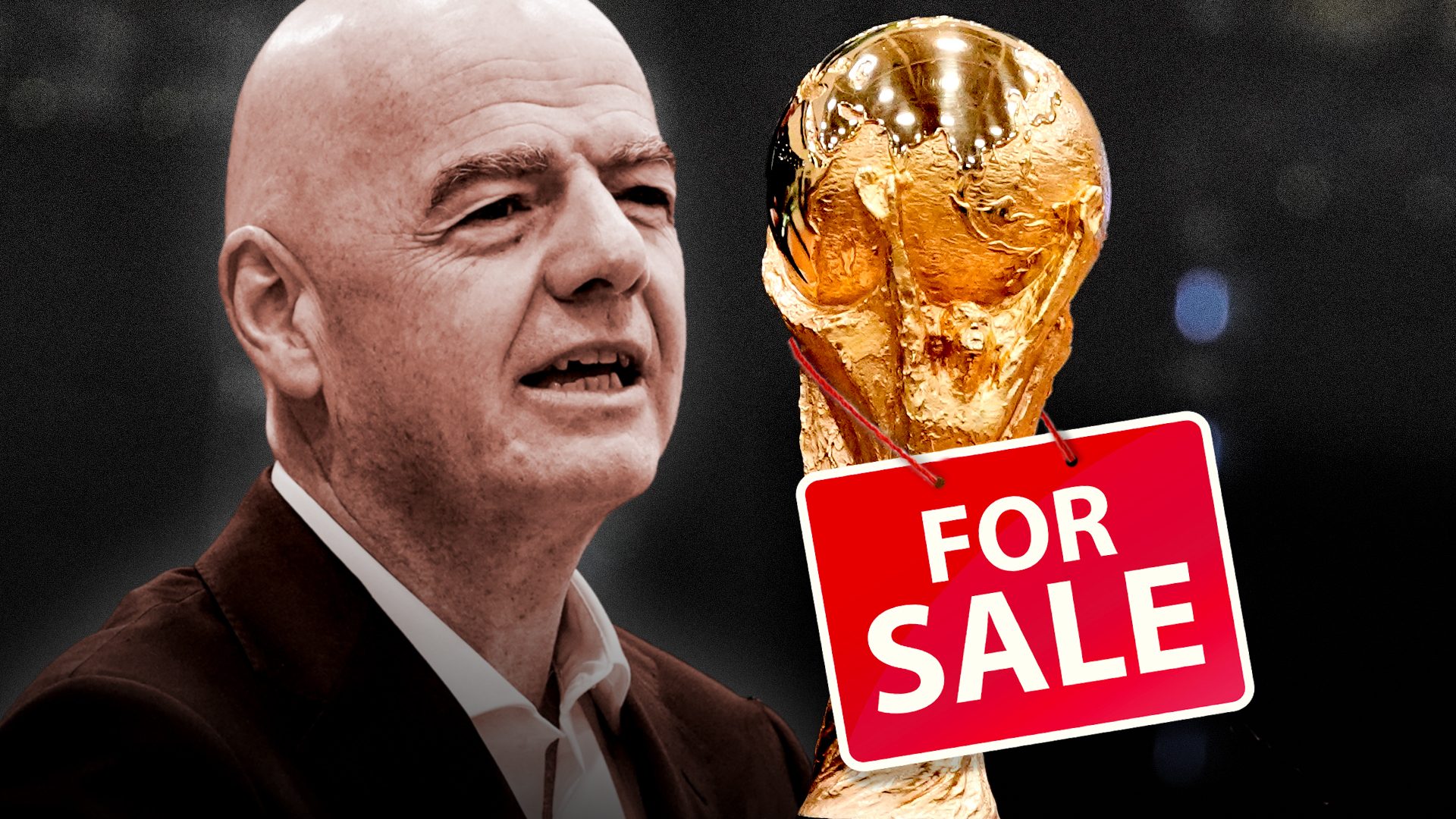
Fifa president Gianni Infantino has given the organisation's 211 member federations until September 19 to support a private investment proposal that could provide each association with up to $40 million in funding.Infantino outlined the deadline in a letter promoting the creation of Fifa Forward Enterprise, a subsidiary valued at approximately $20 billion that would handle commercial operations connected to the World Cup, Club World Cup and other Fifa competitions.Outside investors could purchase a stake of up to 20 per cent, while Fifa would retain majority ownership and control over sporting and governance decisions. Thrive Capital, founded by Joshua Kushner, has been linked to the prospective investor group.Under the plan, Fifa says it could make $10bn available for development beginning in 2027. Each federation would be eligible for up to $20m in one-time Fast Forward funding, in addition to $20m through the regular Fifa Forward Program during the 2027-30 cycle.The temptation is clear for the members, but are they guaranteed to vote for it? Assuming that clearing the Fifa Council is a formality, then Infantino will need 106 votes at the next Fifa Congress, taking place in Morocco in March 2027. Below is a breakdown as to how he might get there. AFC (46 votes) The AFC is led by Sheikh Salman bin Ebrahim Al Khalifa, who also serves as a senior vice-president of the Fifa Council. Traditionally, the AFC has been a reliable supporter of Infantino. Therefore, it was a bit of a surprise to see them release a statement complaining about being blindsided by his proposal. The AFC said it recognised the importance of “exploring innovative approaches” but was disappointed that such a significant plan was announced before the confederation had the opportunity to examine it.“Such initiatives should be founded upon the principles of good governance, transparency and meaningful consultation,” it said. History suggests that the AFC likes to find a unified position, and it would be a surprise if a majority of nations did not support the plan. However, the AFC includes strong football nations with positive relationships with Uefa, such as Japan, Australia and South Korea, who are more likely to go their own way. Members: Afghanistan, Australia, Bahrain, Bangladesh, Bhutan, Brunei, Cambodia, China, Chinese Taipei, North Korea, Guam, Hong Kong, China, India, Indonesia, Iran, Iraq, Japan, Jordan, South Korea, Kuwait, Kyrgyzstan, Laos, Lebanon, Macau, China, Malaysia, Maldives, Mongolia, Myanmar, Nepal, Oman, Pakistan, Palestine, Philippines, Qatar, Saudi Arabia, Singapore, Sri Lanka, Syria, Tajikistan, Thailand, Timor-Leste, Turkmenistan, United Arab Emirates, Uzbekistan, Vietnam, YemenCAF (54 votes)The Confederation of African Football (CAF) said on Wednesday its executive committee will meet next week to evaluate Fifa's proposal. But the CAF is arguably Infantino’s strongest and most reliable voting bloc. Fifa says its investment in African football since 2016 is expected to exceed $1 billion. Ahead of the 2027–2031 Fifa presidential election, CAF member associations unanimously agreed to support Infantino’s re-election, effectively committing all 54 African votes. He will get most, if not all, of the 54 CAF votes. Members: Algeria, Angola, Benin, Botswana, Burkina Faso, Burundi, Cabo Verde, Cameroon, Central African Republic, Chad, Comoros, Congo, Ivory Coast, DR Congo, Djibouti, Egypt, Equatorial Guinea, Eritrea, Eswatini, Ethiopia, Gabon, Gambia, Ghana, Guinea, Guinea-Bissau, Kenya, Lesotho, Liberia, Libya, Madagascar, Malawi, Mali, Mauritania, Mauritius, Morocco, Mozambique, Namibia, Niger, Nigeria, Rwanda, Sao Tome and Principe, Senegal, Seychelles, Sierra Leone, Somalia, South Africa, South Sudan, Sudan, Tanzania, Togo, Tunisia, Uganda, Zambia, ZimbabweConcacaf (35)After Uefa, Concacaf was the most strident in its criticism of the plan. “Concacaf was only made aware of this matter through media reports and, subsequently, via a media release. We are deeply concerned by the lack of due process,” it said in a statement. “As leaders within football, we are the custodians of the game. Collectively, Fifa, the confederations and every member association have a responsibility to always act in the best interests of the sport. Every decision we make must be guided by good governance, robust processes and long-term stewardship.”The US, Canada and Mexico are likely to each go their own way, but many of the smaller associations from Caribbean nations are heavily reliant on Fifa funding. With 35 votes, Concacaf will be pivotal. The financial incentives might be tough to turn down for the majority of members. Another confederation likely to be split. Members: Anguilla, Antigua and Barbuda, Aruba, Bahamas, Barbados, Belize, Bermuda, British Virgin Islands, Canada, Cayman Islands, Costa Rica, Cuba, Curacao, Dominica, Dominican Republic, El Salvador, Grenada, Guatemala, Guyana, Haiti, Honduras, Jamaica, Mexico, Montserrat, Nicaragua, Panama, Puerto Rico, Saint Kitts and Nevis, Saint Lucia, Saint Vincent and the Grenadines, Sint Maarten, Surinam, Trinidad and Tobago, Turks and Caicos Islands, United StatesConmebol (10 votes)The South American bloc has been one of Infantino’s strongest allies. Unlike Uefa, all member associations backed Infantino’s re-election in 2023, giving him a unanimous regional endorsement. They are all likely to support him here, especially as Conmebol are pushing for a 64-team tournament in 2030. Members: Argentina, Bolivia, Brazil, Chile, Colombia, Ecuador, Paraguay, Peru, Uruguay, VenezuelaPlay00:44World Cup stake sale ‘not an obligation’, says InfantinoOFC (11 votes)This is another confederation where the members could be swayed by the financial incentives. The OFC released a neutral statement on Thursday. It said: “The proposal will be considered by the OFC executive committee at its upcoming meeting in August. OFC invites its member associations to review the proposal and participate in the consultation process. OFC remains committed to engaging constructively with its member associations, Fifa, fellow confederations and other football stakeholders throughout the consultation process and in support of the continued development of football across Oceania and globally.”Members: American Samoa, Cook Islands, Fiji, New Caledonia, New Zealand, Papua New Guinea, Samoa, Solomon Islands, Tahiti, Tonga, VanuatuUefa (55 votes)Fifa might have the governing authority over world football, but Uefa boasts its economic engine.Although Europe's 55 national associations account for just over a quarter of Fifa's membership, the confederation organises the sport's richest club and national-team competitions and represents many of its biggest leagues, clubs and broadcasters.That commercial weight gives Uefa significant influence whenever Fifa proposes changes affecting competitions, the international calendar or the commercial structure of the game. Uefa have condemned the plan twice already and are holding an emergency meeting on Thursday. David Trunda, president of the Czech FA, broke ranks and said he saw “pragmatic benefits” from working with Infantino.“Of course, we need more details, but my personal point of view is that I can see the positive impact of Fifa's intentions,” Trunda told Sky News.Despite that, expect Uefa to vote overwhelmingly against the proposal. An economically enhanced Fifa would surely end up causing further disruptions to the global football calendar and even pose an existential threat to Uefa's flagship competitions. Members: Albania, Andorra, Armenia, Austria, Azerbaijan, Belarus, Belgium, Bosnia and Herzegovina, Bulgaria, Croatia, Cyprus, Czech Republic, Denmark, England, Estonia, Faroe Islands, Finland, France, Georgia, Germany, Gibraltar, Greece, Hungary, Iceland, Israel, Italy, Kazakhstan, Kosovo, Latvia, Liechtenstein, Lithuania, Luxembourg, Malta, Moldova, Montenegro, Netherlands, North Macedonia, Northern Ireland, Norway, Poland, Portugal, Republic of Ireland, Romania, Russia, San Marino, Scotland, Serbia, Slovakia, Slovenia, Spain, Sweden, Switzerland, Turkey, Ukraine and WalesConclusionAssuming that Uefa (55 votes) finds a unified position, that would leave Infantino needing 106 of the remaining 156 available. The CAF is likely to back him across the board, which leaves him needing 52 of the remaining 102 from Conmebol, Concacaf, OFC and the AFC. Ultimately, each association will have a say, and it's more difficult to envisage consensus across some of those confederations, although Conmebol is likely to back him. The financial incentives will be extremely compelling for some of the smaller member associations, and 106 is likely to prove an attainable target – even if it might end up being closer than first thought. To prevent it reaching that stage, Infantino's plan would need to be derailed – but how could that happen? Possible outcomes include decisive action from Uefa, widespread intervention at a government level, extreme pressure from sponsors, or a combination of all three. A further option is that a revised proposal, featuring significant amendments, is eventually given the green light.
Can Gianni Infantino get 106 votes? How Fifa's 211 members will decide $20 billion World Cup plan | The National
Breaking down the voting blocs as world football chief seeks to sell minority stake in flagship tournament
1,342 words~6 min read