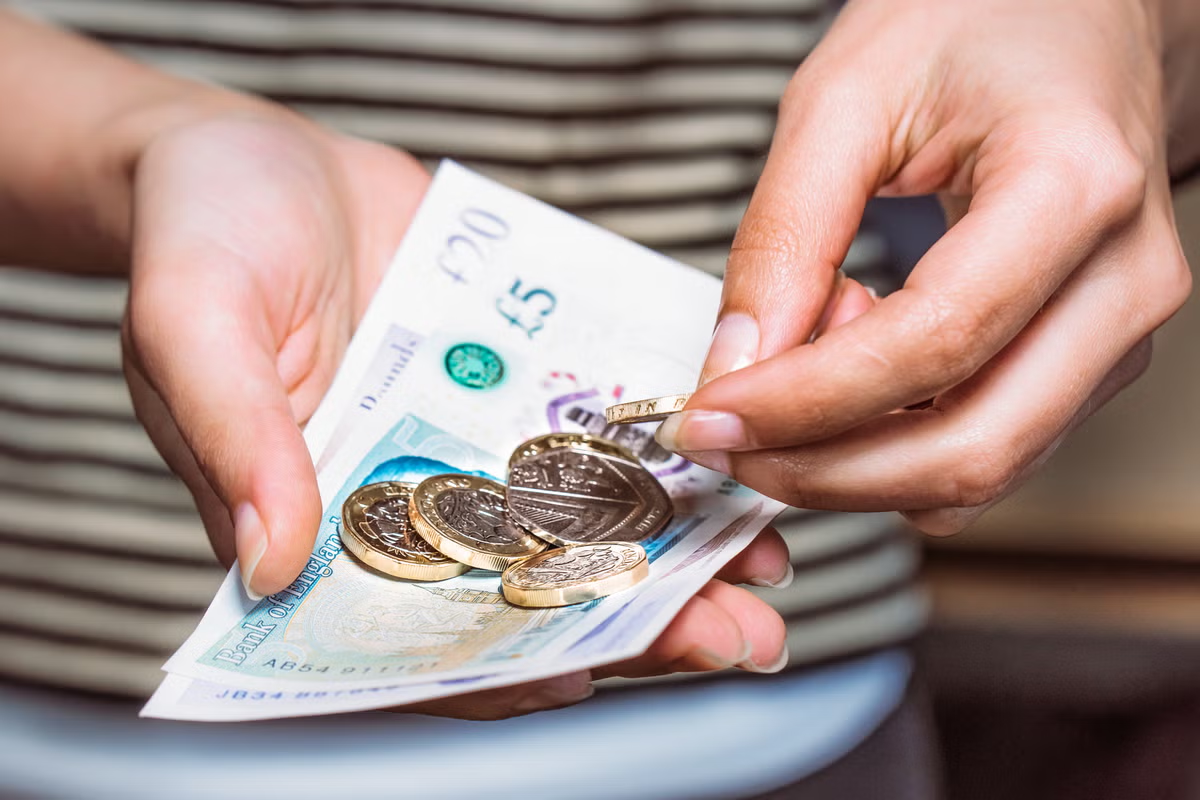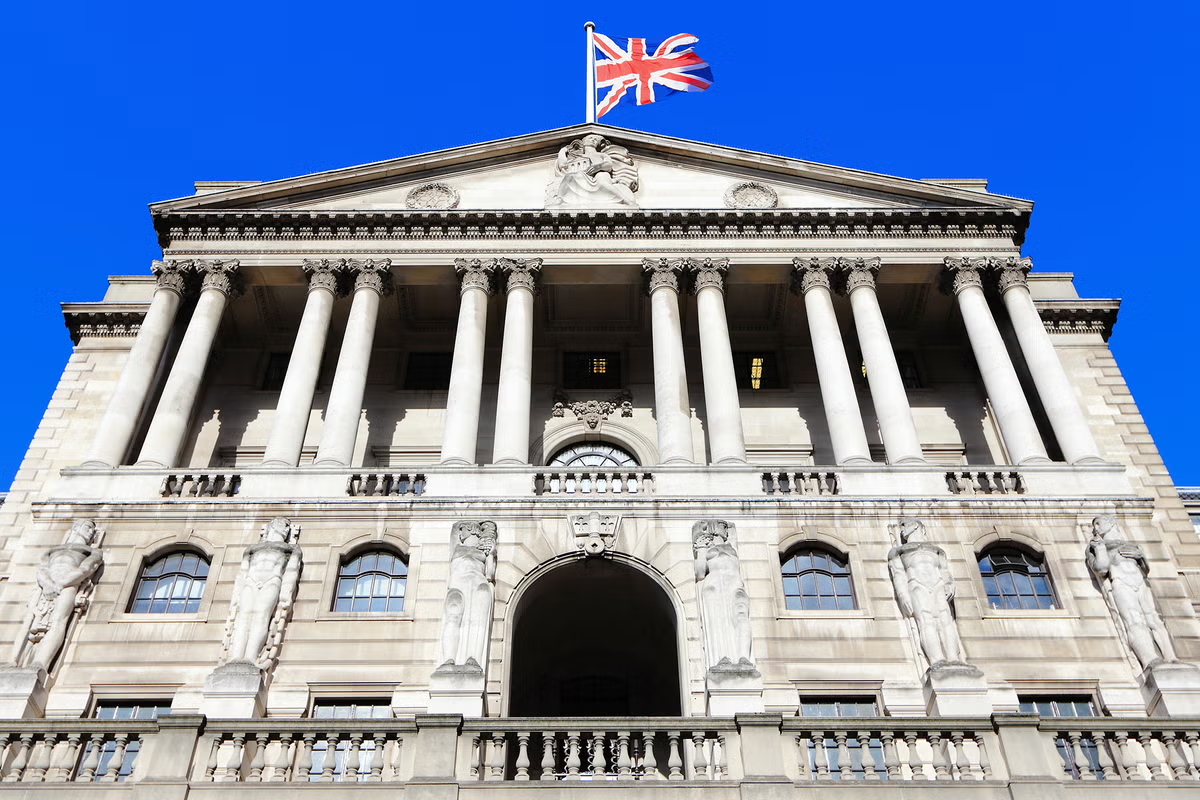
The base rate affects the interest that banks and lenders apply to mortgages, loans and saving accounts12:00, 30 Jul 2026The Bank of England has held interest rates at 3.75%.It is the fifth time in a row where the base rate has been left unchanged, in a move that was widely expected by economists.The base rate affects the interest that banks and lenders apply to mortgages, loans and saving accounts. It is also the main tool used by the Bank of England to control inflation, which is a measure of price rises.When interest rates and the cost of borrowing are higher, people have less money to spend - this then means prices for goods and services tend to fall to encourage spending, which brings down inflation.The Bank of England has a target of 2% inflation.How does it affect my mortgage?As the base rate has not changed, your mortgage repayments will also stay the same. But the impact of any future base rate decisions depends on the type of mortgage deal you have.If you have a tracker mortgage, this follows the movement of the base rate, so this can go up or down when it is updated.If you have a standard variable rate (SVR) mortgage, then this also generally changes when the base rate is updated, though lenders do not have to pass on the cut or rise in full.If you have a fixed rate mortgage, your payments are not affected by the base rate, as you have agreed to pay a fixed amount every month for a set period of time.Your payments will only change when your fixed deal ends - at this point, you will normally roll on to your lender's standard variable rate unless you fix into another deal.How does it affect my debt?If your credit card is linked to the base rate, then you should not see any changes today. The average credit card purchase APR is around 36%, according to Moneyfacts.But not all credit cards are explicitly linked to the base rate. Most credit cards have a variable rate, which means they can fluctuate over time, at the discretion of your lender.Interest rates on personal loans and car financing are normally fixed. This means if you're in the middle of an agreement, this should not change even when the base rate is updated, as you have already agreed set repayments.However, a change in the base rate can impact the rates that are applied to new agreements.How does it affect my savings?When the base rate is higher, banks and building societies generally offer better savings rates - but when it is expected to fall, saving rates normally start coming down.If your savings rate is variable, it can change from time to time. If your money is locked away into a fixed-rate account, then your rate will not change for a set period of time.MoneySavingExpert.com lists the best rates currently available. Revolut offers 5% for six months on up to £25,000 for new customers, made up of 2.9% variable plus a six month 2.1% bonus.Cahoot also pays 5% on up to £3,000 for up to a year, though the rate is variable. Tembo offers 4.55% on up to £20,000, which is made up of 3% variable plus a one year 1.55% bonus.In terms of ISAs, Trading 212 offers 4.51% for newbies, made up of 3.6% variable and a one-year 0.91% bonus.If you are looking to lock your cash away, GB Bank pays 4.92% for a one-year fix, or for a longer term, Investec offers 5% for a three-year fix and Atom Bank pays 5% on a five-year account.Article continues belowRegular savings accounts offer the best rates, but these come with strict terms and conditions. You can normally only make small deposits each month and some accounts restrict how many withdrawals you can make.Lloyds pays 8% fixed for one year but you can only deposit up to £250 each month, while Santander also offers 8%, though this is variable and on up to £200 a month.
Bank of England interest rates decision confirmed - how it affects your money
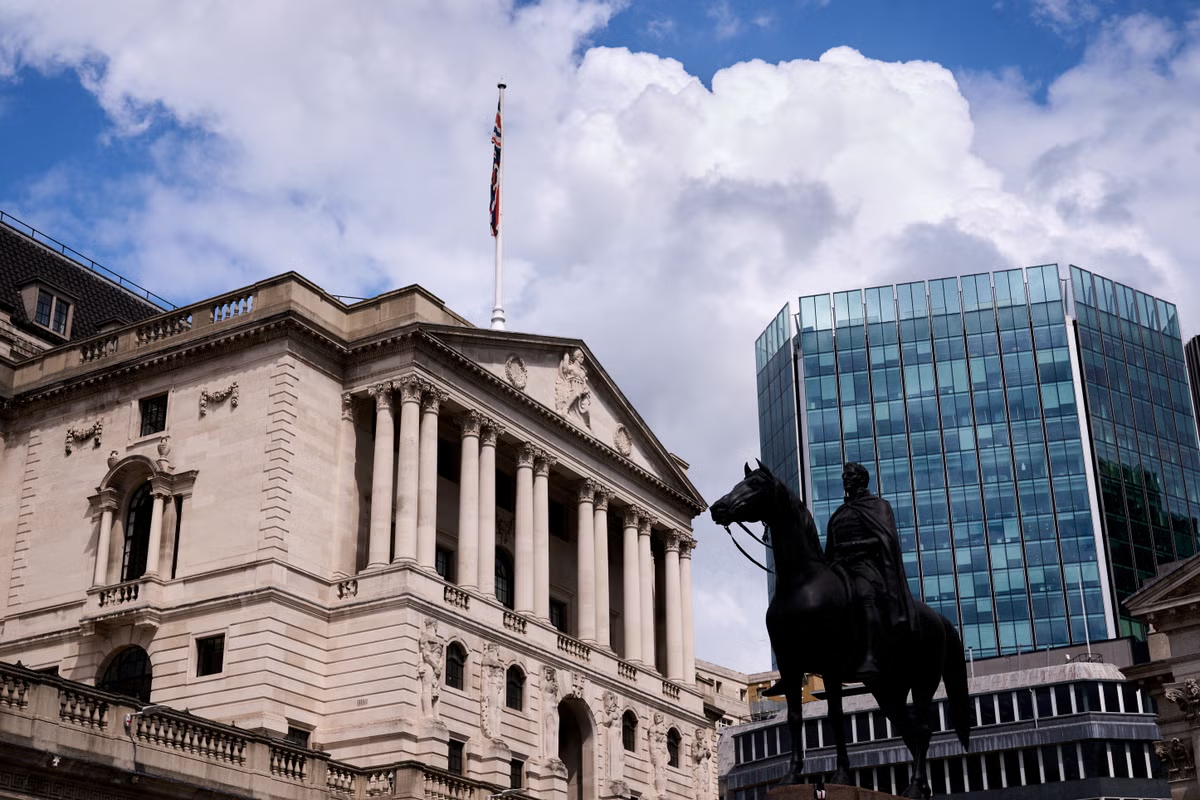
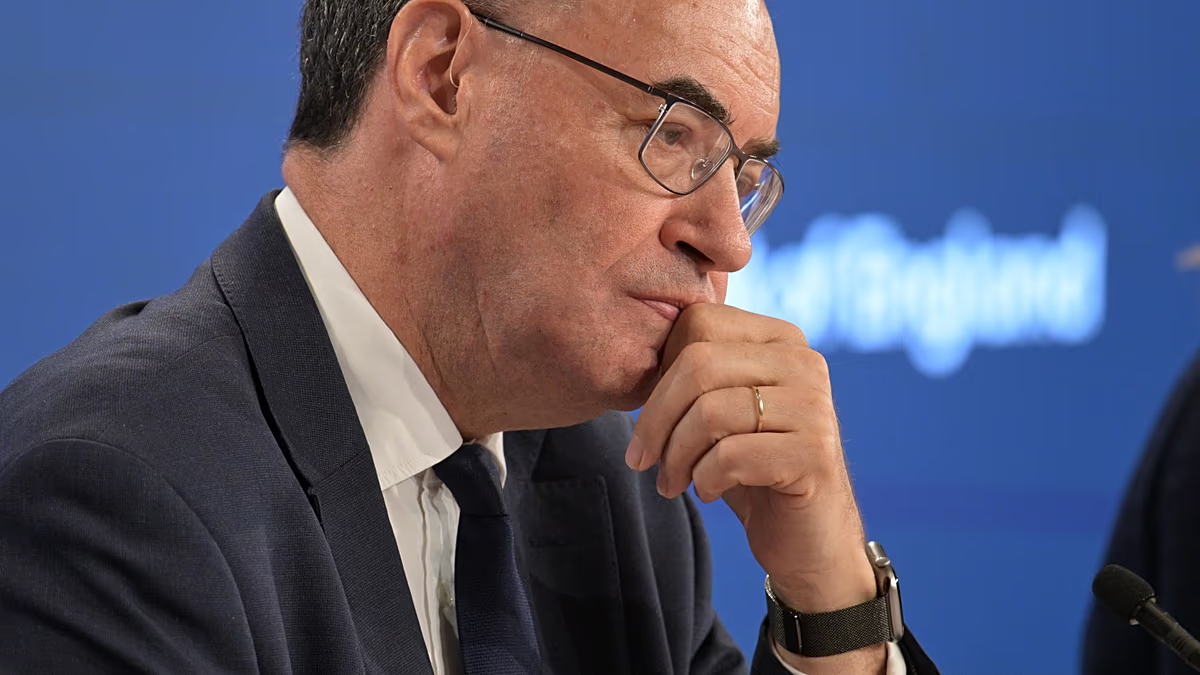
The base rate affects the interest that banks and lenders apply to mortgages, loans and saving accounts
666 words~3 min read