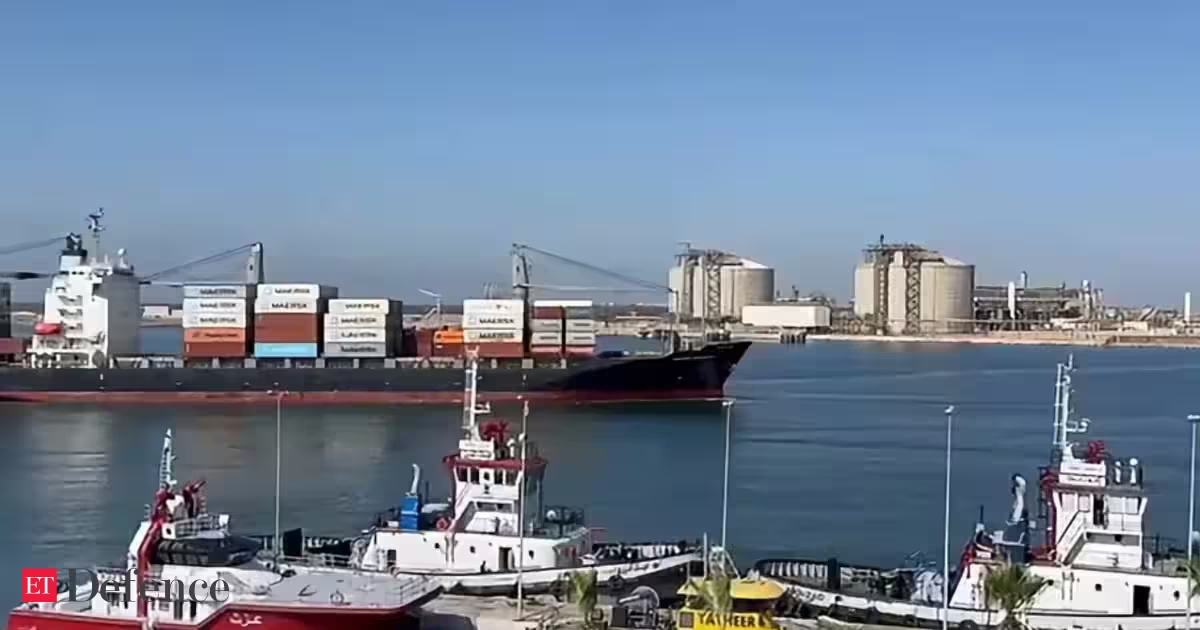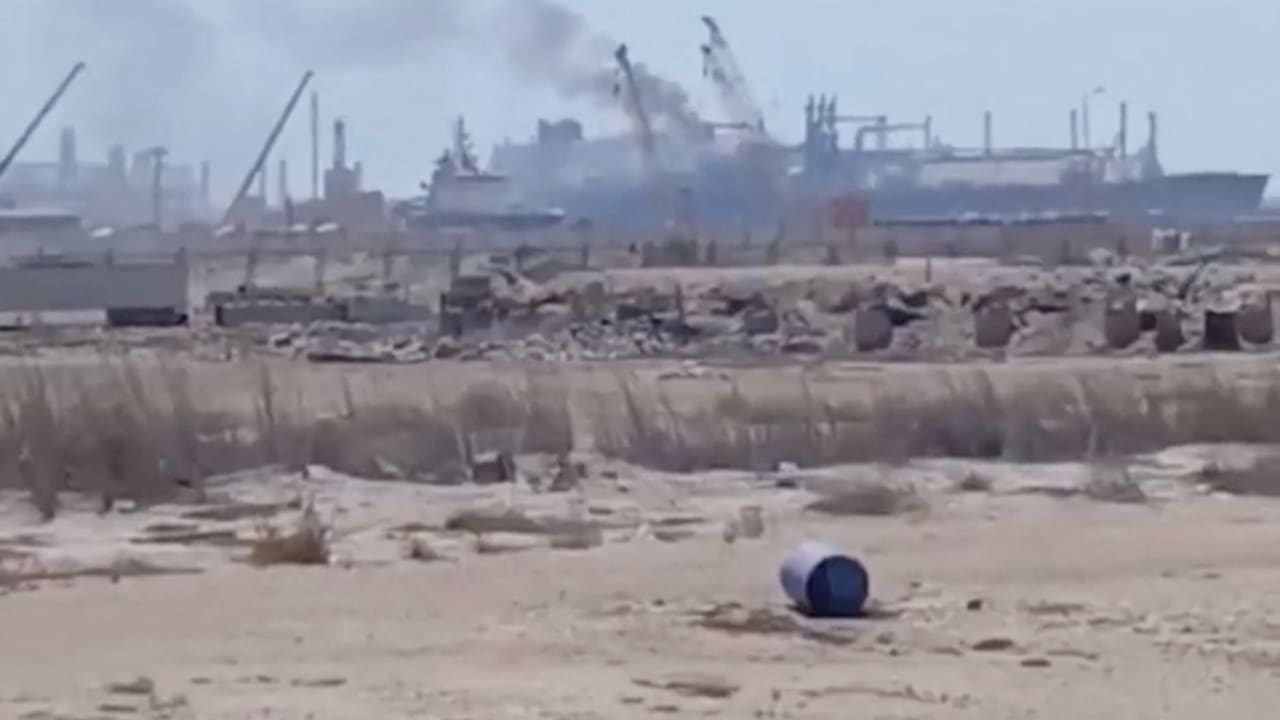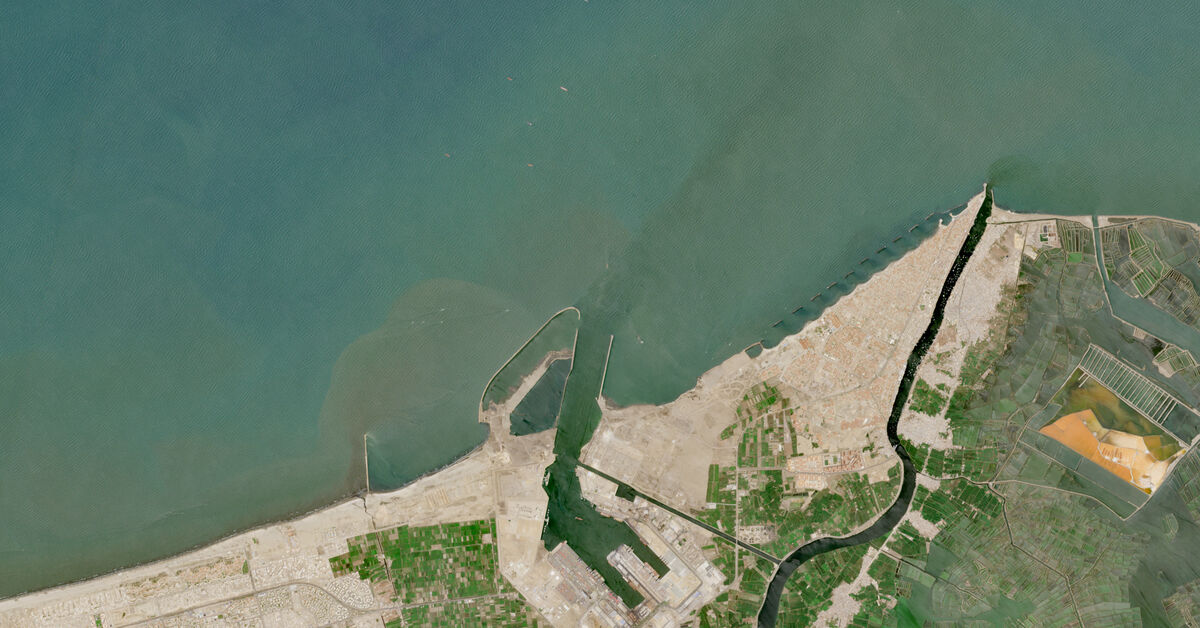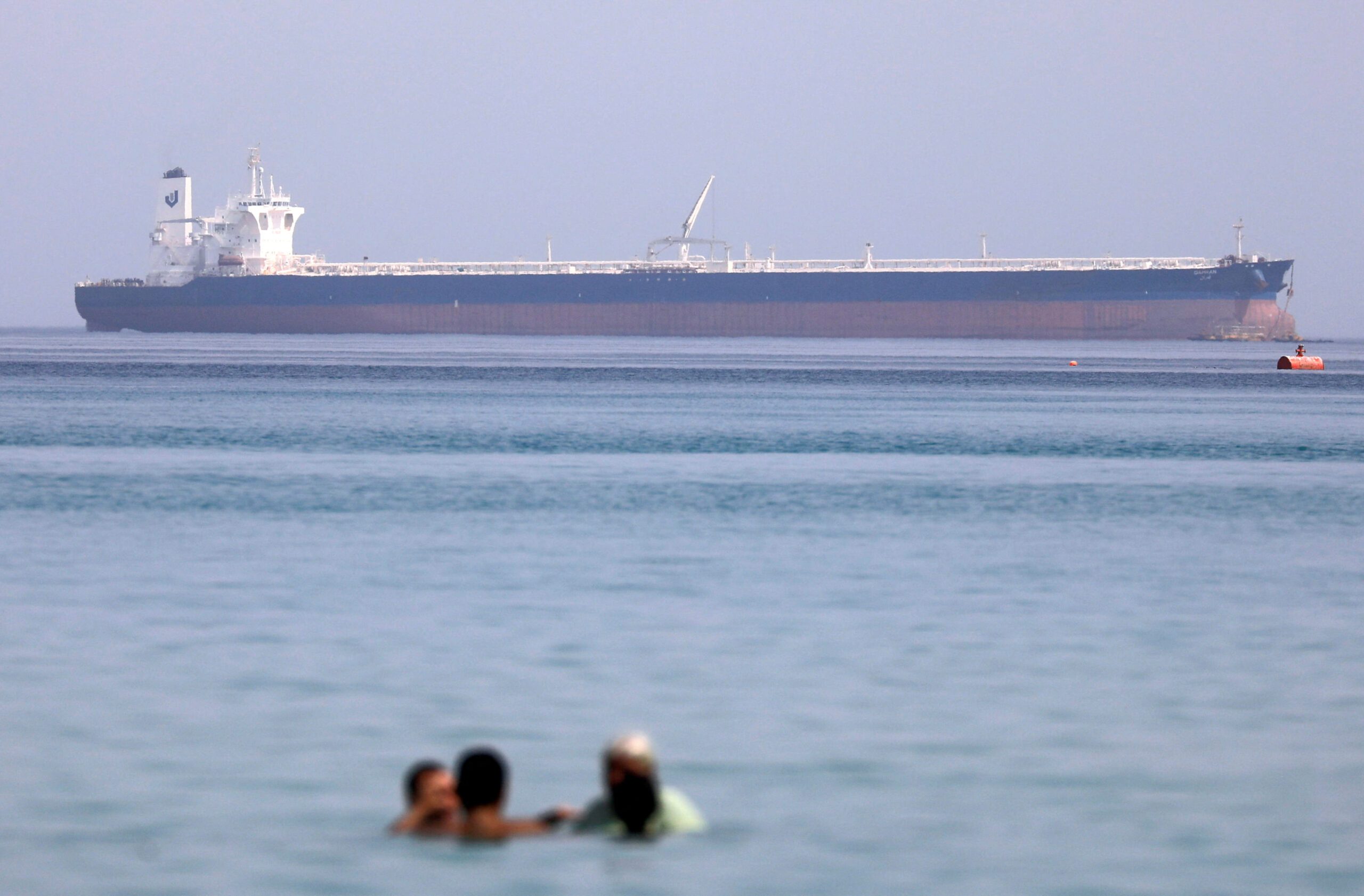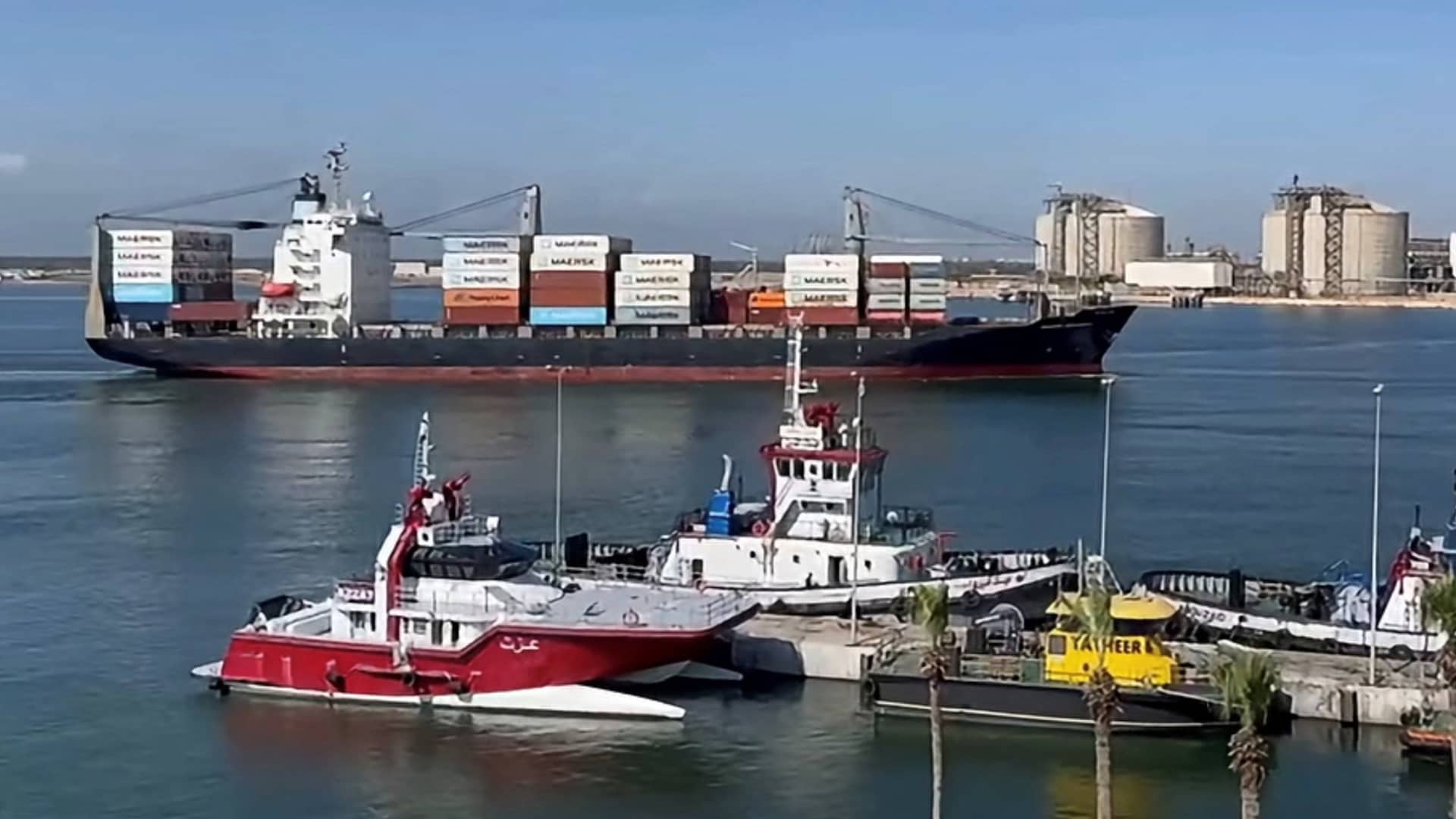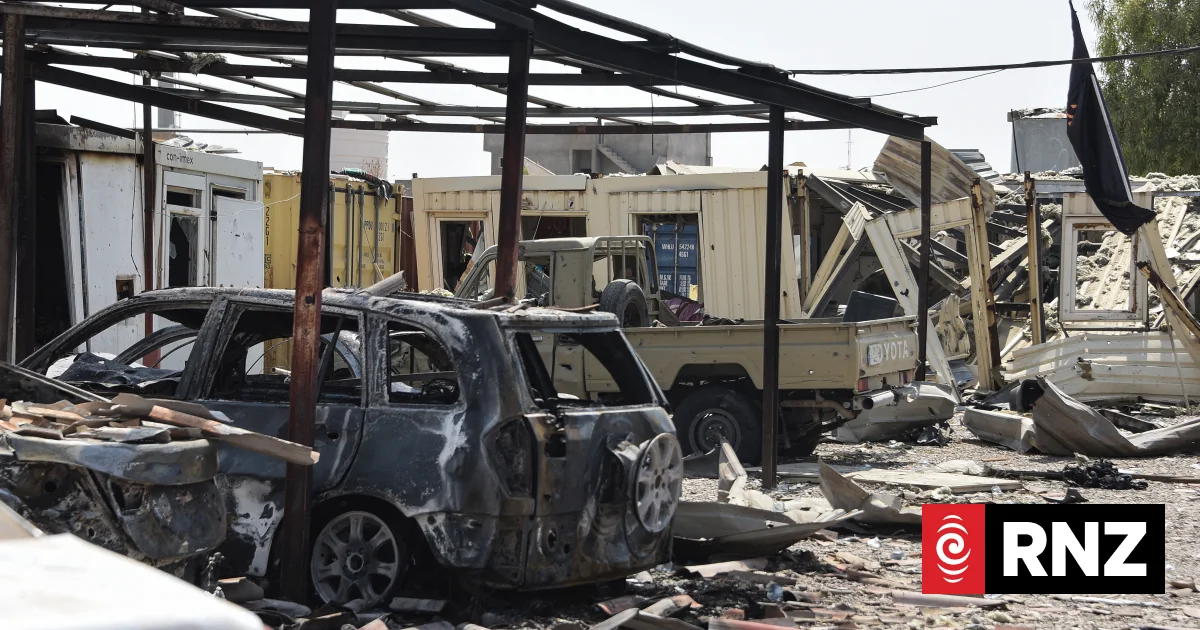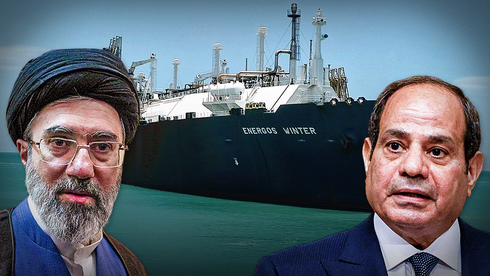
Cairo had focused on the threat of Houthi disruption at Bab al-Mandab, but a drone that set two gas vessels ablaze at a northern Egyptian port exposed a different vulnerability; no group has claimed responsibilityEgypt’s main concern in recent weeks had been the possibility that the regional escalation could lead the Houthis, Iran’s proxies in Yemen, to close the Bab al-Mandab Strait. But yesterday, Cairo faced escalation from another direction, when a drone targeted Damietta port on Egypt’s northern coast.It was reported last night that an explosion occurred aboard two gas tankers at the port. Reuters said it was a drone attack, while The New York Times this morning quoted two Iranian officials who said the strike “was intended to demonstrate that if Iran chooses to escalate the situation, global energy supplies and shipping could be hit much harder.”Gallery El-Sisi, Khamenei and one of the tankers damaged at the port (Photo: Energos, Ludovic MARIN / POOL / AFP, Hamed Jafarnejad/ISNA/WANA (West Asia News Agency) via REUTERS)The officials did not say whether Iran or a pro-Iranian militia was responsible for the strike, and no group has so far claimed responsibility.Cairo initially did not report that the incident was an attack. Official statements issued yesterday by the Egyptian Petroleum and Mineral Resources Ministry said a fire had broken out aboard vessels at Damietta port and was immediately brought under control. The ministry called on media outlets and social media users to rely on its official statements for information.This morning, a statement from the Egyptian government was quoted as saying that preliminary investigations had found that the fire aboard the two vessels was caused by a drone, and that no group had yet claimed responsibility. The statement added that Egyptian authorities “are continuing their investigations and taking the necessary measures to protect Egypt’s interests and national security.”Cairo has not emphasized the Damietta incident, which also did not appear on the front pages of the country’s newspapers this morning.Although Iran has not issued any official claim of responsibility, the strike is consistent with a threat recently publicized by Tehran: a map broadcast on Iranian television showing European interests in the region that Iran could attack in response to the Ukrainian strike on an Iranian vessel in the Caspian Sea.The Damietta area in Egypt appeared among the possible targets on the map. Beside it, text in Persian read: “Production capacity of 5.2 million tons of liquefied gas annually. A gateway for gas exports to Europe.”Footage from Egypt’s Damietta port after the attack (Video: Reuters)In recent days, Arab media reported that Egypt was deeply concerned about renewed disruption in the Bab al-Mandab Strait, the gateway to the Suez Canal.An article published Tuesday in the Qatari newspaper Al-Araby Al-Jadeed cited an informed Egyptian source as saying that senior Egyptian security officials had visited Saudi Arabia in the two days before the report, as part of Cairo’s efforts to curb escalation in Bab al-Mandab and the Red Sea, which is affecting the Suez Canal.The report said the Egyptian initiative “extends beyond” coordination with Saudi Arabia and includes contacts with several other Gulf capitals, including the United Arab Emirates.The article stressed that Cairo fears shipping disruptions like those it faced at the beginning of the war in late 2023, which cost it billions of dollars, and that any disruption in Bab al-Mandab reduces Egypt’s revenues from the canal. In recent years, Egypt has already seen ships reroute around the Cape of Good Hope because of regional tensions in order to avoid passing through Bab al-Mandab.The Hezbollah-affiliated Lebanese newspaper Al-Akhbar also reported this morning that Cairo was strengthening its regional and international contacts in an effort to calm the conflict between the U.S. and Iran and prevent the region from sliding into another broad confrontation.Egyptian sources quoted by the newspaper said Cairo’s contacts “are examining what could serve as the basis for more stable understandings between the two sides and prevent a return to military escalation.”According to the sources, several Arab and regional countries now view any U.S.-Iranian understanding that does not address the most consequential regional issues, including Yemen, the Red Sea, the Gulf and the security of maritime routes, as unstable.The Houthis (Photo: AP Photo/Osamah Abdulrahman)Damietta port (Photo: SRStudio/shutterstock)The sources also said Egypt believes that “the security of the Red Sea and the Suez Canal is a cornerstone of regional stability,” and that “any disruption to shipping affects not only the countries bordering the Red Sea, but also global trade, supply chains and energy markets, making the protection of freedom of navigation an essential part of any political or security arrangement under negotiation.”They added that regional consultations “have become more focused and interconnected, as part of a broader vision for restoring regional stability.”A Reuters report published yesterday, according to which the Houthis were considering imposing fees on passage through the Bab al-Mandab Strait, is also highly relevant to Egypt.However, senior Houthi official Hizam al-Assad told Al-Araby Al-Jadeed yesterday that the Houthis had no intention of imposing transit fees in the strait. He stressed that their activity in the Red Sea was “limited solely to blocking Saudi shipping.”Yesterday, the Egyptian presidency reported that President Abdel Fattah el-Sisi had spoken by phone with Jordan’s King Abdullah II and condemned Iranian attacks against Jordan and other countries in the region. The conversation took place before the attack in Egypt itself.Egypt’s Foreign Ministry also announced yesterday that Foreign Minister Badr Abdelatty had held two separate phone calls.The first took place in the evening with U.S. envoy Steve Witkoff. The two discussed the latest regional developments and efforts to reduce tensions, stressing the need “to curb the escalation and prevent the region from sliding into a broader cycle of conflict.” Abdelatty also spoke with Pakistani Foreign Minister Ishaq Dar about similar issues.
Egypt downplays Damietta drone strike as fears grow for Suez Canal lifeline
Cairo had focused on the threat of Houthi disruption at Bab al-Mandab, but a drone that set two gas vessels ablaze at a northern Egyptian port exposed a different vulnerability; no group has claimed responsibility
959 words~4 min read