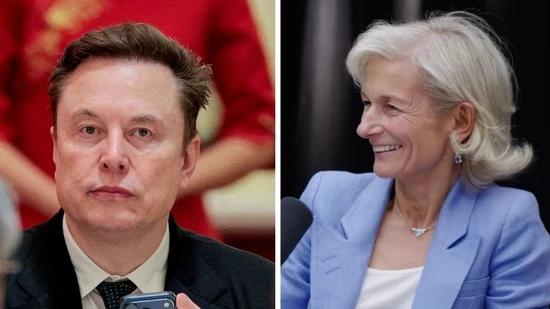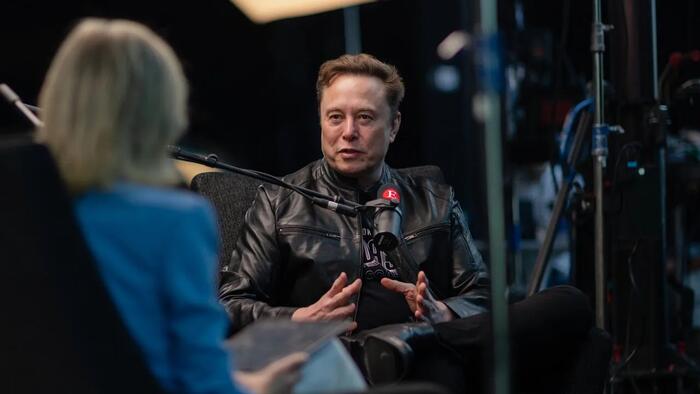
Elon Musk recently sat for a wide-ranging interview with The Economist editor-in-chief Zanny Minton Beddoes, who challenged him over his support for Europe’s far right, his anti-Muslim rhetoric and his cuts to humanitarian aid during his stint in the Trump administration.
Afterwards, on his own social media network that he routinely uses to amplify his personal views, Musk lashed out against his interviewer. “She is a traitor to the West, plain and simple,” he wrote.
By Musk’s assessment, society is full of “traitors.” As he declared over the weekend, “anyone who opposes remigration is a traitor.” So is “anyone who doesn’t love America.” He has also leveled the charge at Minnesota Gov. Tim Walz, Arizona Sen. Mark Kelly, Minnesota Rep. Ilhan Omar and Spanish Prime Minister Pedro Sánchez, to name a few. CNN has reached out to Musk for comment.
EDITOR’S NOTE: CNN’s “Word of the Week” brings you the meaning behind the words in the news.
“Traitor” — which derives via Old French from the Latin “trādēre,” meaning to hand over — was first recorded in English in the early 13th century to describe a person who violated another’s trust or a duty entrusted to them. By the end of the century, it also encompassed betrayals of one’s sovereign or government. Being a traitor is a mark of infamy that carries down through history, attached to the likes of Marcus Junius Brutus, who conspired to assassinate Julius Caesar; Judas Iscariot, who betrayed Jesus for 30 pieces of silver; Benedict Arnold, who deceived George Washington and the Continental Army; and Vidkun Quisling, a Norwegian military officer who collaborated with Nazi Germany during World War II.