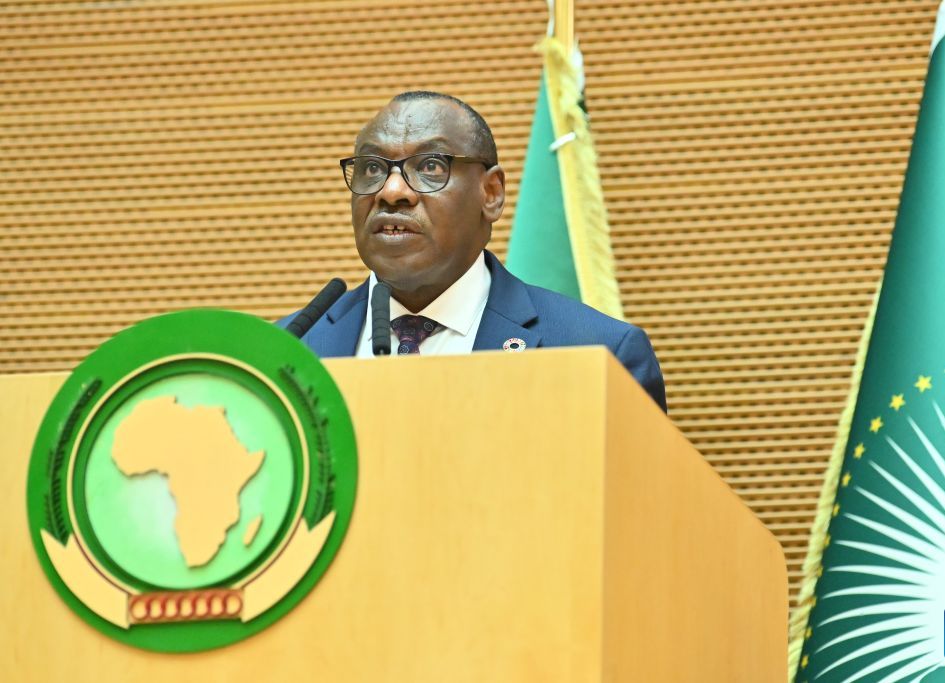
Claver Gatete, executive secretary of the United Nations Economic Commission for Africa (UNECA), addresses the 49th Ordinary Session of the Executive Council of the African Union (AU) in Addis Ababa, the capital of Ethiopia
Southern Africa faces a challenge that goes far beyond economic growth rates or budget deficits. According to the African Development Bank's 2026 Regional Economic Outlook, the region must mobilise development finance at an unprecedented scale to close an annual financing gap of approximately $55 billion. Without it, ambitions around industrialisation, infrastructure, climate resilience and job creation could remain out of reach.
The figure is striking. Yet the bigger story is what it reveals about the changing landscape of development finance in Africa.
Southern Africa's economies continue to show resilience despite a difficult global environment. Countries such as Zambia, Zimbabwe and Angola are projected to record stronger growth in the coming years, while the region as a whole is recovering from the effects of droughts, commodity price fluctuations and global economic uncertainty.
However, economic growth on its own is not generating the resources needed to meet the region's development goals.