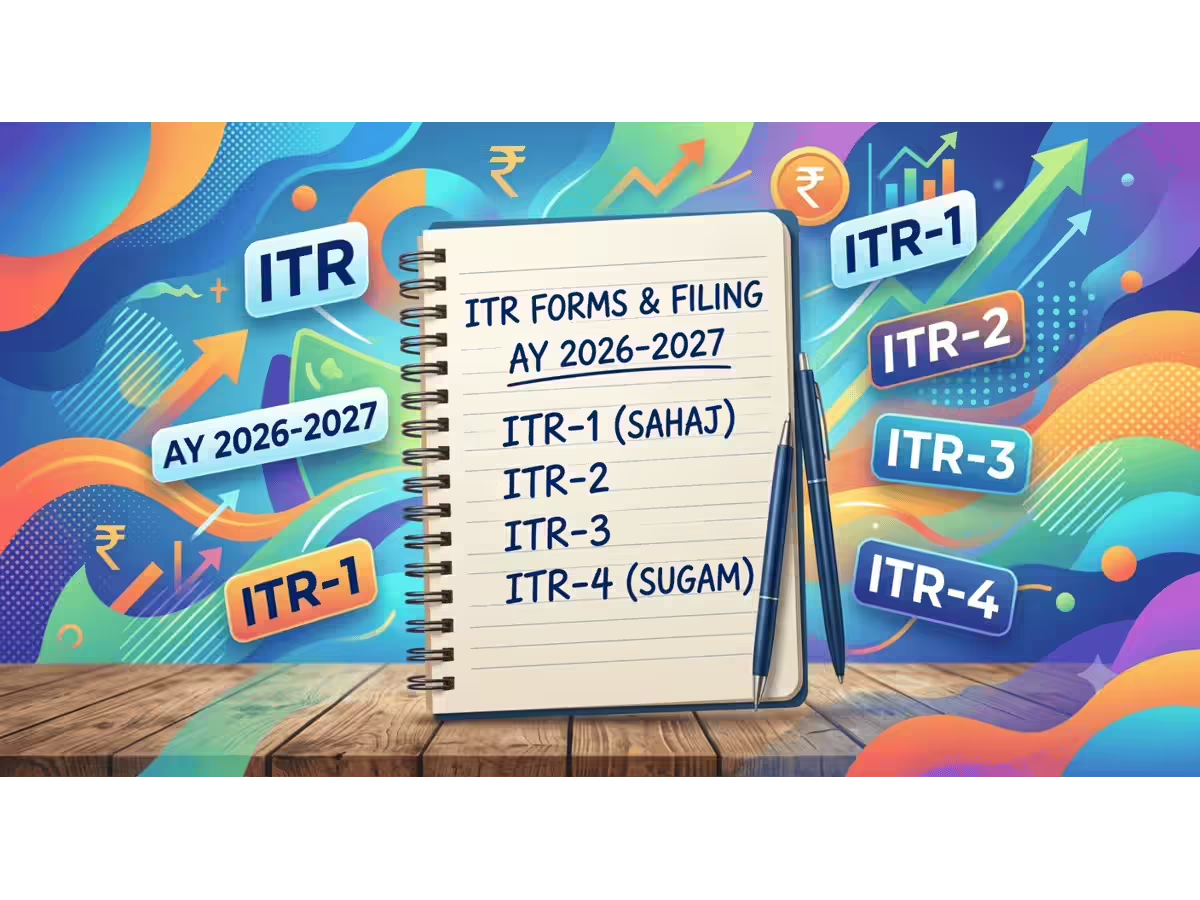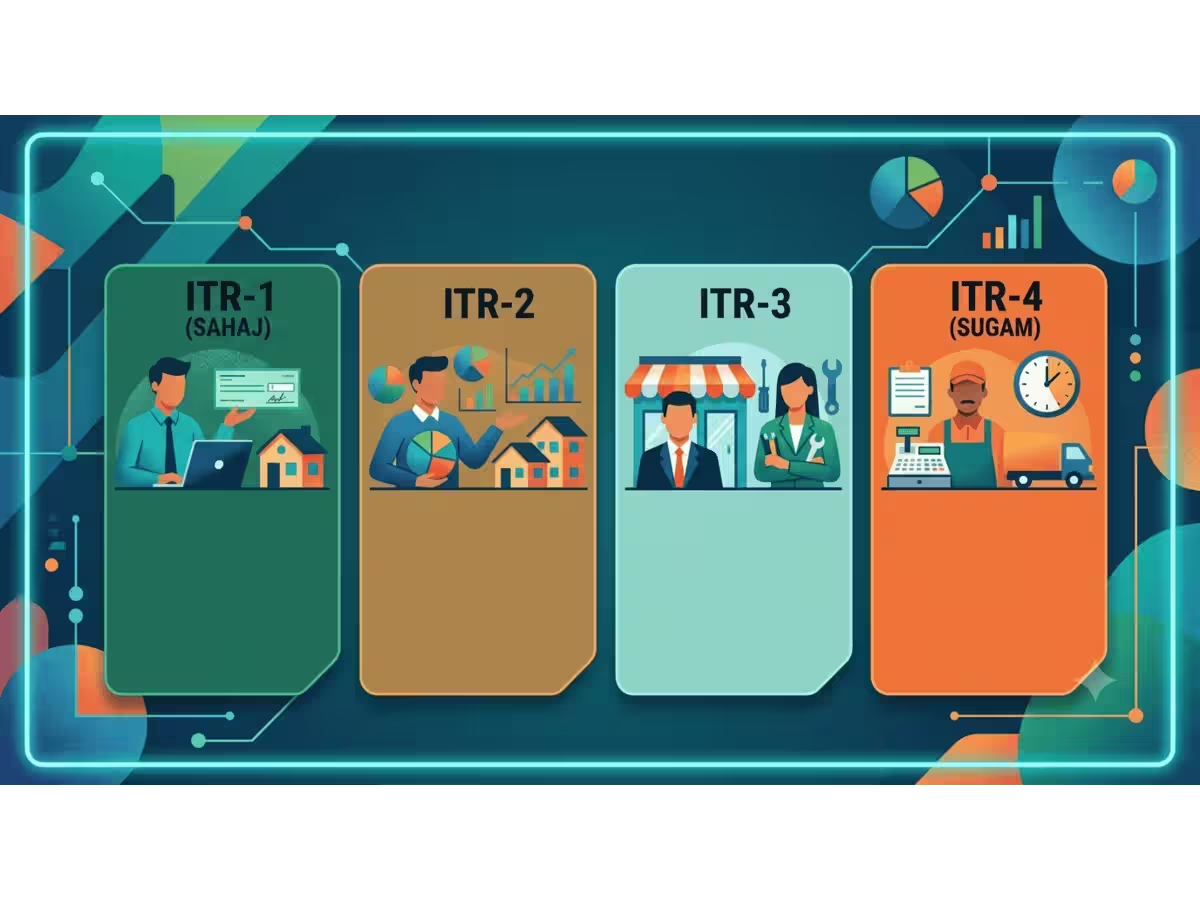
If you are confused about picking the right ITR form based on your income sources, start by identifying the type of income you have. Under Income Tax law, generally, there are five main heads of income:SalaryCapital gainsIncome from house propertyProfits and gains from business and professionIncome from other sourcesThe applicable ITR form is determined not only by the individual head of income but also by the combination of incomes, total income, residential status and other prescribed eligibility conditions.Keep reading to know more about these five heads of income and find out which ITR form is required for different sources of income.Can ITR-1 now be used to report two house property ?From AY 2026-27, ITR-1 has been expanded to allow reporting of income from up to two house properties, instead of only one property earlier. That said, the taxpayer still needs to meet all the other ITR-1 requirements, which include being a resident individual (other than RNOR), having eligible taxable income of up to Rs 50 lakh and not having any business income, disqualifying capital gains, foreign assets/income or losses that need to be carried forward. Chartered Accountant Suresh Surana says: "Where income from more than two properties is involved, or carry-forward of a house-property loss is required, ITR-2 should generally be used."Salary incomeIncome from salary includes basic salary, allowances, bonus, commission, taxable perquisites, employer-provided benefits and pension received from a former employer. Salary income necessarily requires an employer employee relationship. An eligible resident individual earning a salary, having income from up to two house properties and specified income from other sources may generally use ITR-1, provided total taxable income does not exceed Rs 50 lakh and other eligibility conditions are met. If you don't qualify for ITR-1 but don't have any business or professional income, you would typically use ITR-2. Surana says: "If salary is combined with business or professional income, ITR-3 or, in eligible presumptive taxation cases, ITR-4 would apply."House property incomeIncome generated from house property includes the annual value or rental income from a building or the land that goes with it, which is owned by the taxpayer. The taxable amount is usually calculated after subtracting municipal taxes, the statutory deduction of 30% and any eligible interest on borrowed capital. A property used for the taxpayer's own business or profession is generally not taxed under this head. For AY 2026-27, income from up to two house properties may be reported in ITR-1, as long as the other conditions are met. ITR-2 generally applies where the taxpayer has more than two properties or is otherwise ineligible for ITR-1 but does not have income from profits and gains of business or profession (PGBP income). Surana says: "If house-property income is combined with business or professional income, ITR-3 or eligible ITR-4 would apply."Business or professional incomeProfits and Gains of Business or Profession (PGBP) covers profits from a business, trade, profession, consultancy, freelancing, proprietorship, F&O trading and other commercial activities. It also includes taxable remuneration, interest, bonus or commission received by a partner from a firm. Surana says that having PGBP income plays a crucial role in choosing the correcr income tax return form: an individual or HUF having such income generally files ITR-3. ITR-4 may be used only where income is computed under the presumptive taxation provisions of Sections 44AD, 44ADA or 44AE and all its conditions, including the Rs 50 lakh total income ceiling.Capital gainsCapital gains arise from the transfer of capital assets like shares, mutual funds, immovable property, bonds, jewellery and other investments. Depending upon the nature and holding period of the asset, the gains may be classified as short-term or long-term. For AY 2026-27, ITR-1 and ITR-4 permit only eligible long-term capital gains under Section 112A up to Rs 1.25 lakh, subject to all other conditions. Surana says: "Other capital gains generally require ITR-2 where the taxpayer has no PGBP income and ITR-3 where business or professional income is also present."Income from other sourcesIncome from Other Sources (IFOS) is the residual head and includes income that is taxable but does not fall under the other four heads. Common examples include bank interest, dividend income, family pension,[1.1] taxable gifts, interest on securities, lottery winnings, betting income and certain other receipts. Ordinary interest, dividend or family-pension income may be reported in ITR-1 or ITR-4 where their respective conditions are satisfied. Surana says: "Special-rate or complex income, such as lottery, betting or race-horse winnings, generally requires ITR-2 where there is no PGBP income and ITR-3 where PGBP income is also present."The combination of incomes ultimately determines the ITR formFor example, salary, bank interest and income from up to two house properties may qualify for ITR-1 if the taxpayer satisfies its Rs 50 lakh income limit and other conditions. Adding capital gains beyond the limited Section 112A gains permitted in ITR-1 would generally shift the taxpayer to ITR-2. Salary, house-property income, capital gains and IFOS can all be reported in ITR-2 so long as there is no PGBP income. Once business or professional income is added, ITR-3 would apply. However, where the business or professional income is computed presumptively and the taxpayer satisfies all the simplified-form conditions, ITR-4 may be used.Accordingly, ITR selection must be based on the taxpayer's complete income profile rather than any one source of income. Total income exceeding Rs 50 lakh, residential status, foreign assets or income, directorship, unlisted shares, carried-forward losses, special-rate income and similar disclosures may make ITR-1 or ITR-4 unavailable even if the nature of income otherwise appears to be covered.
Confused about ITR forms? Here's how to pick the correct ITR for AY 2026-27 - The Economic Times
How to select the right ITR form based on your income for AY 2026-2027
916 words~4 min read