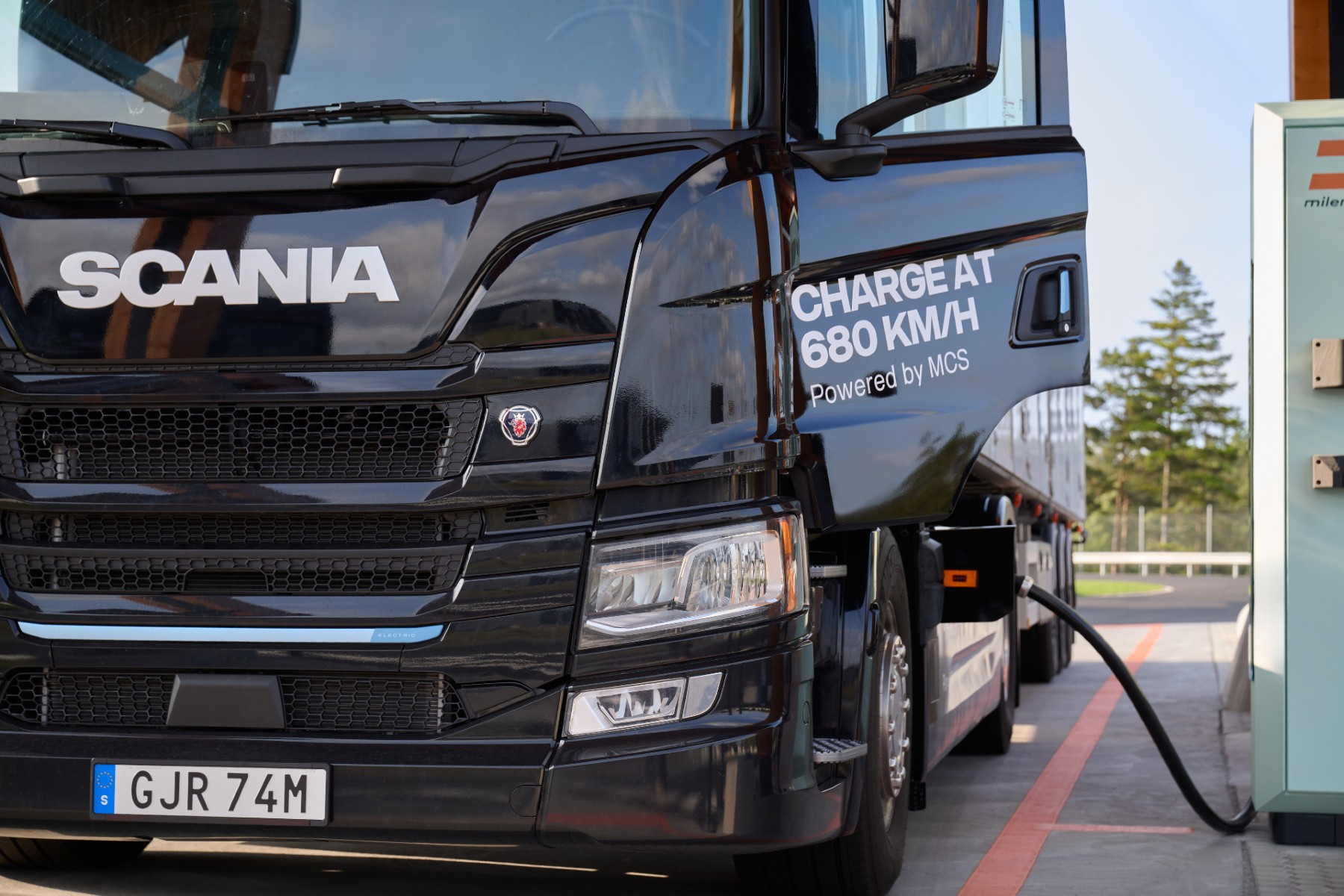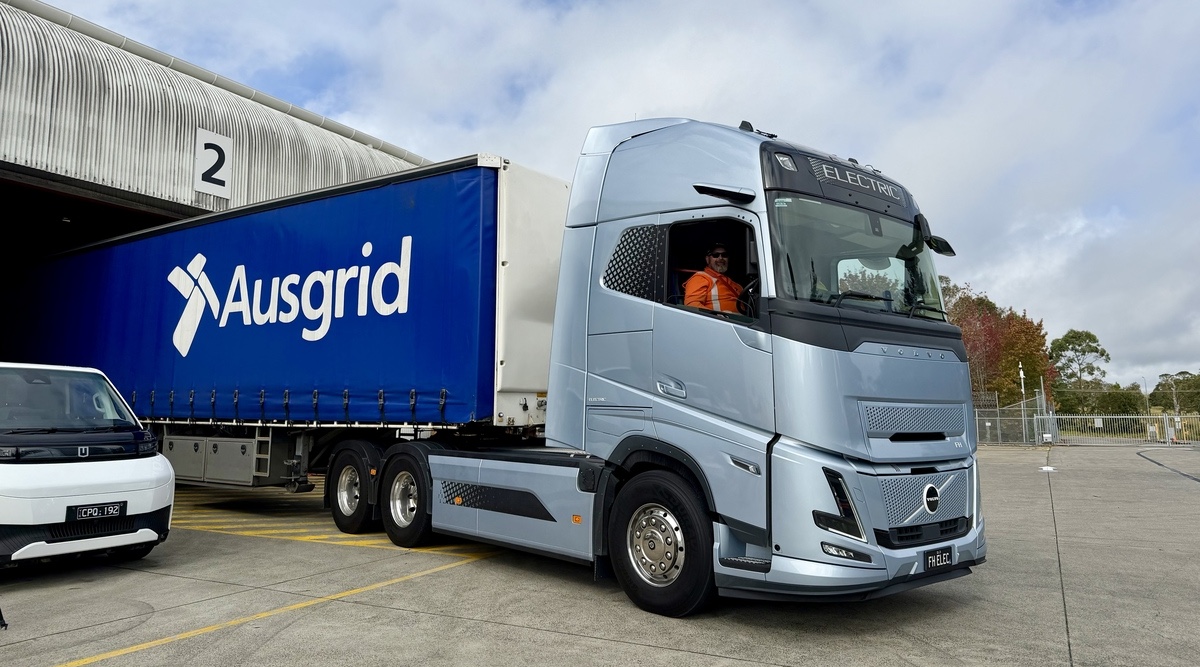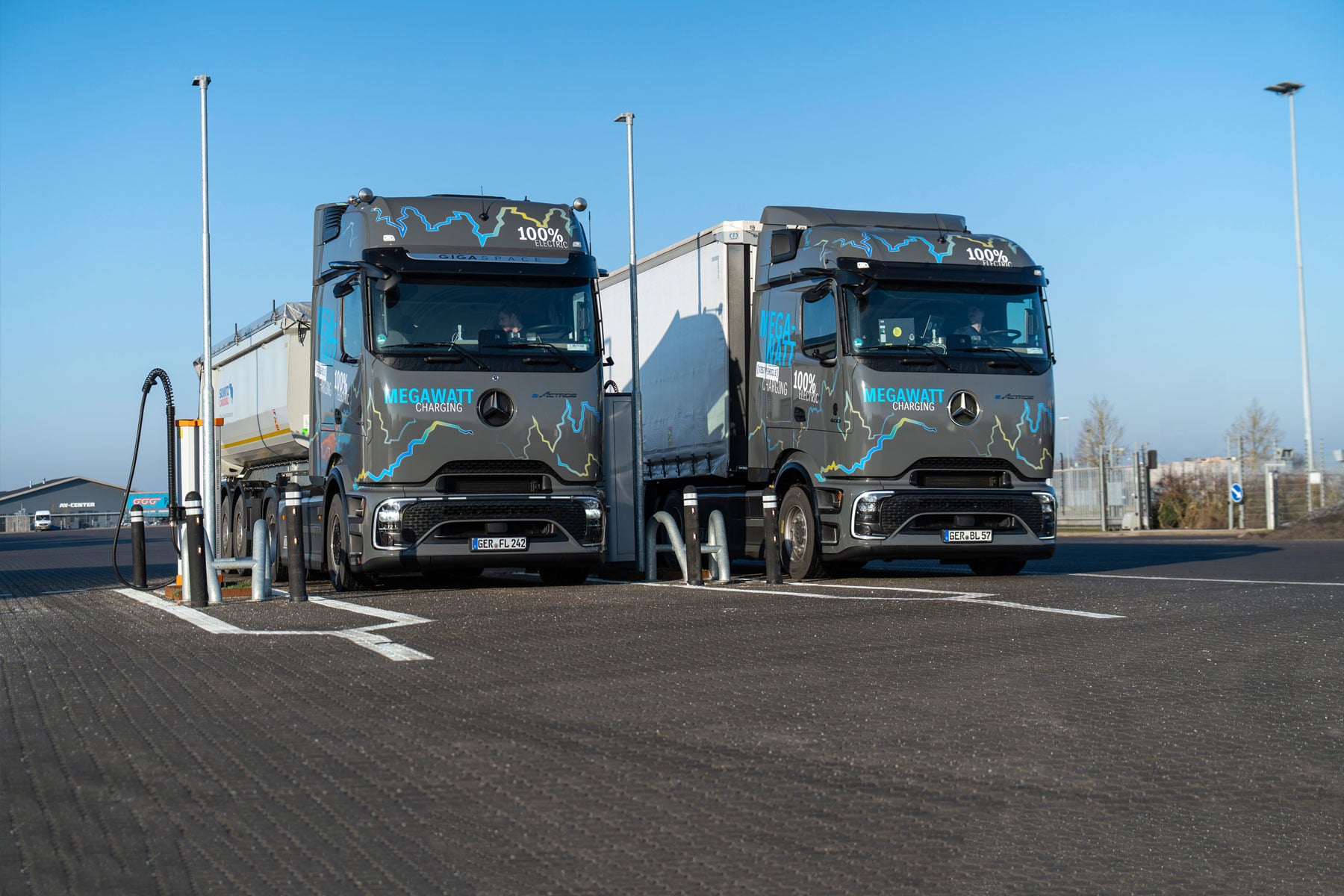
With the first MCS-compatible trucks and charging stations now entering commercial service, it may seem premature to ask whether the Megawatt Charging System (MCS) will remain the dominant charging interface for heavy-duty transport.
MCS has only just moved beyond the development stage and is now entering the market while the final steps of international standardisation are being completed. Truck manufacturers are launching MCS-compatible vehicles, charging equipment, cables and vehicle inlets, and the first truck charging hubs are already operating with installed hardware. With technical specifications converging globally, MCS appears well on its way to becoming the standard interface for ultra-fast charging of battery-electric heavy-duty trucks.
However, alternative concepts are already emerging. At Power2Drive Europe trade fair in Munich in June, several companies presented solutions designed either to exceed the capabilities of MCS or to eliminate the conventional charging connector altogether. Start-up akroVA, for example, demonstrated a manually operated charging plug rated for up to six megawatts. At the same event, the Fraunhofer Institute for Transportation and Infrastructure Systems (IVI) unveiled an automated underbody charging system for electric trucks that is designed to deliver up to 4.5 megawatts.