Not long ago, designers relied on AI mostly for generating images or experimenting with quick concepts. Today, AI design tools can generate complete user interfaces, create interactive applications, write production-ready code, build marketing assets, and even help developers move from a Figma file to a working product much faster than before.
That rapid evolution has also created a new problem.
Search for AI design tools, and you'll find hundreds of recommendations. And looking at feature lists alone doesn't tell you which one fits your requirements.
That's why I tested them myself.
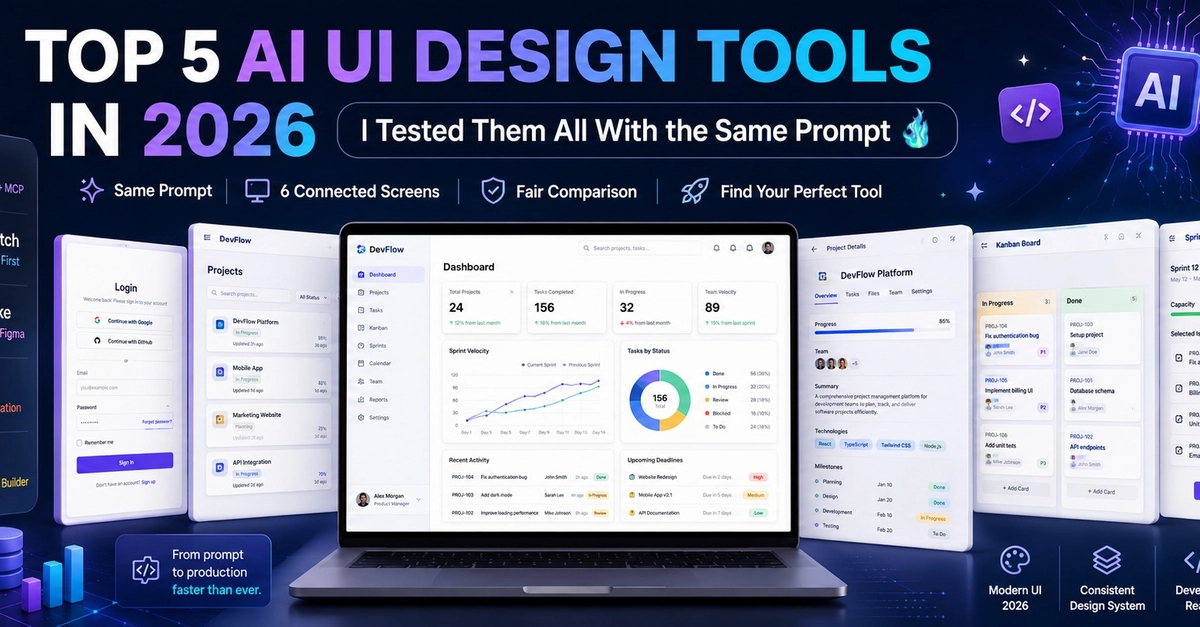
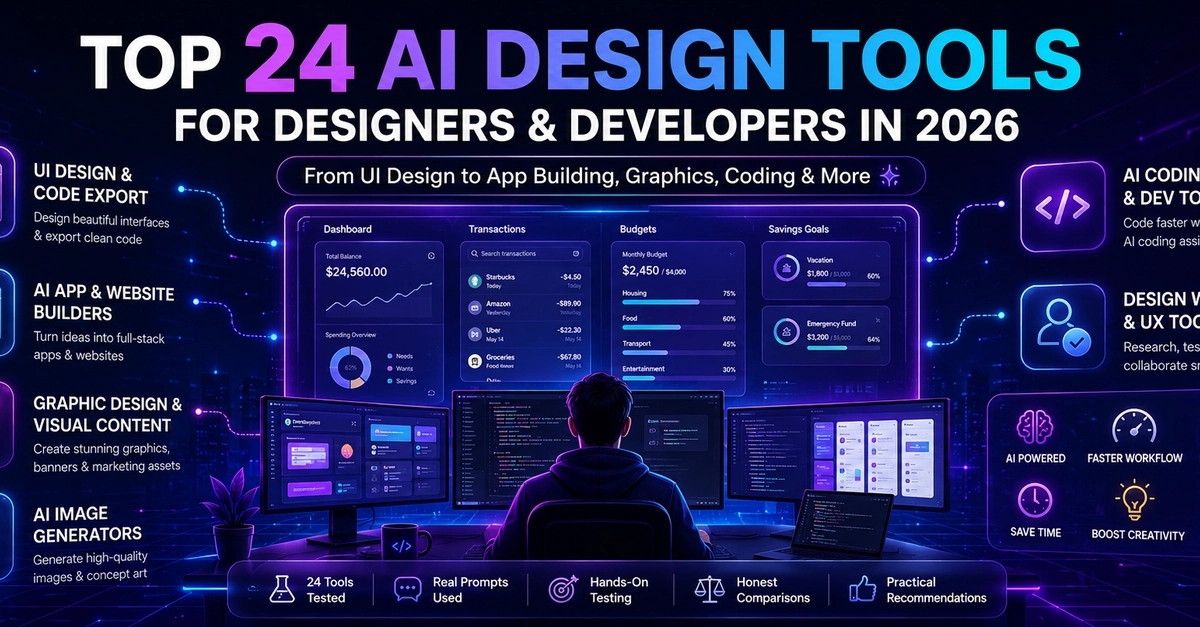
Instead of creating another roundup based on documentation, I spent time using 24 popular AI design tools across different categories. Whenever tools shared the same purpose, I evaluated them using the same prompt. For workflow-focused platforms that solve different problems, I created individual prompts that reflected their primary use case.