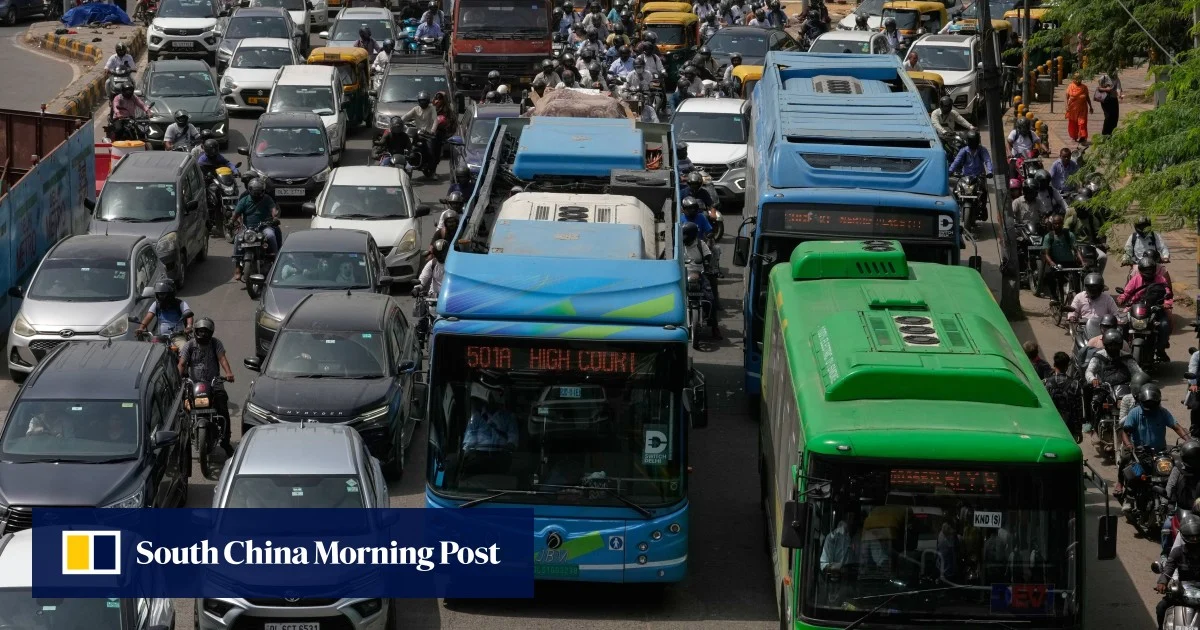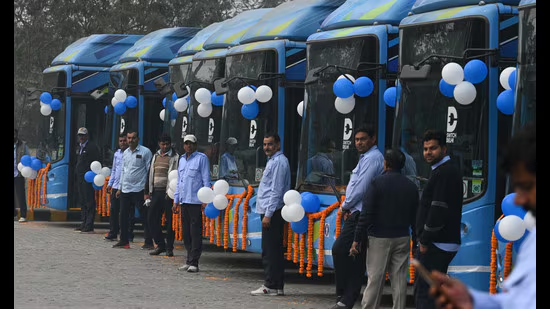
(representative image) While vehicle adoption has gathered pace, progress in electric bus deployment remains limited. Letters of Confirmation of Demand and Quantity have been issued for 13,800 e-buses across Delhi, Bengaluru, Hyderabad, Mumbai, Ahmedabad, Pune and Surat.
| Photo Credit:
PTI/R SENTHILKUMAR
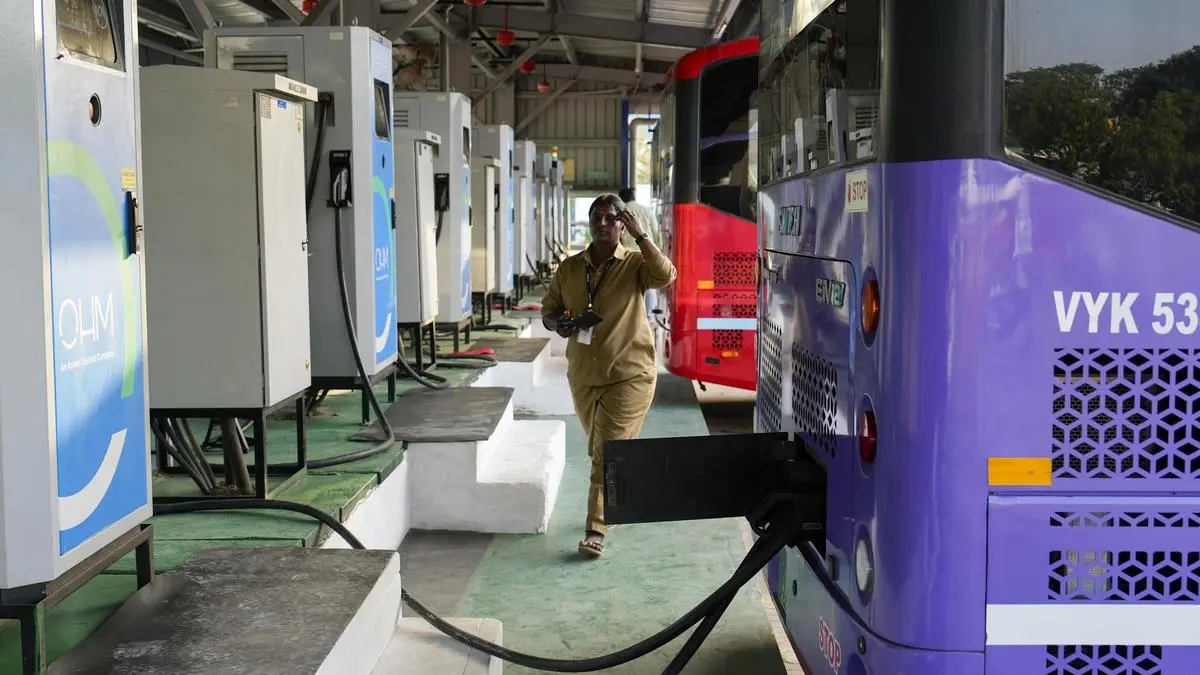
India’s flagship PM E-DRIVE scheme has significantly accelerated electric vehicle adoption, supporting more than 23 lakh electric two- and three-wheelers and helping EV penetration rise from 0.7 per cent in FY20 to 8.2 per cent in FY26. However, the latest progress update from the Ministry of Heavy Industries reveals slower implementation across key supporting infrastructure, including electric buses, charging networks and battery manufacturing.Data released by the ministry on Tuesday showed that 23.23 lakh electric two- and three-wheelers received incentives between April 1, 2024 and July 22, 2026, with manufacturers reimbursed ₹2,281.94 crore. Of this, electric two-wheelers accounted for 20.57 lakh vehicles and ₹1,505.3 crore in incentives, while 2.61 lakh L5 electric three-wheelers received ₹769.02 crore. Another ₹7.61 crore was disbursed for 5,082 e-rickshaws and e-carts.The two-wheeler segment has achieved around 83 per cent of its target of 24.79 lakh vehicles under the scheme, making it the strongest-performing component of PM E-DRIVE. Incentives for electric two-wheelers are due to end on July 31, 2026, although the government is considering an extension. Any continuation would require fresh budgetary support as the schemes ₹10,900-crore allocation has already been committed.While vehicle adoption has gathered pace, progress in electric bus deployment remains limited. Letters of Confirmation of Demand and Quantity have been issued for 13,800 e-buses across Delhi, Bengaluru, Hyderabad, Mumbai, Ahmedabad, Pune and Surat. An additional 200 buses have been sanctioned for Jammu & Kashmir, taking total allocations to 14,000 against a target of 14,028.However, concession agreements have been signed for only 1,515 buses so far, comprising 915 in Hyderabad and 600 in Surat. That represents just about 11 per cent of the buses allocated to the seven major cities, highlighting the gap between allocations and actual deployment. Successful bidders must still secure prototype approvals before buses can be rolled out.The bus and truck segment is also facing supply-chain challenges, with manufacturers seeking relaxation in localisation norms because of difficulties sourcing heavy rare-earth magnets used in traction motors.The ministry acknowledged that no formal assessment has yet been conducted to evaluate the scheme’s impact on fuel consumption, emissions reduction or EV adoption. It said, however, that the sharp rise in EV penetration reflects growing acceptance of electric mobility. Manufacturers registered under PM E-DRIVE have also localised their models and secured compliance certification under the Phased Manufacturing Programme.Progress in charging infrastructure remains at an early stage. Of the ₹2,000 crore earmarked for public charging facilities, ₹689 crore had been approved by July 1 for deploying 6,562 chargers through three oil marketing companies and nine state governments. The 6,562 chargers, however, have only been sanctioned and should not be treated as installed or operational. As of March 24, no funds had been disbursed for charging infrastructure under the scheme.The government is simultaneously attempting to build domestic battery manufacturing capacity. On July 29, the ministry held a pre-bid meeting for the final 10 GWh of capacity under the ₹18,100-crore Advanced Chemistry Cell (ACC) Production-Linked Incentive scheme, attracting 29 prospective bidders. Yet implementation remains slow. While 40 GWh of the scheme’s 50 GWh target has already been awarded, official data show only 1 GWh of installed capacity, and no beneficiary had claimed incentives as of February 2026.Published on July 30, 2026