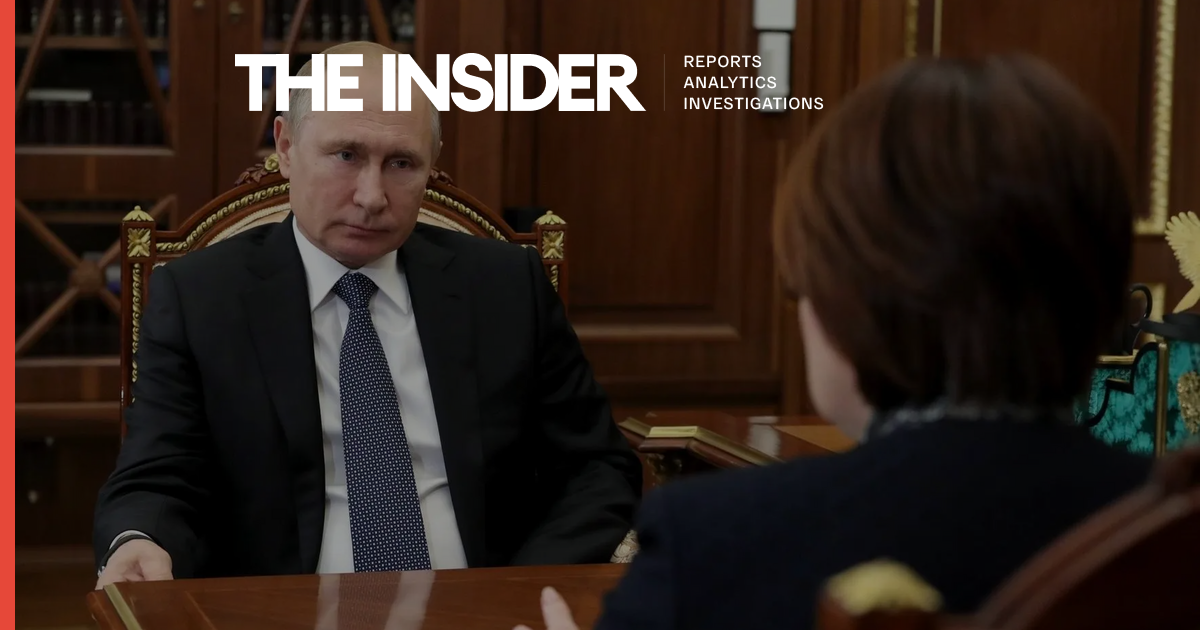
For the first time since September, last month the Russian budget posted a small surplus — albeit thanks to the lagging effect of the brief oil price spike caused by the war in the Persian Gulf. Nevertheless, the overall deficit for the first half of the year remains at a record high. The authorities are scrambling for money to fund ever-growing military expenditure (46% of the budget) and for ways to rewrite the rules of public finance in their favor. The State Duma has given the government the green light to do whatever they see fit with state finances, sharply reducing the system’s predictability and leaving markets bewildered. Meanwhile, the Bank of Russia has definitively refused to lower its key rate and is unlikely to let the Finance Ministry borrow cheaply. All of this has translated into a falling stock market, declining investment, and a growing share of loss-making enterprises.Contents1.Why the budget deficit spooked the head of Central Bank2.The law of lawlessness3.Oil and gas revenues: the Persian Gulf inferno brought no warmth4.Other revenues: the tax squeeze at full force5.The military spending tsunami is being concealed6.What to spend and where to borrowWhy the budget deficit spooked the head of Central BankThe Bank of Russia has slowed its key rate cuts: between June and September 2025, the rate was reduced from 21% to 17% in three steps of one to two percentage points each. Then, from October 2025 to May 2026, five more cuts followed, each of 0.5 percentage points. However, this past June 19, the reduction was the smallest yet — just a quarter of a point, from 14.5% to 14.25%.Russian financial markets had expected more, and on June 22 the Moscow Exchange index plunged 4.23% in a single day, marking the market’s worst performance since the fall of 2022. By July 7, the index had dropped to 2,190 points, culminating a fall of 20% in just three months.The Russian Central Bank explains its actions using the theory of aggregate demand and aggregate supply: since the government’s military-heavy budget deficit is increasing aggregate demand beyond expectations, the Bank of Russia must keep the money supply in check by being more conservative with key rate reductions. As Bank of Russia governor Elvira Nabiullina put it in her statement:“Fiscal policy over the next three years will be more stimulative than what was built into our baseline forecast… The contribution of fiscal policy to money supply growth remains elevated and, given the revision of budget parameters, will continue to exceed our previous assumptions. If lending growth continues at such a high rate under these conditions, this may require us to pursue a tighter policy than envisaged in the baseline scenario. The combined impact through the fiscal and credit channels has already pushed money supply growth to the upper bound of our expectations, and even slightly beyond.”Nabiullina’s statement that fiscal policy will be “more stimulative” for a full three years means, in effect, that the Central Bank expects the government will run deficits. So how long will the federal budget’s troubles drag on?The trends in Russia’s federal budget are extremely unfavorable. From January to June 2026, revenues totaled 18.6 trillion rubles, with a year-on-year increase of 5.8%. Expenditure, however, amounted to 24.4 trillion rubles, an increase of 16%. The first-half deficit came to 5.7 trillion rubles — 70% more than the 3.4 trillion accumulated over the same period in 2025. It also exceeded the full-year 2026 deficit target by a factor of one and a half.However, May and June were far better than the first four months of the year. From January through April inclusive, at least 1 trillion rubles were added to the federal deficit each month. In May, however, the deficit amounted to just 130 billion rubles, and in June, for the first time since September 2025, federal revenues exceeded expenditure, with the surplus coming in at 280 billion rubles. The June fiscal success is striking when compared with the previous year — when a deficit of 660 billion rubles was recorded. Over the whole of 2025, there were only three months with a budget surplus: March, August, and September. In 2026, March delivered a trillion-ruble shortfall, even if June came in positive.For the full year 2025, the federal deficit was 5.645 trillion rubles — five times the figure initially set by the budget law. As a share of GDP, however, this amounted to just 2.6%.The law of lawlessnessA great deal of uncertainty has been introduced by Russia’s hastily adopted 2026 law on the special features of the budget process (No. 195-FZ of 26.06.2026). Its draft was submitted by the government on June 8; that same day, it passed through the relevant committee and the legal department of the State Duma apparatus with a recommendation to adopt it immediately, without amendment. By June 10, the document had already been passed in its first reading, with no votes against (380 in favor, 70 did not vote). The law’s main purpose is to allow the Finance Ministry to adjust the budget process quickly, without the need for additional parliamentary approval or undue public scrutiny. This applies above all to the size of the deficit and borrowing levels (article 5 in the table below).Provisions of Federal Law No. 195-FZ of 26.06.2026The general thrust of all the provisions included in the law is clear: to expand the government’s powers while weakening legislative and parliamentary oversight. The government will decide for itself how much to spend and borrow, what liability standards should apply to shipbuilders who miss delivery deadlines, and how much and on which products the technology levy should be charged.Many of the measures are presented as temporary and short-term, applying only in 2026 or even for specific months only. For example, the change relating to alcohol and spirit excise duties is set to apply from August 1 to Dec. 31 of this year. The technology levy was initially due to be introduced on Sept. 1, but it has now been postponed to Dec. 1. It is also unknown what revenue, expenditure, and deficit figures will now be considered target levels for the federal budget (or how many times these benchmarks may change over the remaining six months of the year).With a State Duma entirely subservient to the Kremlin, it would not be difficult to stage a formal ritual every month in which the government submits amendments to the current year’s budget and parliament rubber-stamps them without scrutiny. However, such ceremonies appear to have been deemed tedious — and perhaps even politically dangerous. A less public process for revising budgetary targets will attract less attention, raise fewer questions, and perhaps do less visible damage to the authorities’ credibility.A less public process for revising budgetary targets will do less visible damage to the authorities’ credibility
No-holds-barred budget: With finances in “manual control” mode, the Kremlin is set to plunge the Russian market into uncertainty
For the first time since September, last month the Russian budget posted a small surplus — albeit thanks to the lagging effect of the brief oil price spike…
3,401 words~15 min read