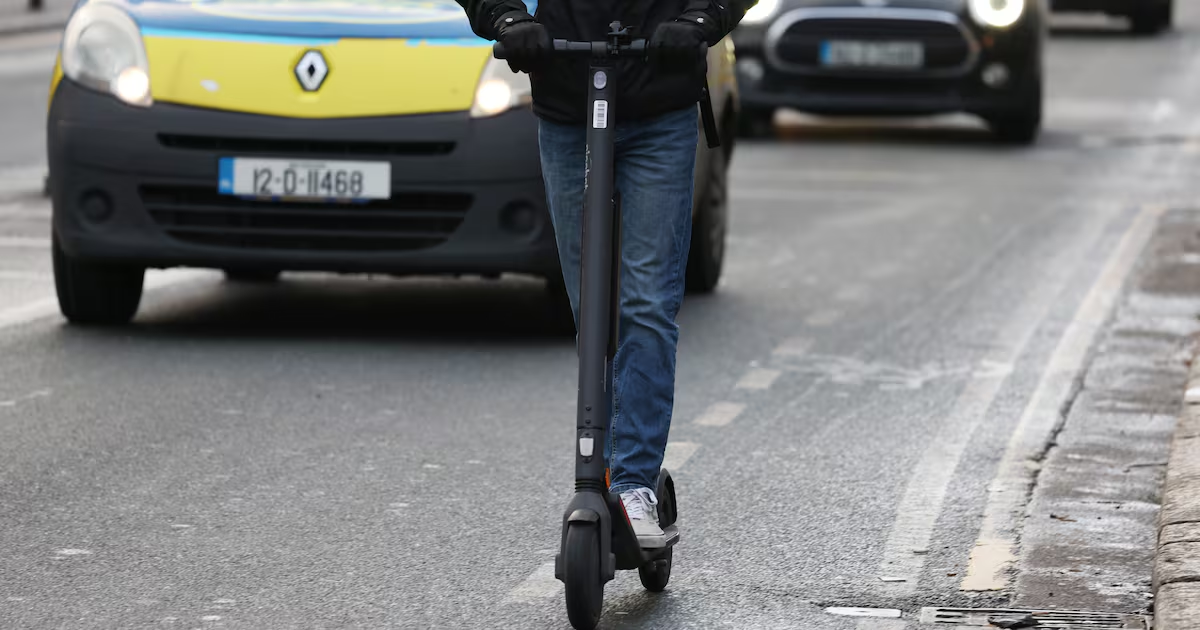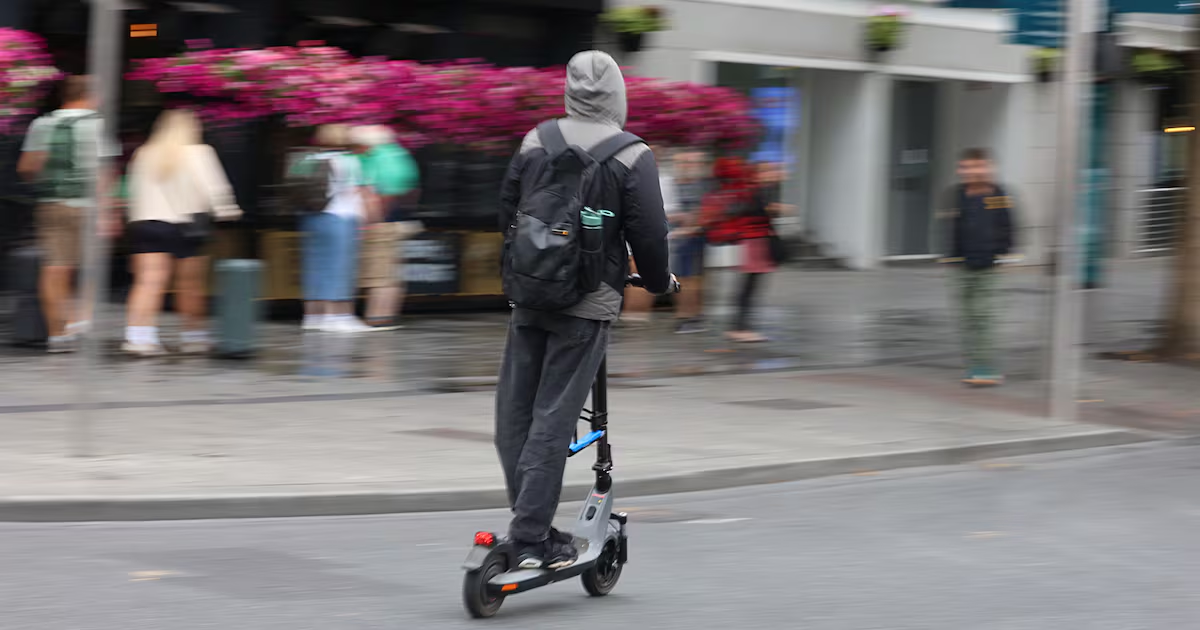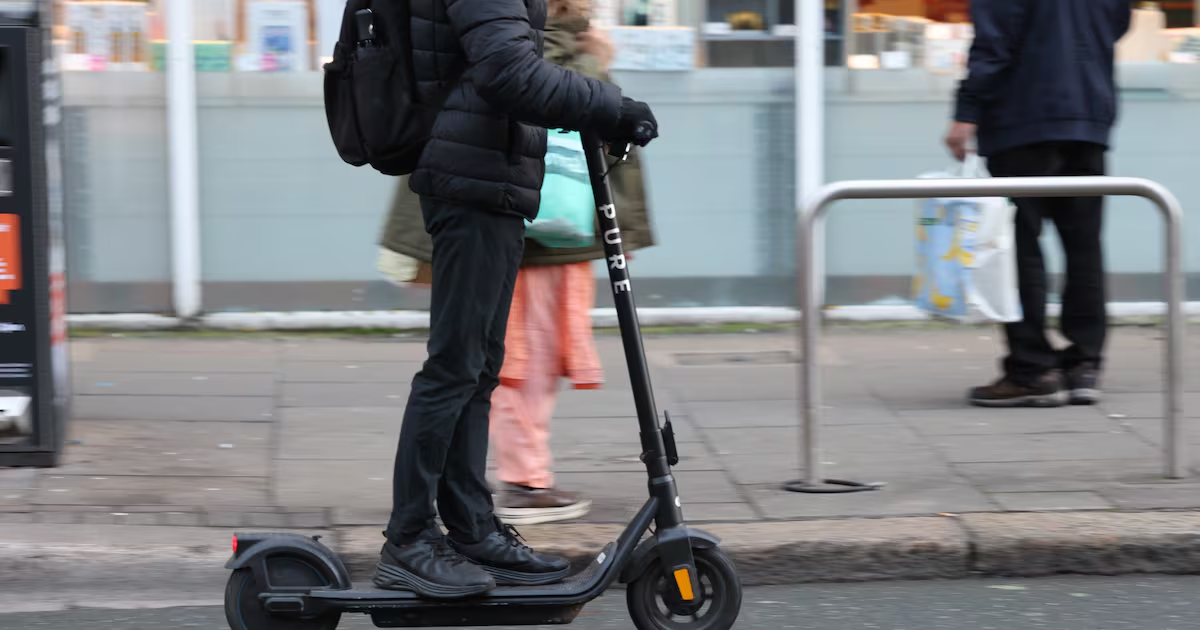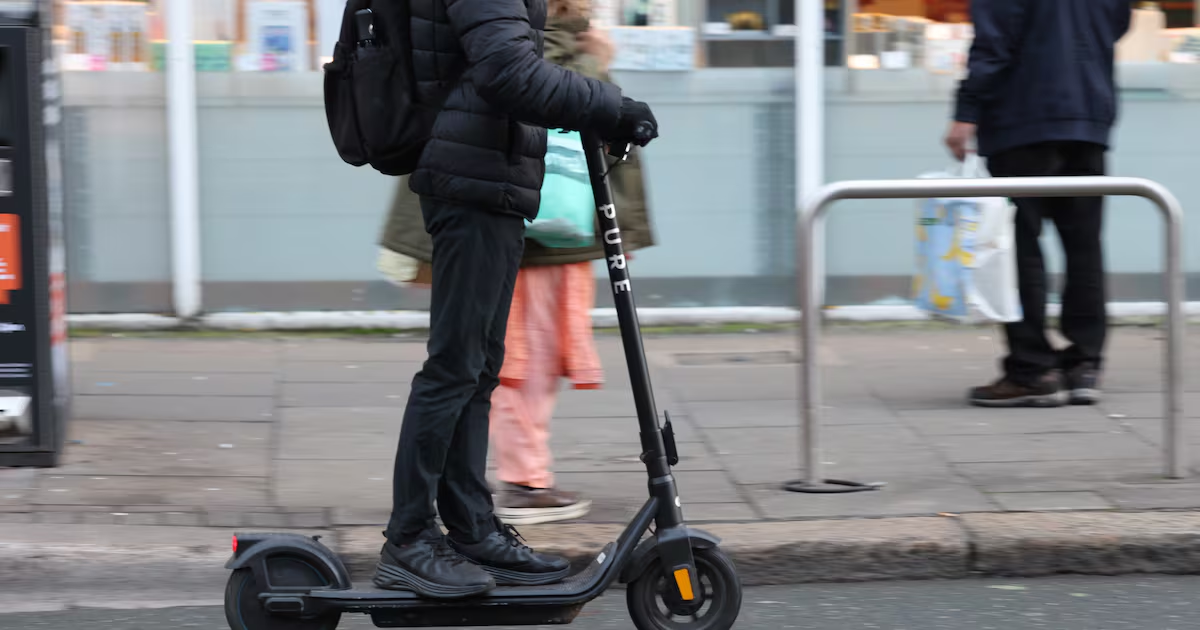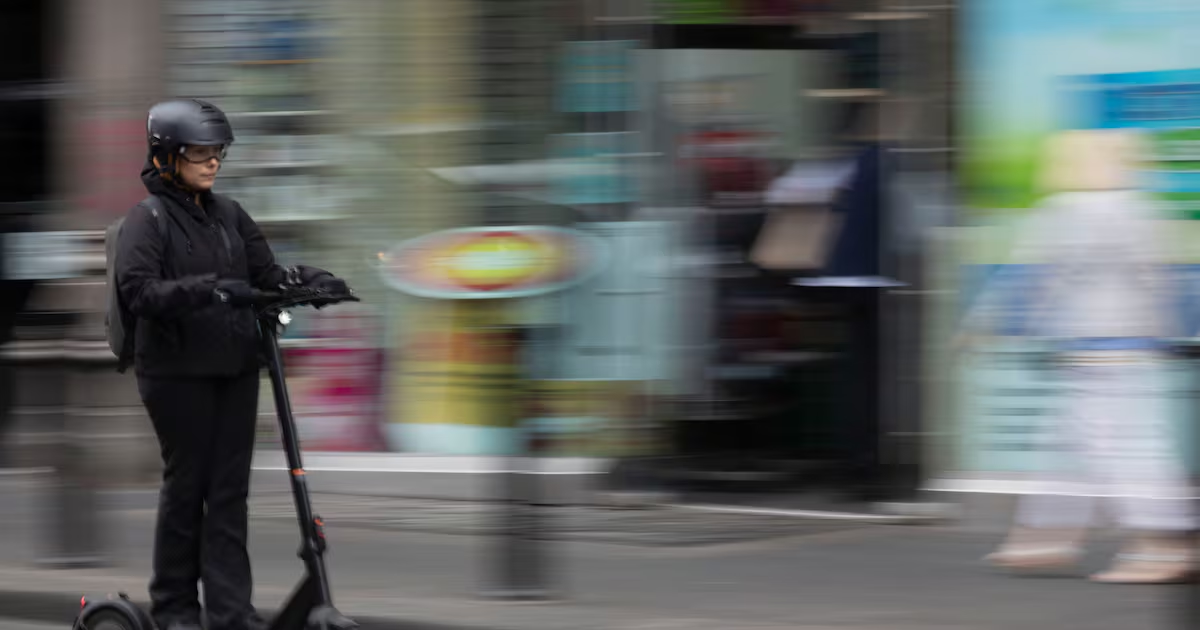
Measures brought to the Cabinet on Wednesday on e-scooters – in the aftermath of a number of tragedies and serious injuries to children – stop short of a de-facto ban, but will make e-scooter more difficult to access, particularly for children. The Government plans to raise the minimum age from 16 to 18 and make helmets and hi-vis wear mandatory. It will increase fixed-charge notices for e-scooter offences to €100 and double the first-day release/storage fee for detained e-scooters from €125 to €250. These initial announcements of the measures – which will come into force soon – have already had some effect, with some retailers introducing stricter rules on selling e-scooters. One, Decathlon, said it would stop selling them in Ireland.More than a third of paediatric traumatic brain injury admissions to CHI at Temple Street this year were related to e-scooters, and these admissions increased by 50 per cent in the previous 12 months, so it’s clear action was needed.E-scooters are, however, a sustainable mobility alternative and used by an estimated 4 per cent of adults on a regular basis.In any debate about limiting their use, it is worth considering what modes of transport would have been used had e-scooters not been available and the climate impact of that.International research demonstrates that many of the trips replaced by e-scooter trips tend to be walking and cycling. But the Road Safety Authority conducted a survey in 2024 and it showed that 51 per cent of respondents reduced or replaced car trips with an e-scooter journey. Likewise, 65 per cent of the respondents said they had replaced a journey on foot or bicycle with an e-scooter trip. More research is required to understand which modes of transport have been substituted for an e-scooter trip, but there may be a considerable environmental benefit to the switch from car to e-scooter.One of the most effective ways e-scooters help reduce emissions is when they are used with public transport. Typically, this involves using the scooter at the first mile and the last mile of a trip, making access to public transport easier and quicker. This combination of modes has the potential to increase the range and coverage of public transport and achieve a greater shift from the private car. But since 2024 the National Transport Authority has banned e-scooters from buses, trains and trams in Ireland. This makes it extremely difficult to use different modes in combination as happens in other countries. The primary reason for this ban relates to potential fires due to damaged batteries. This is an example of how well-meaning regulations can interfere with a mode of transport reaching its full potential. More imaginative ways of integrating scooters into our public transport network should be considered, including safe and secure parking at public transport terminals.Internationally, e-scooters are used extensively through shared schemes. In the early 2020s, several cities introduced shared e-scooter schemes to help reduce congestion. However, the schemes became controversial and ultimately cities including Madrid, Melbourne, Toronto, Paris, Barcelona and Brussels abandoned them. The main objections involved poor parking practices and the effect on the built environment when e-scooters were abandoned on busy streets.To date, the only substantial trial of a shared scheme here in Ireland is in Wexford town. Its results suggest shared schemes may have potential in this country – however, like other shared schemes internationally, critics tend to focus on the safety and security impacts. Lessons need to be learned from the experience of Wexford and other international locations, and a full public consultation should also be undertaken before there is any extension of the scheme here.Dún Laoghaire-Rathdown is planning to introduce a network of 73 mobility hubs, which will include e-scooter parking, car-share infrastructure and a shared e-scooter scheme. A public consultation on this plan ended on July 3rd. Implementing the new rules as part of the shared scheme could be challenging – new rules around helmets and hi-vis may be difficult to implement in a shared scheme.While e-scooters have the potential to reduce car usage and help curb emissions, most of the recent debate focuses on how to ensure they can be used safely – which is understandable given the recent CHI/Temple Street traumatic brain injury figures.Other countries have a mandatory requirement for helmets including Italy, Greece and Croatia. Others have stricter rules around the use of e-scooters: in Germany and in Italy they must be registered and all users must have third-party insurance. Other countries also have restrictions around speeds; in Italy all scooters must have amber flashing lights to indicate turning.Internationally, most countries have regulations on the age at which people can access e-scooters, but few have done what Ireland is planning to do in banning under-18s from using one. Most countries tend to have 16 as the age limit. Several have restrictions on where these scooters can be used.Will the new guidelines around the use of e-scooters have the desired effect? The key here will be the resources that are used to enforce the new regulations. New rules can only have an impact if they are enforceable – and if gardaí, retailers and local authorities know what they are enforcing and have the powers to do so.Collecting data on how the policy change affects the use of e-scooters is also key to ensuring that transport policy is evidence-based. Understanding mobility patterns is vital to measuring the success of these new regulations.While the narrative has moved away from an outright ban of e-scooters, we still must evaluate their use in the same way as we would any other mode of transport. Do they fit within our climate action plan? Can they reduce emissions? What impact can they have on congestion? Concerns that e-scooters will simply end up replacing walking and cycling trips – which are healthier and involve zero emissions – are worth considering, but ultimately e-scooters should be seen as providing another sustainable transport option.There is no getting away from the shocking figures from the CHI/Temple Street traumatic brain injury unit. In this context, the new regulations are needed and bring us closer in line with our international peers. But e-scooters can offer an alternative to the car and complement public transport. We must not lose sight of the role they can play in offering a sustainable mobility solution.Brian Caulfield is professor in Transportation at Trinity College Dublin
Brian Caulfield: We shouldn’t lose sight of the fact that e-scooters are a sustainable transport option
Battery-powered scooters help cut emissions by replacing car journeys and when used with public transport
1,055 words~5 min read