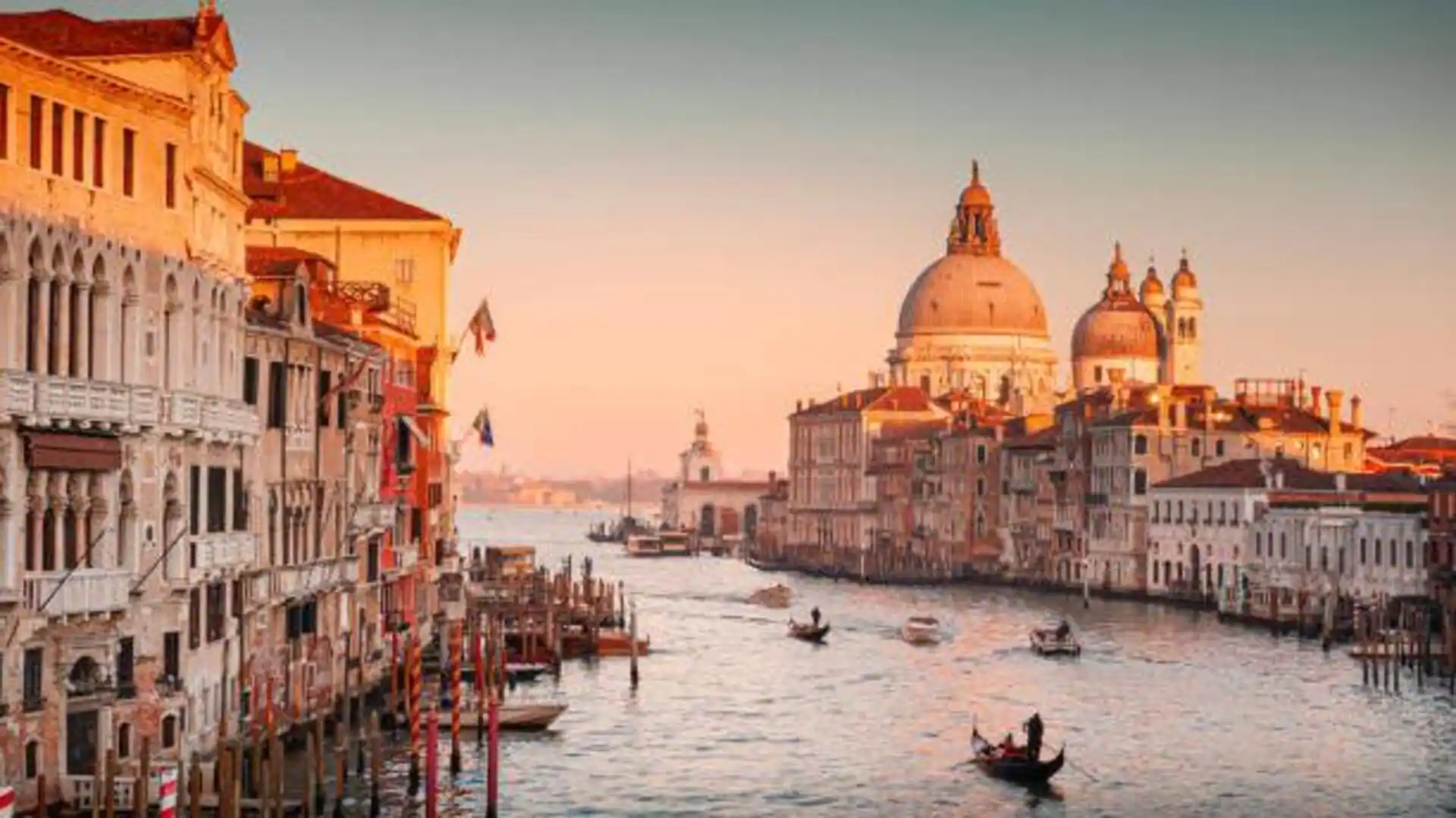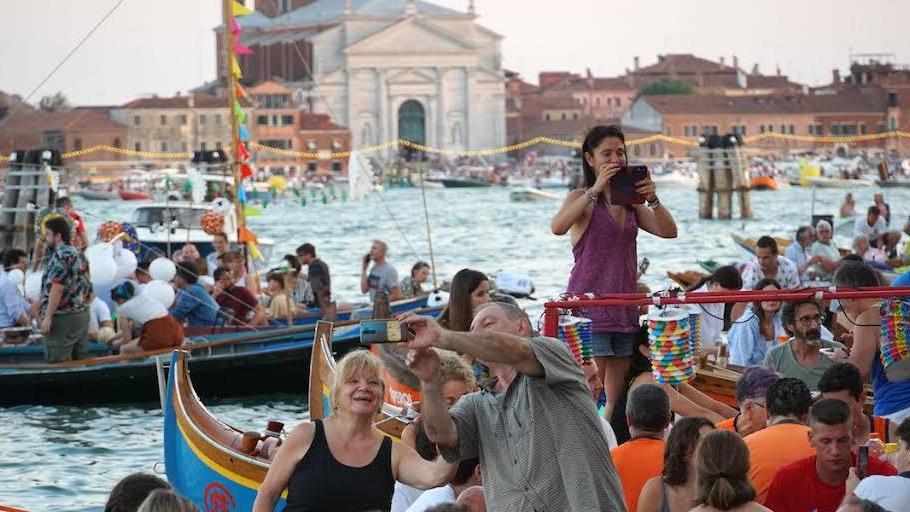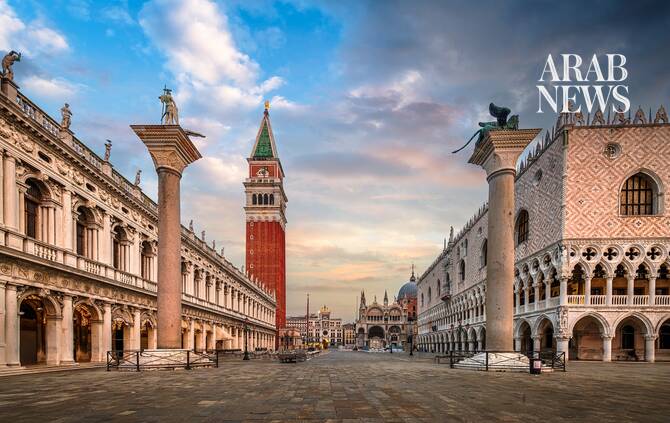
VENICE: The misty night sky sprinkled droplets of rain that splashed the mirrored image of hundreds of rushed feet across the pavement, as boats bobbed to greet me on my first trip to Venice. The UNESCO World Cultural Heritage site looked like a moving postcard.
Venice was built on water as a strategic refuge. In the 5th and 6th centuries, fleeing barbarian invasions across the crumbling Roman Empire, mainland Italians sought safety in the marshes of the Venetian lagoon, where the shallow, muddy waters provided a natural defense that horse-borne attackers could not penetrate. This architectural marvel — capital of the Veneto region, and affectionately known as the Eternal City — was built on millions of petrified wooden piles.
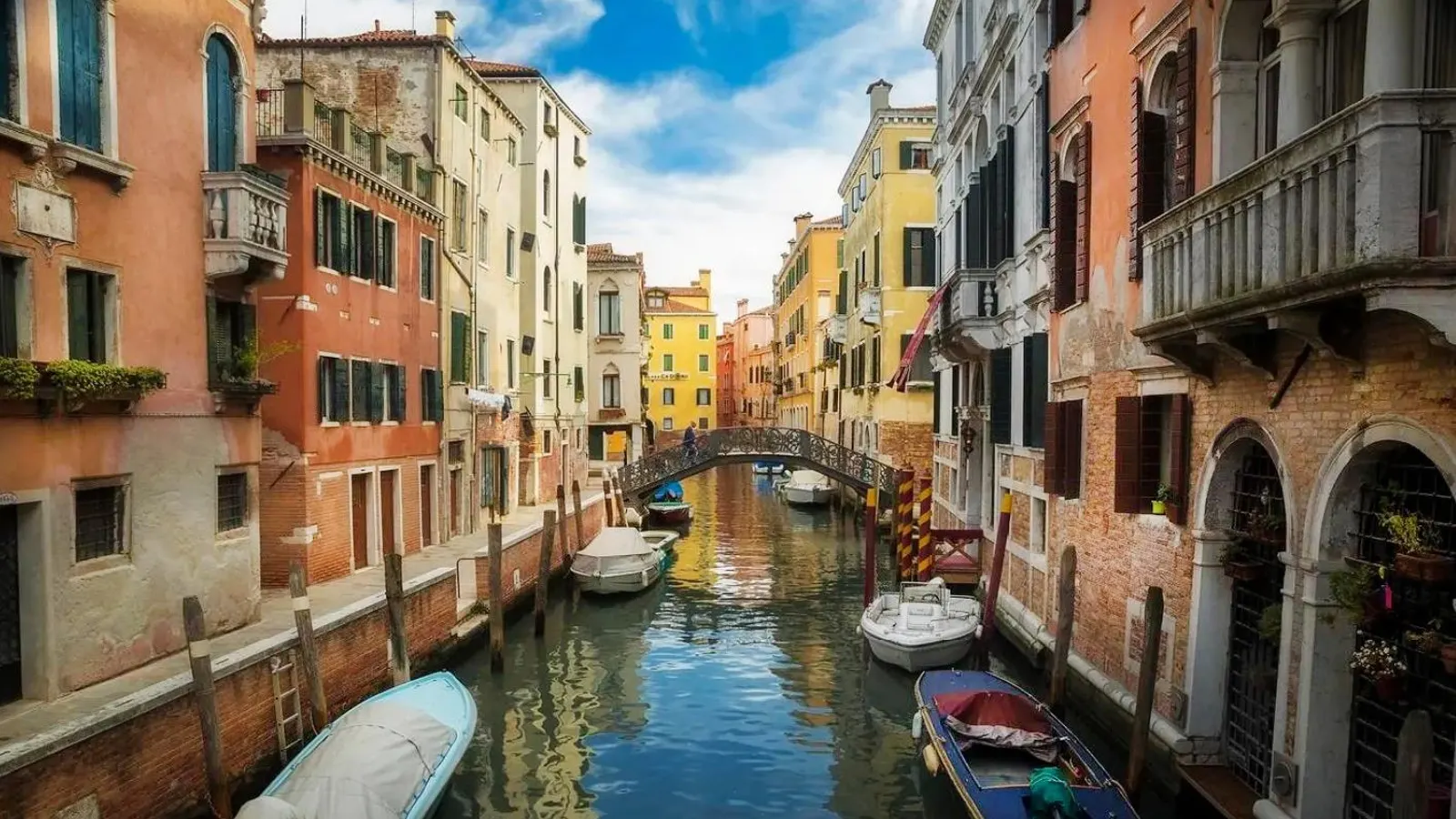
A bridge crosses a waterway in Venice. (Shutterstock)
A floating city of over 100 islands, separated by expanses of open water and more than 150 canals all connected by upwards of 400 bridges, Venice functions without cars or roads. Naturally, water is everywhere and I expected that would mean a certain unpleasant smell would permeate the city. Thankfully, that was not the case.
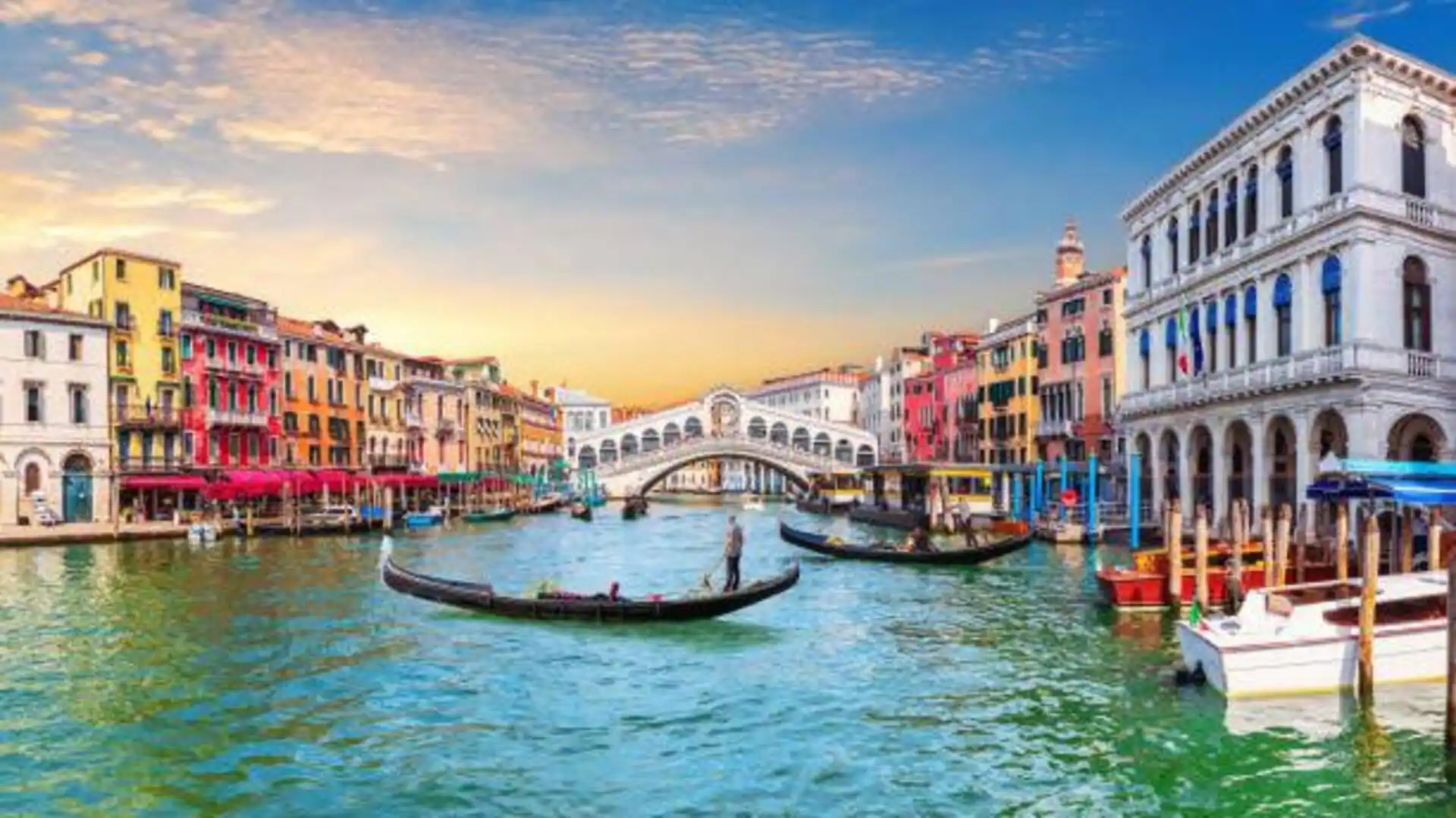
There are several transport options. The water taxis are speedier but pricier than the vaporettos (water buses). And yes, you will see plenty of gondolas, the iconic flat-bottomed boat helmed by men in striped shirts with a single oar. They might make for an eye-catching social-media post, but there’s a reason you won’t see the locals using them; at around €90 for a 30-minute journey — rising to €110 at, or post-, sunset — they’ll eat into your holiday budget fast.