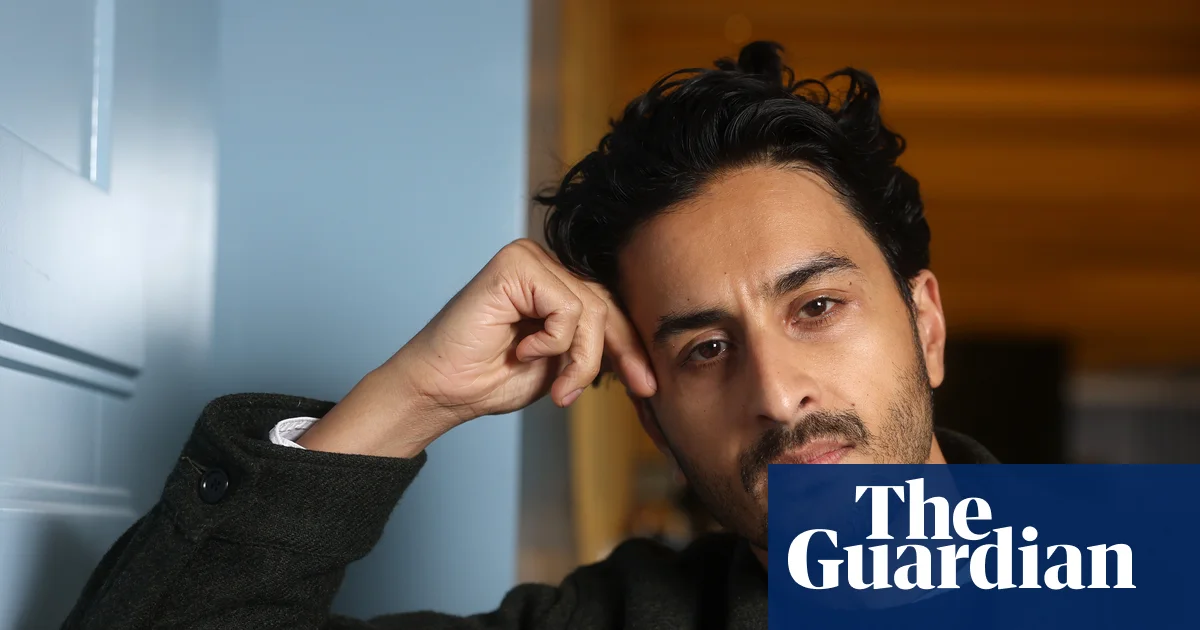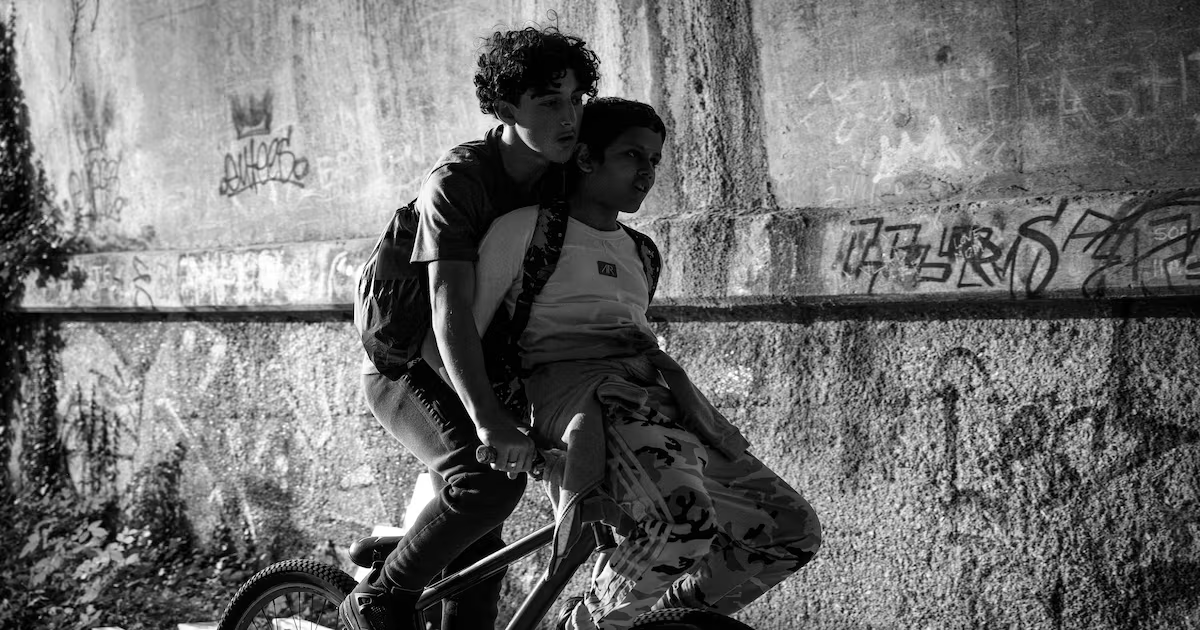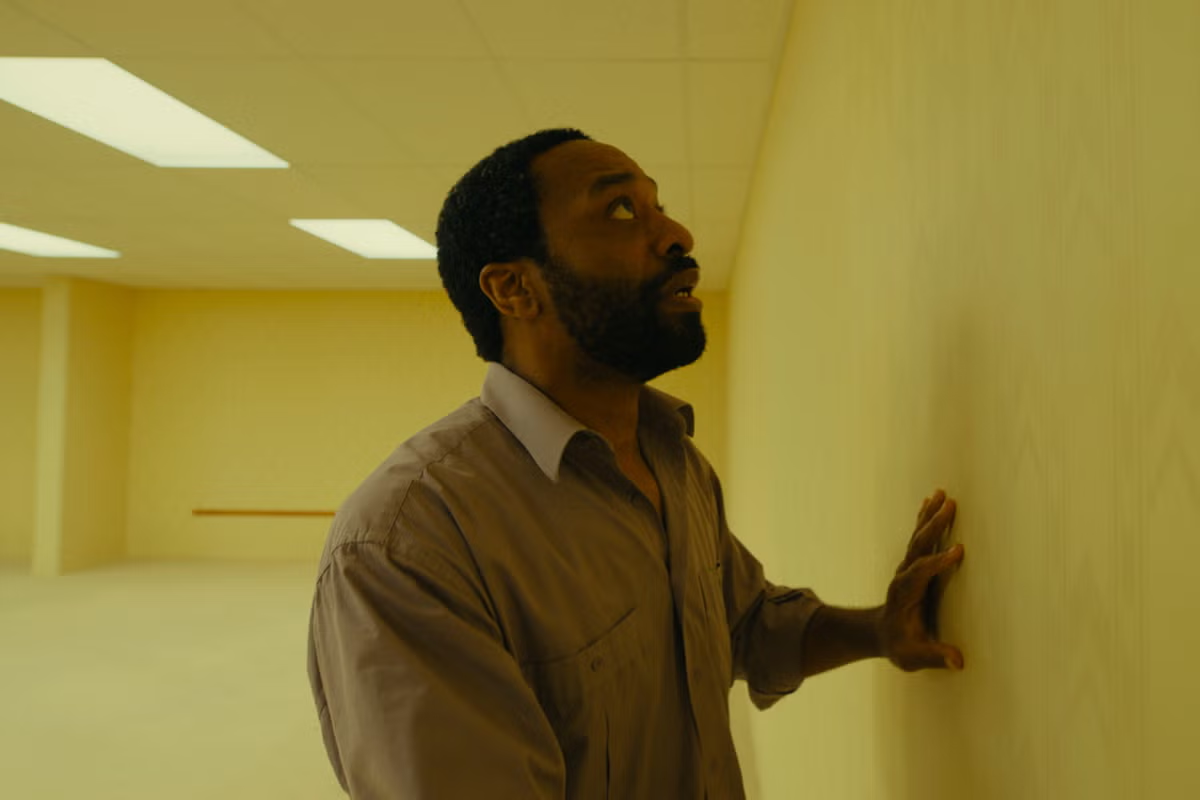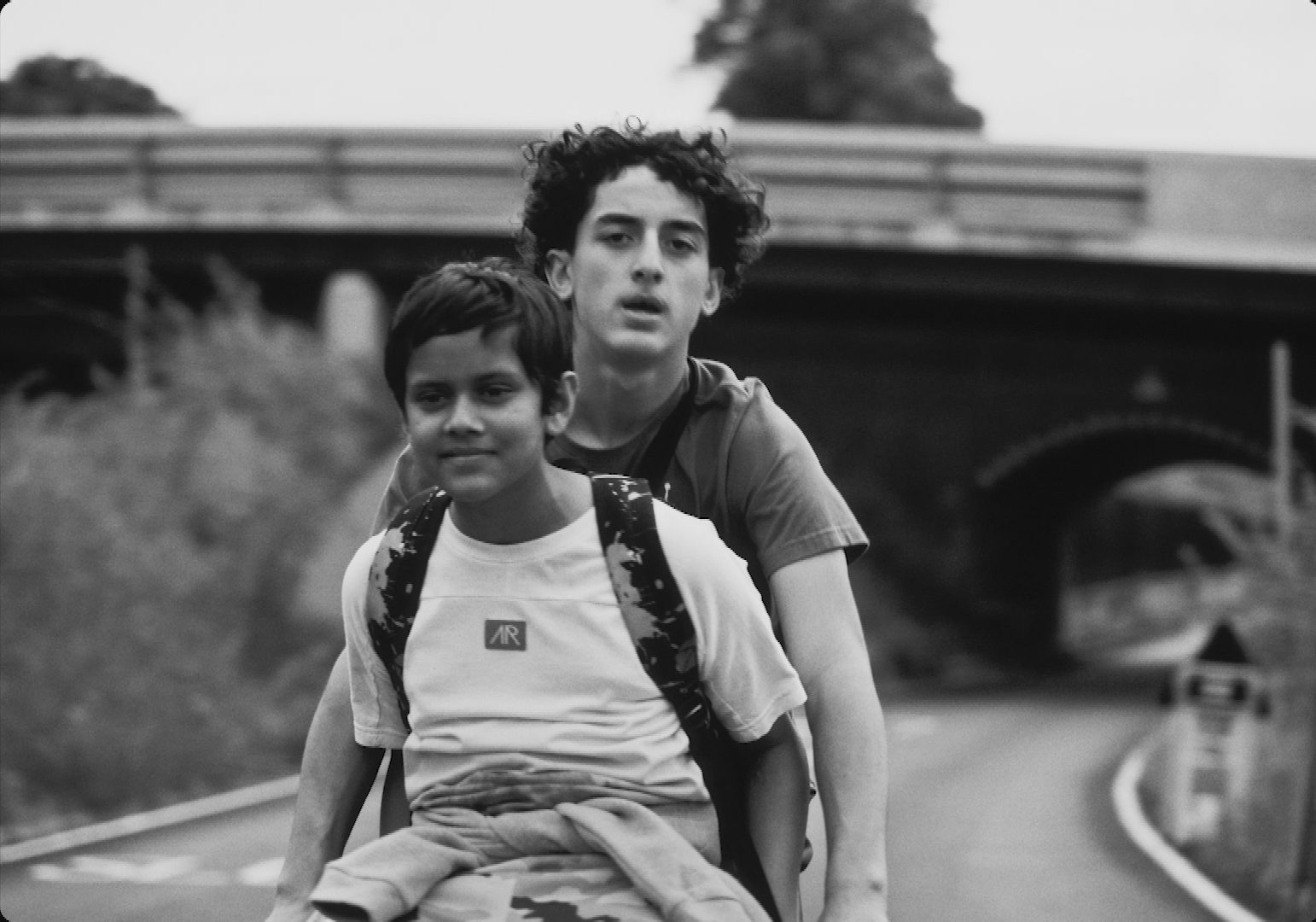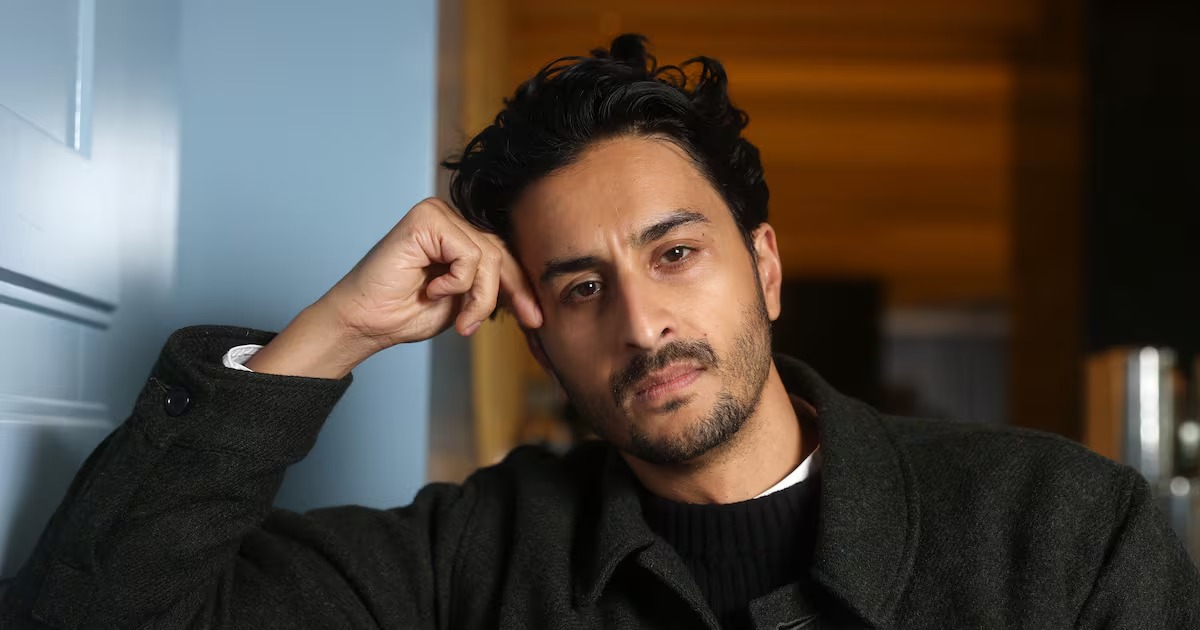
‘I really believe in British and Irish independent cinema,” Imran Perretta tells me. “I was very naive to this, but I realise now that you don’t see enough of it actually getting a theatrical release or distribution at all.”It is hard, at this end of the summer, to be heard over the bellow coming from The Odyssey and the new Spider-Man flick, but at least one beautiful, smallish film is squeezing itself into the sandwich. Following a kid of South Asian heritage as he comes of age in an evocative version of Luton – semi-rural bivouacs beneath low-flying airliners – Perretta’s Ish is among the most touching dramas you’ll see this year. The young title character, played by Farhan Hasnat, has made friends with an older Palestinian boy played by Yahya Kitana. That relationship is tested during a summer punctuated by police harassment.It feels autobiographical but Perretta, who is of Bangladeshi and Italian parentage, was raised in south London, a good 50km or 60km from Luton.“Everything in this is, in one way or another, a scene from a certain point in my childhood and my teenage years,” Perretta says.“Not in, obviously, such a perfect three-act structure. But these are all scenes from my own life – and also from Enda’s.”“Enda” is Enda Walsh, the tireless Dublin-born writer known for such work as Disco Pigs, Steve McQueen’s Hunger and the stage version of John Carney’s Once. Ish could hardly be more rooted in the South Asian experience. How did Walsh end up as collaborator?“To cut a really long story short: I had finished the first draft, and I was emptied out by it,” Perretta says.“The BBC, they were like: ‘Well, look, we want to shoot this next year. How do you feel about the potential of a co-writer?’ “I thought to myself, well, I’ll only do it if it’s someone who I feel really passionately about. Before I could reel it back in, ‘Enda’ just popped out of my mouth.”Perretta’s producer said he would send Walsh the script, but he warned the film-maker not to get his hopes up. The Irishman replied almost immediately with a note saying: “This is amazing.” “I was a massive fan of his,” Perretta says. “When I was at art school, I got very into Irish political poetry and political theatre. I guess I saw a parallel with these colonial narratives that I was looking at, between South Asian history and Irish history. There’s something about his sensibility, the way that the Irish political and historical context is baked into the everyday lives of his characters.”How did that work when it came to language? One of the distinguishing aspects of Ish is the deep urban vernacular spoken by the two young leads. Perretta grew up close to that. Walsh did not.Imran Perretta: 'Improvisation was baked in from the start, because they’re all first-time actors.' Photograph by Shane Anthony Sinclair/Getty Images for BFI “It was all the boys,” he says of Farhan and Yahya.“It wasn’t really either of us. Enda did his best attempt at what 15-year-olds speak like now. I am closer to that, in that I used to speak that way when I was younger, but things have moved on. “In the end, the methodology was basically to just say to the boys: ‘Well, look, these are the lines that you have to hit. But as long as it feels natural coming out of your mouth, go at it.’”So the non-professional actors essentially translated it into their own urban dialect?“Improvisation was baked in from the start, because they’re all first-time actors,” he says. “They were all brilliant.”Perretta is a man of considerable gifts. To this point best known for his work in the visual arts – he won a Turner Prize bursary in 2020 – he is also a hugely accomplished composer. His beautiful, varied score for Ish adds greatly to the film’s hypnotic appeal. I wonder how much that background contributed to his cultural education. Bengali and Italian? That’s an enviable combination.“London is a very multicultural place,” Perretta says. “To a lot of people, my mix sounds really unusual, but actually, growing up, my group of friends from school were kind of a fascinating mix. “It was only when I went to uni that I understood I was quite unusual – my mix was quite unusual in terms of cultural heritage. But I was always encouraged to celebrate and explore all the sides of my heritage.”Did he have film-making as an ultimate goal when he went to college, or was that a later development?“I initially studied architecture, and I went to do an MA in fine art,” he says.“I was in my early 20s and I was, like: ‘I don’t want to be an architect. I want to make music, to find a way to make music and films.’ “By hook or by crook, I managed to do it. If anyone does know me, most people will know me as a contemporary artist before anything else.”Ish premiered to raves at last year’s Venice International Film Festival, and it has been picking up further good word ever since. Is there a particular sensibility associated with those film-makers who began in the visual arts?“I think so. When you go to art school, no one tells you how to do anything. You have to make it up for yourself. Whether you’re painting, whether you’re making sculpture, whether you’re making moving-image work, ultimately you direct your study. And what that means is you learn how to do everything the wrong way. Ha ha!”This makes sense. A film like McQueen’s Hunger speaks of a singular approach to the film-making discipline. Ish has a similarly unconventional feel. It has an elegant overall structure, but there is a sense of riffs being improvised from shot to shot. Themes are wound into the background and then gradually teased forwards. One such concern is the acute attention that came the way of the Asian community in the aftermath of September 11th, 2001. A key incident at the centre of the film sees Ish’s pal become the victim of a targeted “stop and search” by police. The everyday action is intercut with sinister footage of random surveillance. South Asians became a “suspect community” in those years.“The authorities – ie the police – became incredibly aggressive towards people from that background, particularly South Asian, Muslim, Middle Eastern,” he says. “The minute you lose that innocence you come to understand how you’re seen by other people. “That moment in time really massively politicised me. It affected how I saw myself, which is a reckoning for all young people. The fact that it came at the hands of the police, at that sensitive time post 9/11, but also in my own adolescence, changed everything for me. “I feel as though everything I’ve done, politically and artistically, has followed from that moment in my life.”Imran Perretta: 'The minute you lose that innocence you come to understand how you’re seen by other people.' Photograph: Shane Anthony Sinclair/Getty Images for BFI There is wit and warmth here as well. Ish, whose mother died recently, is surrounded by a caring, amusing family. And the town of Luton opens itself up to the camera in remarkable fashion. Over 89 crisply monochrome minutes, one gets a robust sense of a place little celebrated in culture. I understand it was Perretta’s wife, raised in the area, who first introduced him to the spiritual home of English millinery.“She’s half-Irish and half-Jamaican, which is one of the most common mixes in the UK,” he says. And a product of Bedfordshire.“My wife is from around there, and all my in-laws live in and around Luton,” Perretta adds.“So I’ve been going there for years and years. We’ve been together a long time now. Every family event on that side of the family, we drive up to Luton. “I just felt close to it. Sometimes you see a place, especially a place that has a bad rep, and you feel a real affinity for it. Coming from south London, I felt that.”Ish premiered to raves at last year’s Venice International Film Festival, and it has been picking up further good word since. On balance, it’s no bad thing that, whether intended or not, its release plays like counterprogramming to the two biggest films of the summer. Not everyone wants to see Spider-Man: Brand New Day. Not everyone needs to see The Odyssey a second time. I am sure Christoper Nolan would wish Perretta well.“I’m sure he’s quaking in his boots,” Perretta says with a good-natured chuckle.Nice fellow. Great film.Ish is in cinemas from Friday, July 31st
‘I saw a parallel with the colonial narratives I was looking at, between South Asian and Irish history’
After the BBC approached Ish director Imran Perretta about finding a co-writer, Dublin-born Enda Walsh jumped at the opportunity
1,437 words~7 min read