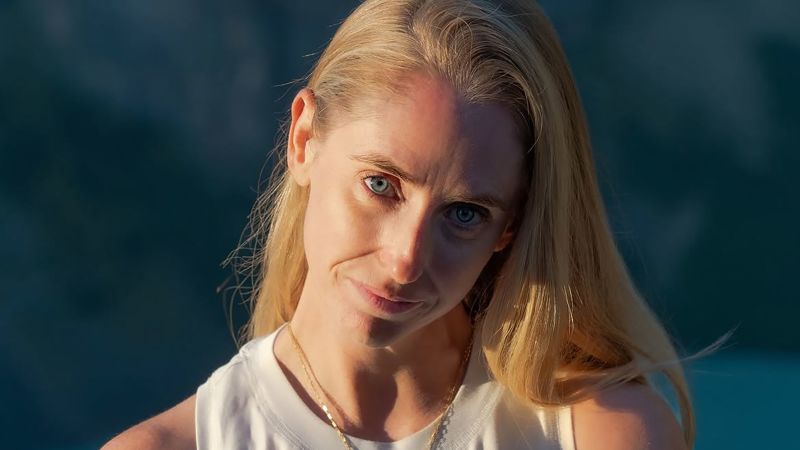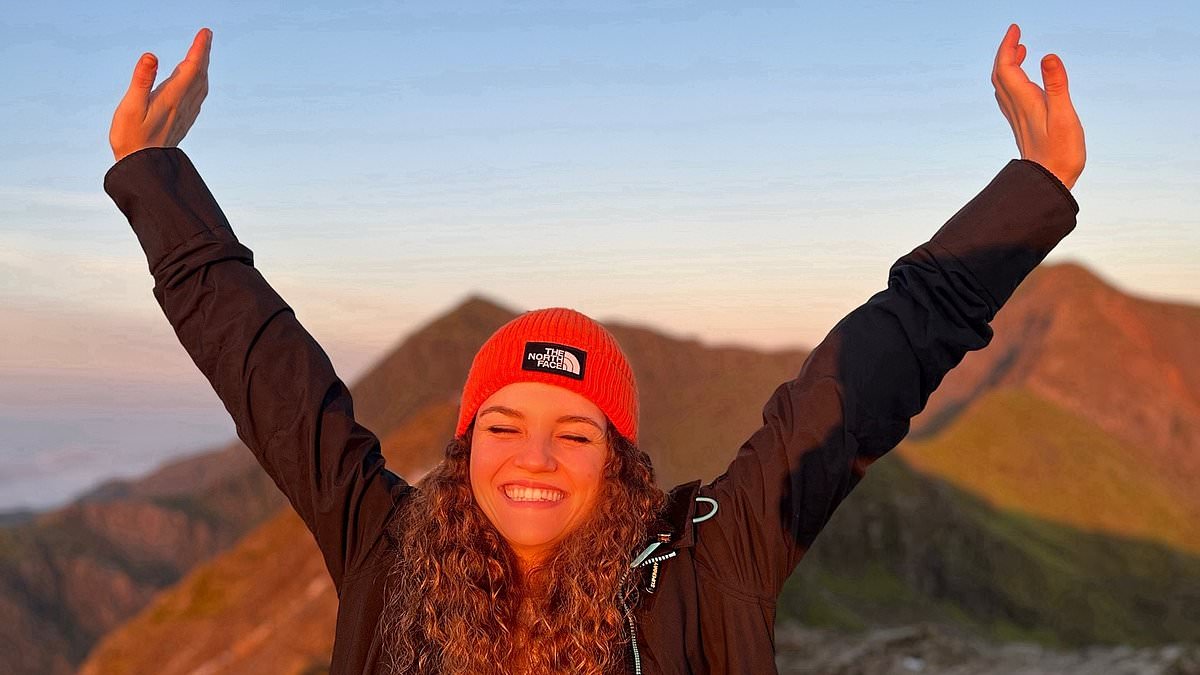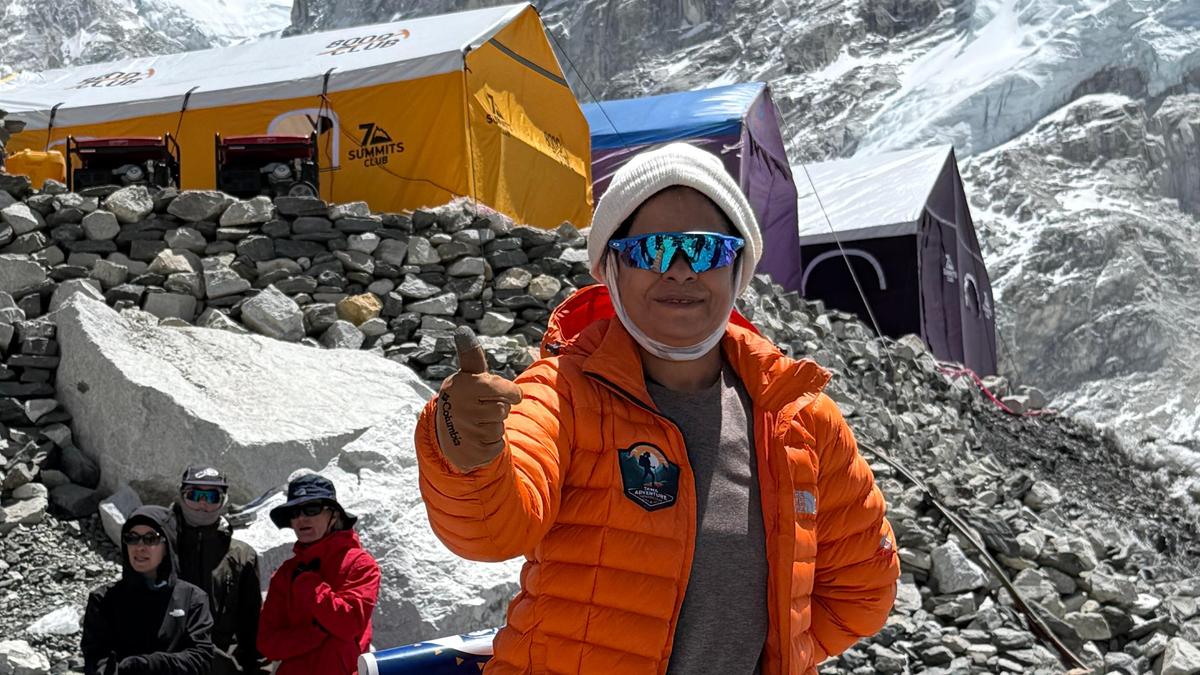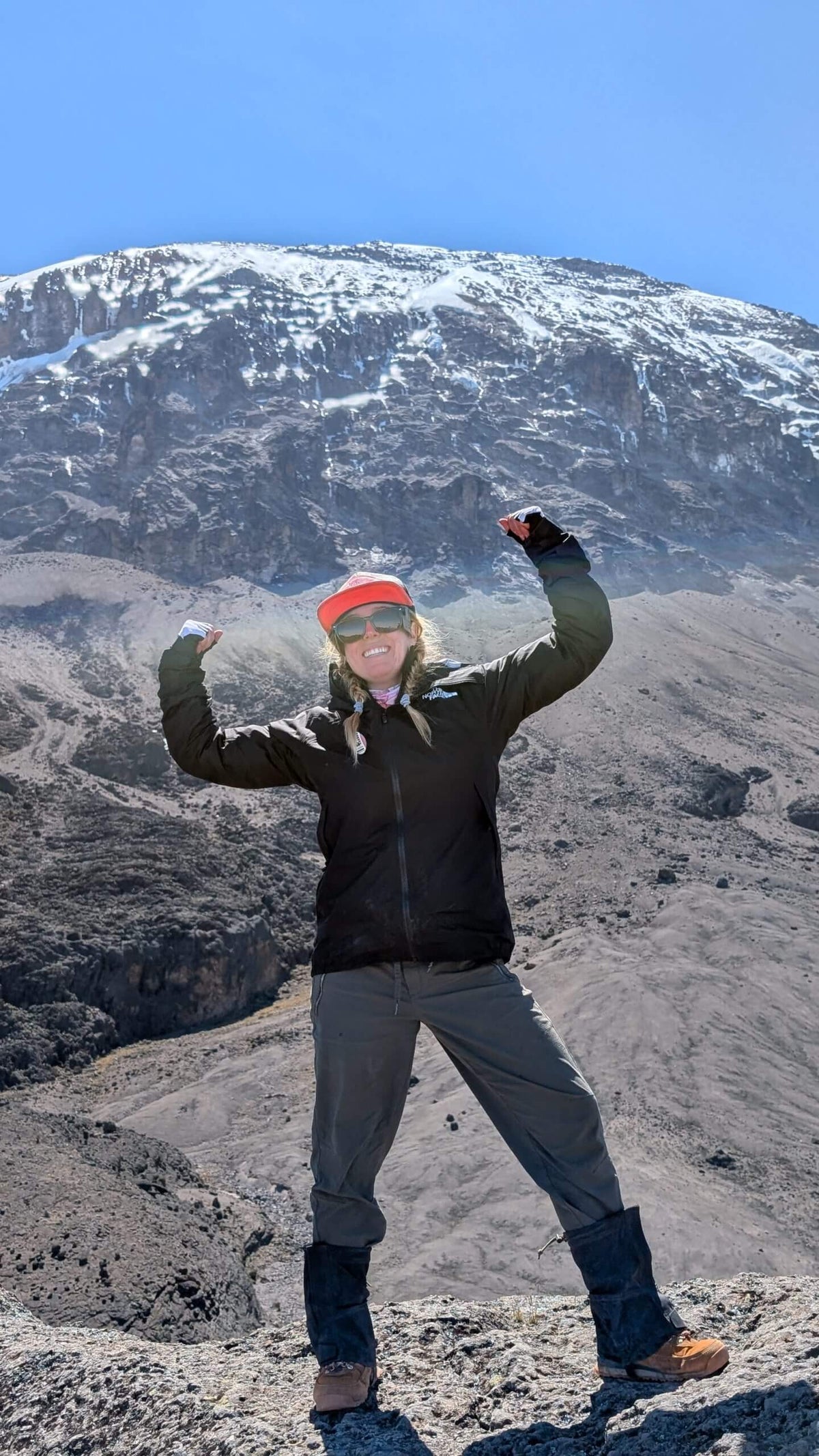
At the top of the world’s tallest freestanding mountain, Jamie MoCrazy did a cartwheel. It was simultaneously an expression of relief and joy at reaching the summit and a nod to how far she had come in her life to arrive at this moment.Cartwheels are MoCrazy’s signature move, a gymnastic reference to how it all turned suddenly upside down for her 11 years ago.A freestyle skier, MoCrazy was competing at the World Tour Finals in Whistler, Canada, and needed a big score to lift her out of fourth place. Switching her off-axis backflip to an off-axis double backflip for the second run, she under-rotated on landing and crashed heavily, her head whiplashing on to the snow.“My brain started bleeding in eight spots and I hurt my right brainstem, which instantly paralyzed the whole right side of my body,” MoCrazy tells The Athletic.Her sister Jeanee, scheduled to compete the next day, was on the mountain at the time and skied down to see what had happened.“She saw me convulsing on the snow,” says MoCrazy, “spewing blood, and my eyes were rolled back in my head.”MoCrazy went into a natural coma at the time of the crash, and her chances of survival looked slim. Doctors would write her fatality report — but it never got signed.“I was a three on the Glasgow Coma Scale, which is the lowest number you can have and actually wake up from,” she says. “And if you look at the statistics, there should be no possibility that I would be a person talking to you.”Not only is the 33-year-old MoCrazy now talking and walking (and skiing and snowboarding), but she has also climbed Africa’s highest peak; which was, she says, her greatest physical challenge since that accident in April 2015.Jamie MoCrazy spent 10 days in a coma after her 2015 skiing accident. (Gabby Leintz)The journey up that mountain really started in her hospital bed 11 years earlier.After 10 days in a coma, MoCrazy had serious amnesia when she woke up and was severely debilitated physically. In front of her lay a long and complicated recovery. She had to relearn basic skills such as speaking, reading, walking and swallowing, and that’s before even considering the enormous emotional toll she had to endure.“Recovery from a major traumatic brain injury (TBI) demands extraordinary mental and emotional strength — relearning skills, adapting to new challenges, managing frustration, and persevering through setbacks long after the physical injuries have begun to heal,” Katharine Kilbourne, a physical therapist at the Intermountain Health centre in the U.S. state of Utah, who supported MoCrazy’s recovery, says in an interview.It was while she was confined to a hospital bed there in Salt Lake City that MoCrazy started to map out her goals, determined the TBI would never limit or define her. Reflecting on the nearby mountains that had always been a part of her life, a new perspective started to take root.“I still thought I was going back to skiing, but I remembered this alternative peak,” says MoCrazy. “And then it grew, and it became a metaphor for the whole injury recovery.“As you encounter an unexpected trauma in your life and things change, you’re caught in a metaphorical avalanche that slides you down to the bottom of life. And you have two choices: you can stay stuck at the bottom, or you can choose to climb an alternative peak.“Climbing peaks takes modifications and changes in your mindset and opportunities. But everybody can climb alternative peaks after unexpected trauma.”The former freestyle skier had to learn to walk and speak again. (Gabby Leintz)With Kilimanjaro, those figurative peaks became a reality. It was five years after her brain injury that MoCrazy first envisioned undertaking the climb to the top, which seemed a hugely demanding but not insurmountable goal.Located in Tanzania, East Africa, near the border with Kenya, at 5,895 meters (almost 20,000 feet) above sea level, Kilimanjaro is one of the world’s Seven Summits — the highest points on each continent.Established routes up to the peak and the lack of technical climbing involved make it more accessible than some of the other largest mountains on the planet, but the physical load of an eight-day trek and the sometimes debilitating effects of extreme altitude still pose considerable challenges.For TBI survivors, the demands of such a climb — or indeed any form of physical activity — can be even greater.“The combination of fatigue, altitude, variations of sleep habits/sleeping at altitude, stress and cognitive demands can all add up and make a climb like this challenging,” Kilbourne says.“TBI can cause a wide array of physical, emotional and cognitive symptoms that can be exacerbated with fatigue, stress and decreased available oxygen… Physical symptoms such as pain, headaches, dizziness and fatigue can make it difficult and exhausting to initiate and maintain an exercise program, let alone train for a major undertaking such as climbing Kilimanjaro.”MoCrazy’s preparation consisted of hikes around Salt Lake City and neighboring ski resort Park City with a 20-pound weight in her bag, as well as training with a LiveO2 device — this prepares the body for exercising at altitude by switching between oxygen-rich and oxygen-depleted air, increasing the cells’ overall capacity for oxygen.She didn’t struggle with altitude sickness for the climb itself; her oxygen levels recorded as excellent whenever they were tested by the guides — once in the morning and again in the afternoon. The biggest challenge, it transpired, was descending afterwards on a knee she injured earlier in her skiing career.“I’ve had two ACL surgeries on my right knee, and there’s a thought that that’s what caused my brain injury — my right knee giving out, which caused my head to hit the ground,” says MoCrazy. “It’s now bone on bone… In general, it’s feeling alright — on the way up, every day it felt OK — but by the time I reached the camp on the seventh night, my knee was swollen, and I was limping on the way down.”That felt like a small price to pay after the euphoria of reaching the summit earlier this month.“You set these goals and you set this dream, and then by taking a step and a step and a step, you reach the summit,” MoCrazy says. “And you’re so high up — you’re so high, and you just can look down on everything.”MoCrazy was joined on the climb by her mother Grace and Cody Williams, another TBI survivor. (Gabby Leintz)She couldn’t help but notice the similarities between summiting Kilimanjaro and recovering from her brain injury. Progress was slow, arduous and incremental, but the destination so deeply rewarding.MoCrazy’s recovery, in fact, was a central theme to the climb. She was accompanied by her mother, Grace Mauzy — her primary caretaker after her TBI — and Cody Williams, another TBI survivor. They were fitting companions: Williams also spent time in a coma and was treated by the same doctor at Canada’s Vancouver General Hospital, while Grace, who has a master’s degree in counseling psychology, played a vital role in her rehabilitation.“It felt really wonderful because a decade ago, her life changed as well as mine,” MoCrazy, who changed her name from Crane-Mauzy to her childhood nickname several years ago, said about completing the climb with her mom. “And that was unexpected. For us to be able to summit together… that really added to the trip.”Climbing Kilimanjaro has only reinforced MoCrazy’s appetite for activity and adventure.Through MoCrazy Strong, the non-profit organization she founded with her family to support TBI survivors, she has started working with tour company Kilisherpas to give those recovering from brain injuries the chance to summit Kilimanjaro or explore the surrounding region.One of her biggest takeaways from the climb, says MoCrazy, was realizing “how much more capable you are than you give yourself credit for.” She wants to inspire other TBI survivors to break through what she calls the “glass ceilings” of their recoveries.Staying active has played a key role in her recovery journey.“Before my mind came back, I was doing physical therapy,” says MoCrazy. “I had to relearn how to walk and that kind of stuff, and then we continued to do meditation and therapy and hikes.“When I left the hospital, we would go on family hikes, and I’d go with my friends. I could never do anything independently at that time, but I would go on hikes.”Jamie MoCrazy competing in a January 2013 freestyle event at Copper Mountain, Colorado. (Doug Pensinger/Getty Images)As her outpatient physical therapist, Kilbourne saw first-hand the huge strides MoCrazy made while recovering.“Jamie’s recovery has been remarkable, but it has required a tremendous amount of effort,” says Kilbourne. “That effort has extended far beyond the physical aspects of rehabilitation and has included significant emotional and cognitive work as well.“She did not simply push herself physically to recover; she devoted countless hours to rebuilding the cognitive abilities and emotional resilience affected by her injury.”Since her accident, MoCrazy has returned to recreational skiing and also taken up snowboarding. Through her foundation, she runs events empowering TBI survivors and uses public-speaking engagements to advocate for brain-injury recovery methods.Above all, she wants TBI survivors to live a life unlimited; to see, in her own words, that “your mindset creates so much more to your outcomes than you fully understand”.For proof of that, look no further than MoCrazy herself, cartwheeling across the summit of Kilimanjaro.
Jamie MoCrazy nearly died after a skiing accident. This month, she climbed Mount Kilimanjaro
Doctors wrote MoCrazy's fatality report but during a 'remarkable' recovery she learnt to walk, talk and swallow again.
1,554 words~7 min read