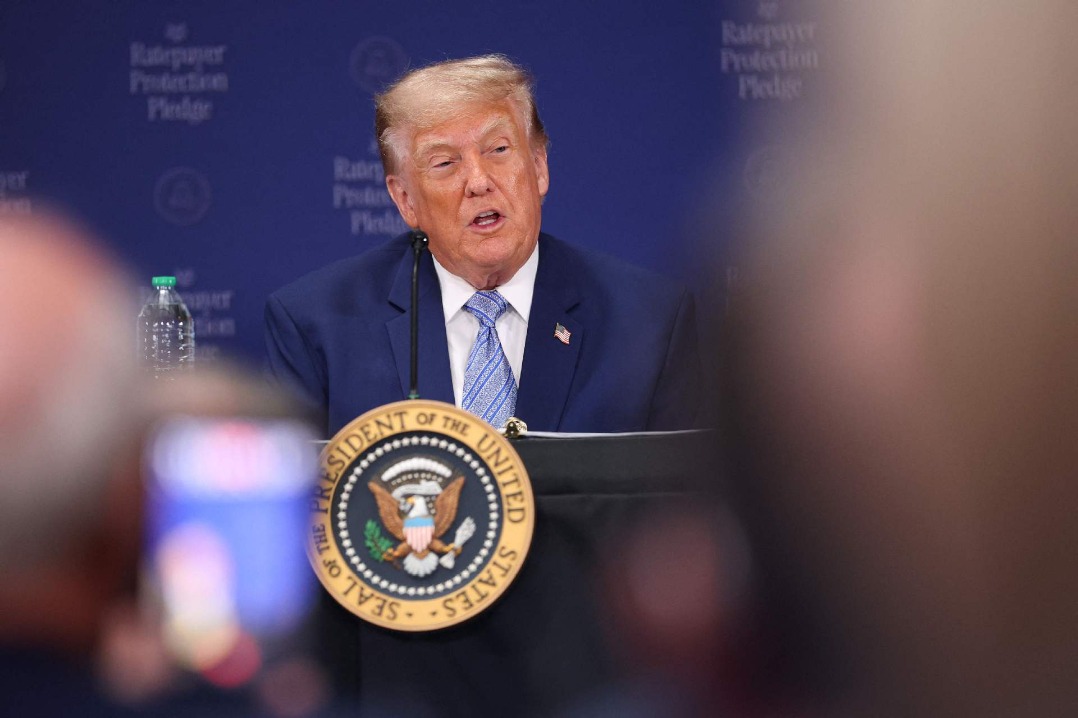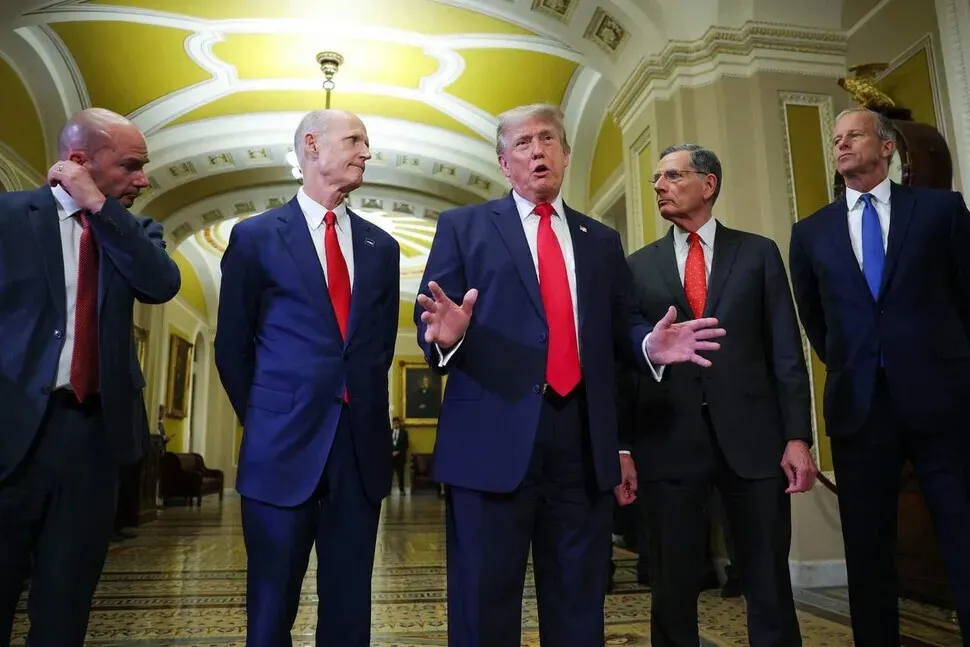
US President Donald Trump speaks to the press after meeting with Republican senators at the Capitol building in Washington, DC, on June 24, 2026. (AFP/Yonhap)
Already, we are less than 100 days out from the US midterm elections. More than a referendum on the Trump administration, these elections represent a complex mix of variables, including the issues of cost of living and healthcare, electoral redistricting and voting rules, and the growth of democratic socialists within the Democratic Party.The political landscape favors the Democrats. A RealClearPolling survey on July 11 showed the Dems with almost a 6-point lead in approval rating (48.4%) over the Republicans (42.5%). President Donald Trump’s approval rating was 40.5%, with 56.9% dissatisfied with him.In addition, consumer prices in May rose 4.2% year on year, their highest growth since spring 2023. The president’s party typically suffers losses in midterm elections, but public anger over inflation has compounded the situation ahead of this year’s vote.The Democrats’ core strategy is to channel the public pain from rising living costs into anger against Trump. Rather than the abstract concept of “defending democracy,” the party will highlight the hardships caused by rising insurance premiums, medical bills, grocery prices and housing inflation and make the public burden of the Republicans’ tax cut bill on Medicaid and food assistance a key issue in battleground states.The GOP strategy takes the opposite approach. The party seeks to shift the focus away from Trump’s economic report card toward border control, public safety, culture wars and opposition to the Dems’ tilt toward socialism.The outlook differs for both houses of Congress. Given the current makeup of the House, where the majority can shift with the change of just a few seats driven by the national political climate, it’s rational to assume that the Democrats have the advantage. But in the Senate, the Dems need to hold on to their incumbent seats and secure four more. They must retain Georgia, Michigan and New Hampshire and win all four swing states of Maine, North Carolina, Ohio and Alaska.The GOP can maintain control of the Senate — including the vice president’s tie-breaking vote —by keeping just one of these. While public sentiment favors the Dems, the Senate could serve as a bulwark for their rivals.What merits attention is Trump’s strategy of going all out to win an election despite unfavorable circumstances. The first thing he does is ensure the tangible impacts of his policies are felt before voters go to the ballot box. The White House is promoting temporary cuts in income tax for tips, overtime pay and interest on loans for American-made cars, along with additional breaks for the elderly as “tax cuts for working families.”“Trump Accounts,” which were launched this month, offering tax breaks for accounts opened in children’s names, fit into this same pattern. The administration lowered its political liability by allowing people to feel tangible benefits before the elections, while holding off on most institutional changes like Medicaid until afterward.The problem is that rising prices are drowning out the message of tax cuts. Higher energy and gas prices have driven up overall inflation, and criticism persists that tariffs are raising the prices of imports and business costs. Trump has publicly pressured major corporations like Wal-Mart to cut prices, and claims he is the one who lowered them, something close to a form of direct interventionist populism. Whether the GOP walks away victorious in November hinges on whether voters prioritize tax cuts or the cost of living and prices at the pump.His second strategy is redrawing electoral districts, otherwise known as gerrymandering. Trump pressured Republican-led state governments such as that of Texas to redraw their district boundaries before the midterms, and Democratic-led states responded in kind. The 10 states that redrew their House districts this year account for about 40% of congressional seats.