AI takes the path of least resistance.
That one characteristic explains most of what changed for me about architecting a system once an agent was in the loop.
It is genuinely faster than I am on frameworks, patterns, and the standard way to wire something up. Since it has read more on them than I have. But "least resistance" means it optimizes for the thing in front of it, e.g., getting an endpoint to work or a test to pass. It cannot optimize for the shape the system needs for your use case because it does not know all details. You still own 100% of that part.
Two ways least-resistance goes wrong
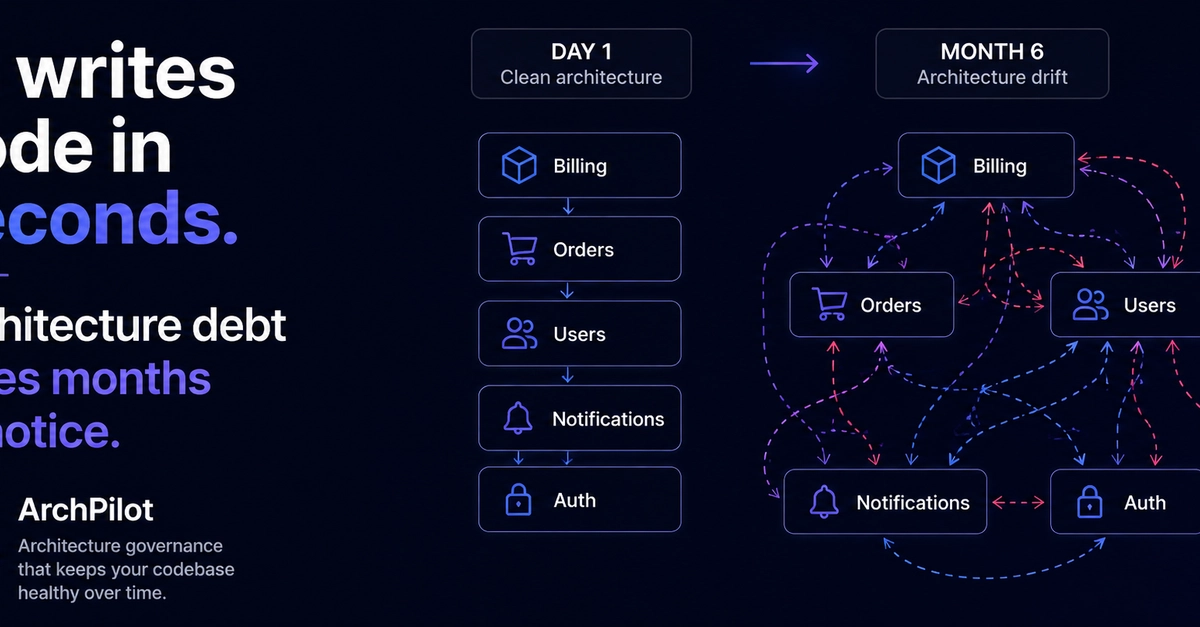
Left alone, the path of least resistance breaks in two opposite directions. It cuts a corner to make the immediate thing work: collapses a boundary, hardcodes a value, skips the seam that would have let two pieces move independently later. And when you try to correct it, it will over-engineer and reach for patterns, layers, and abstractions you did not ask for and don't need yet.