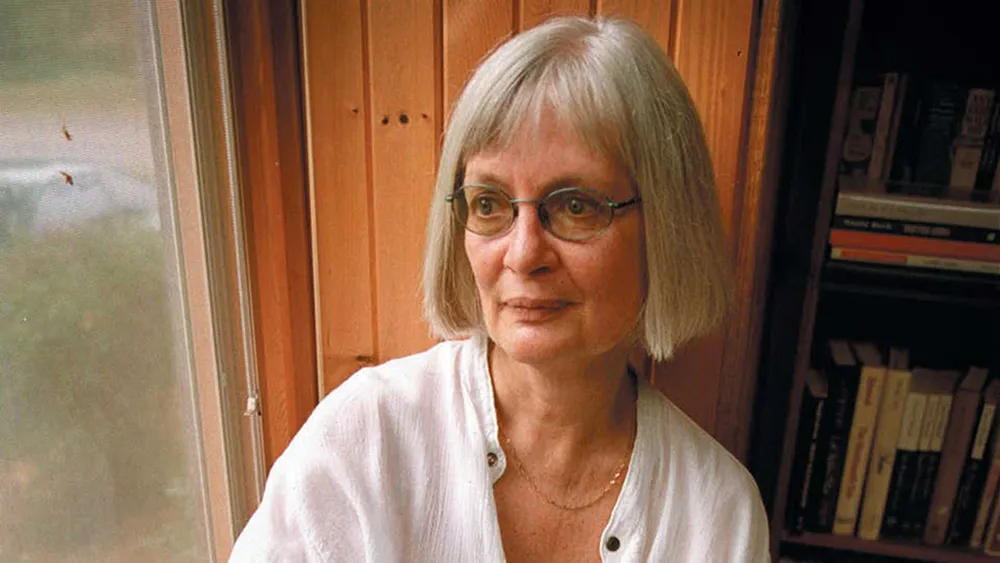
When a girl turns up at an isolated cabin in Canada, unannounced and uninvited, the woman busy thinning the lettuce has no idea who the stranger is. But then the woman has trouble remembering even her own name. ‘“Are you Abra Phillips?” asks the girl. “Am I?” the woman ponders, conscious that the words “mean something” to the girl,’ writes Joan Barfoot in the opening pages of Gaining Ground, a Canadian feminist classic now republished nearly 50 years after it first appeared as a debut novel entitled Abra.
‘I think, finally, that I must be; there is no one else to connect with this name,’ continues the protagonist, who we soon learn has been alone in the cabin for the past nine years, all but living off the land after walking out on her family. The girl, whom Abra does not recognise and cannot place, is her daughter. Now 18, Katie wants to know why her mother exploded their family, disappearing without a trace and without looking back at what she left behind.
If it seems unlikely that a mother would abandon her children, consider how many fathers do the same thing
This opening, delivered in succinct, unsentimental prose, takes barely ten pages; but it sets up the conflict at the heart of this existential masterpiece as a battle between selfhood and motherhood. Who is Abra the hermit and who was Abra the mother? Can they even be the same person? Katie’s arrival prompts a soul-searching reckoning that forces Abra to hunt for memories that were long gone. To Abra, alone in a cabin she bought in secret with her grandmother’s inheritance, it had seemed ‘quite natural that all the past should die, as the person who lived it had’.