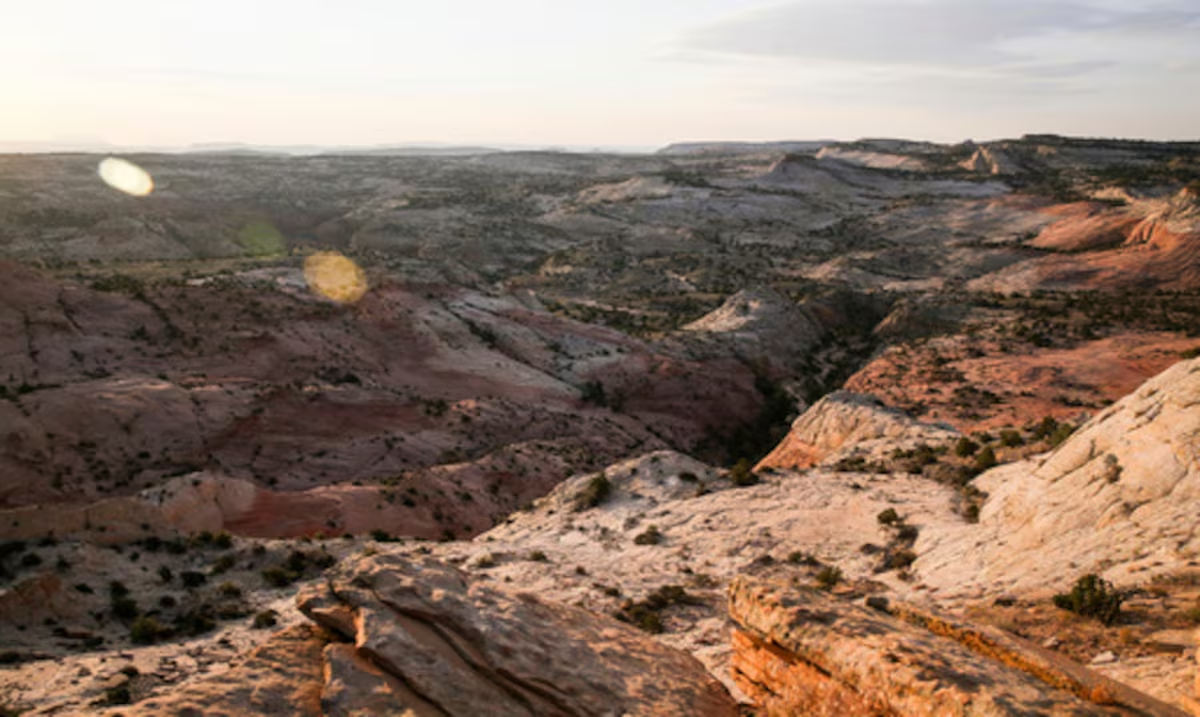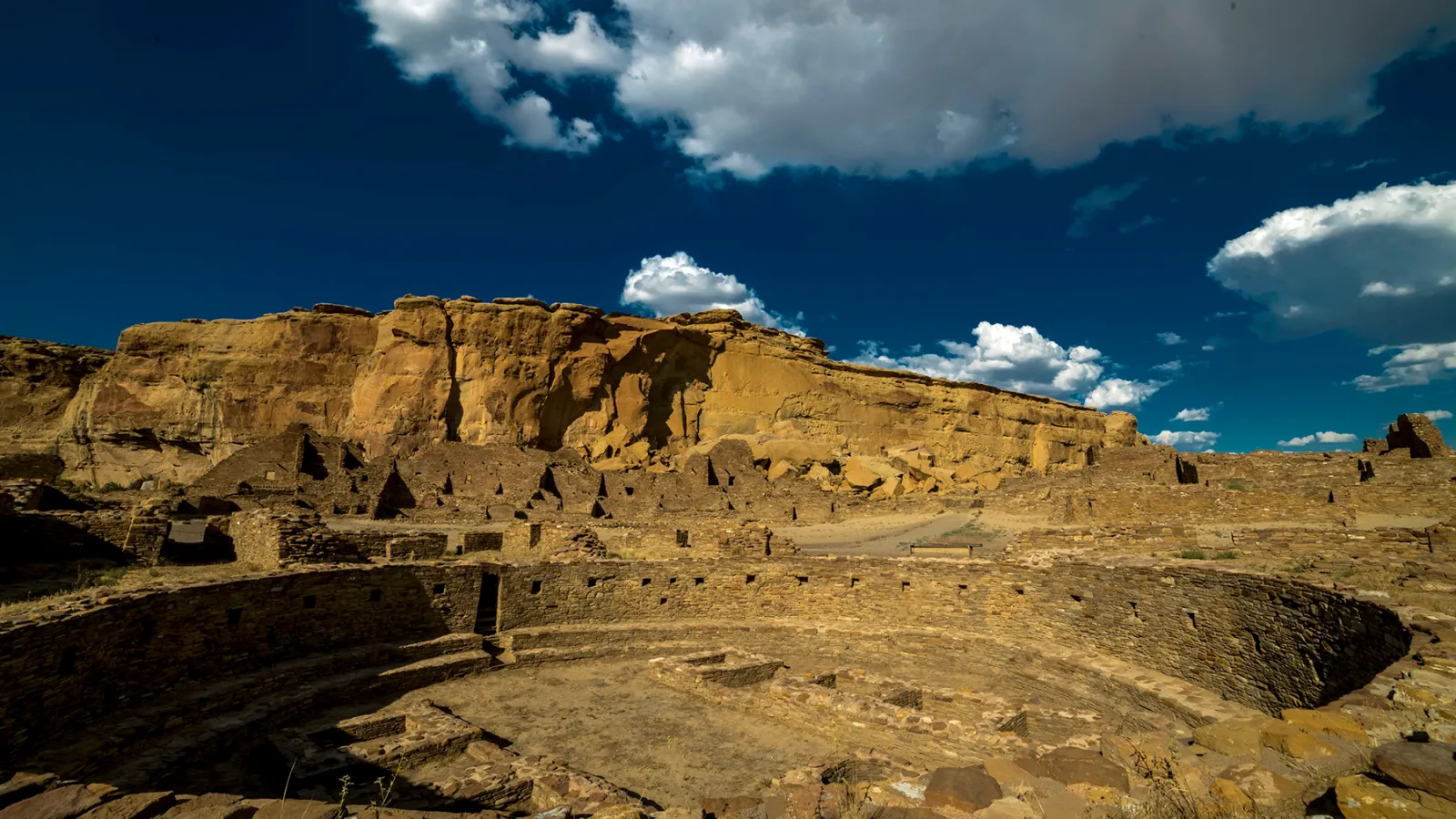
Chaco Canyon, located in Northeast New Mexico, is infamous for being arid, but on the day I arrive, the road is nearly washed out from a July monsoon. Thunder echoes off the ancient stone ruins that make the place a UNESCO World Heritage site and national park, and the hypnotic smell of wet sage perfumes the air. I’ve come to meet Mario Atencio, a Diné (formerly Navajo) organizer who has been fighting to protect the Greater Chaco area from oil and mineral extraction, and his grandfather, Daniel Tso, from whom Atencio inherited that fight, now in the national spotlight due to the “drill baby, drill” Trump Administration’s renewed interest in the oil fields that surround Chaco.
We convene at the visitor’s center at 7:30 a.m., the rocky landscape surprisingly tender in the damp dawn light. Atencio, rocking an olive bucket hat, gets there first; he’s been on the road since 4 a.m. to make our rendezvous. Tso, white hair tucked into a traditional bun at the nape of his neck, pulls up next in a black beast of a truck, eyebrows wagging. “So you’re the pebble in the wash!” he crows when I introduce myself as a reporter from Rolling Stone.
For many Native peoples of the Southwest, including New Mexico’s 19 Pueblo tribes and the Diné, Chaco Canyon is holy ground. “We’re literally in the place where gods walked,” offers Atencio, referencing oral traditions not intended for public consumption. “Our ceremonies were born here.”