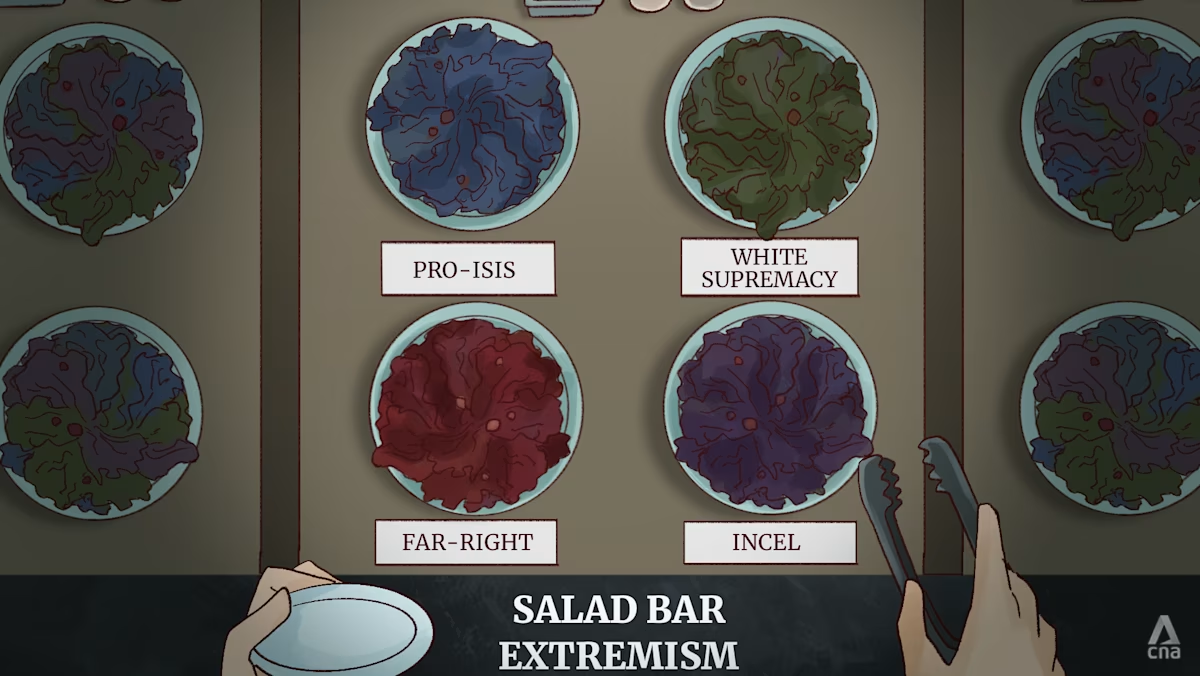
SINGAPORE: As extremist threats shift beyond traditional ideological lines with the rise of “salad bar” extremism, detecting and rehabilitating radicalised individuals has become more difficult than before, said experts.Also known as Composite Violent Extremism (CoVE), it has seen individuals assemble their own patchwork of ideologies, including conflicting ones such as pro-ISIS and far-right narratives, upon which they pursue violence.This development has implications for rehabilitation, which has to address a more complex mix of ideological, psychological and behavioural influences in radicalised individuals. This means rehabilitation cannot rely on past playbooks, experts told CNA.The term "salad bar" was made popular by former Federal Bureau of Investigation director Christopher Wray to describe individuals who pick and choose different beliefs and narratives, rather than subscribing to one ideology.
Researchers recently started referring to it as CoVE to better capture the complexity of these evolving pathways. Authorities in the United Kingdom have also used the term Mixed, Unstable and Unclear (MUU) extremism to describe it.In Singapore, the Internal Security Department (ISD) faced the first case of salad bar extremism last September, when a 14-year-old boy was dealt with under the Internal Security Act (ISA). Since then, there have been similar cases.In June this year, a 19-year-old youth was revealed to have been arrested for the same reason, while earlier this week, the ISD announced that it has detained a 14-year-old boy who was plotting a school attack.