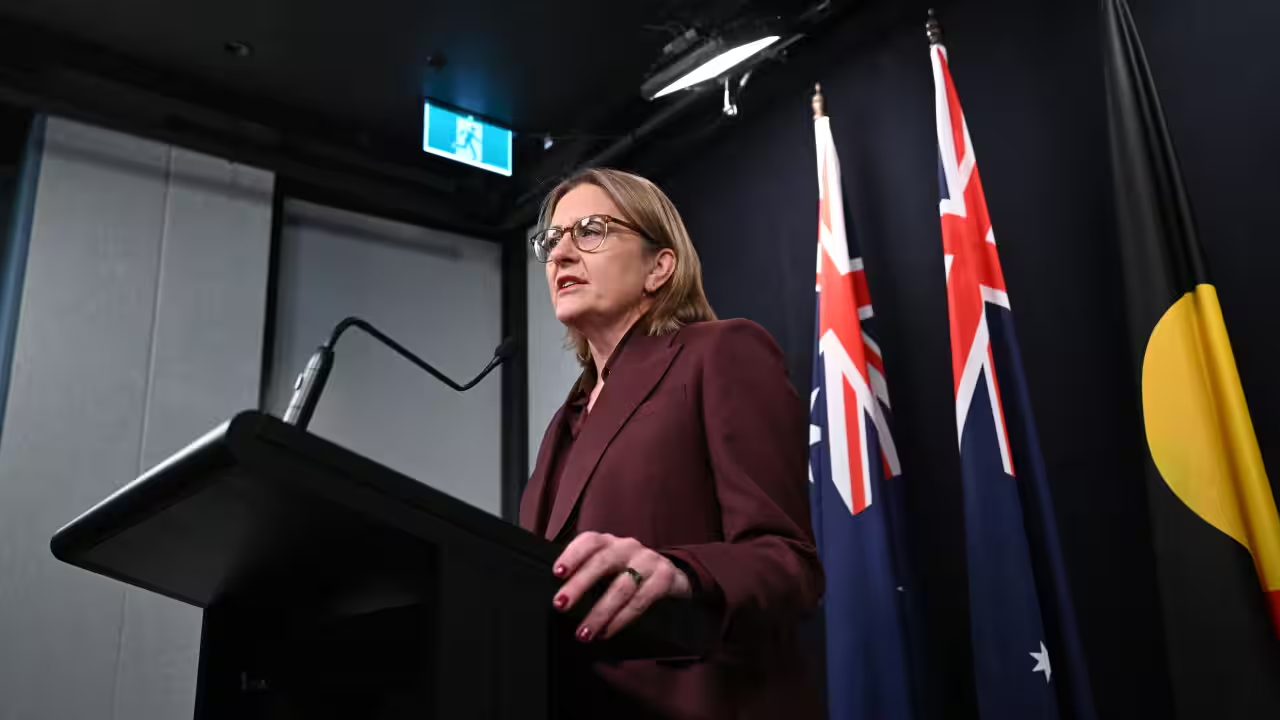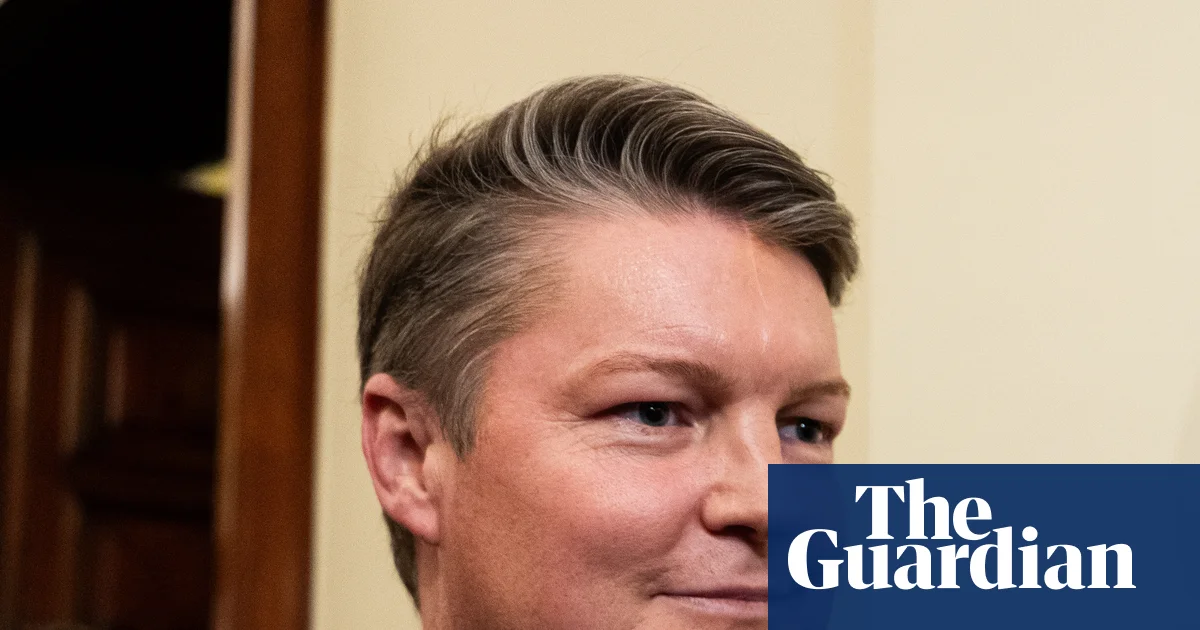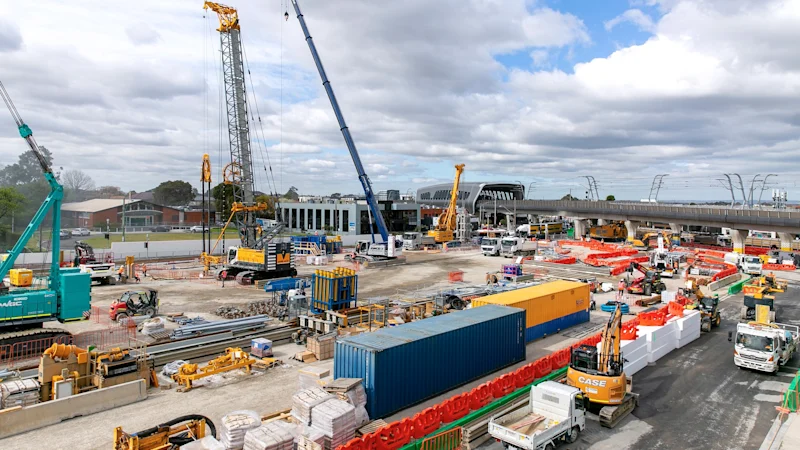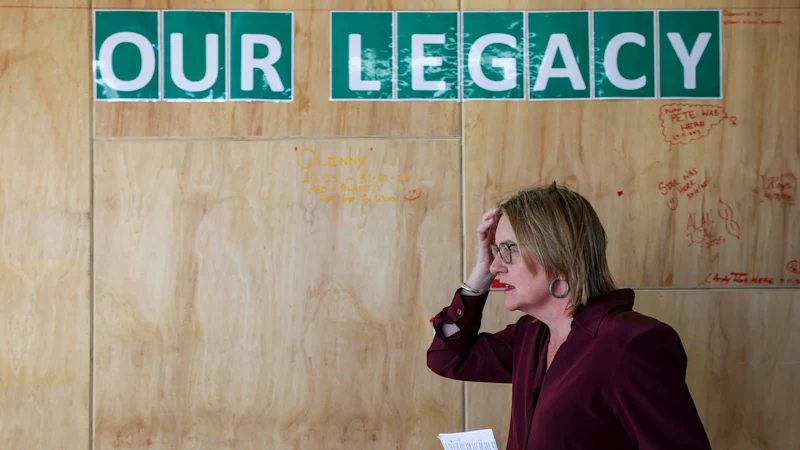
In 2008, the Brumby Labor government declared the EastLink tollway open. It was delivered on budget and five months ahead of schedule.Between 2014 and 2018, Daniel Andrews’ government removed 29 level rail crossings, also on time and budget – a feat that helped him convincingly win a second term as premier. As Liberal scion Michael Kroger remarked after the 2018 landslide, new infrastructure was “a very visual sign of a government doing something”.To Labor, this seemed like both good policy and good politics – and under Andrews and his transport minister, Jacinta Allan, the government’s ambitions grew exponentially.Eight years later, Labor faces an uphill battle for a fourth term, and Allan is the nation’s least popular politician by far. On Tuesday, she was humiliatingly blasted out of her job.The story of what happened in Victoria has emerged, piece by piece, in hundreds of investigative news stories in The Age, The Sydney Morning Herald, the Australian Financial Review and 60 Minutes over more than two years. A commission of inquiry holding public hearings in Queensland has brought out more, as has a scathing report by anti-corruption investigator Geoffrey Watson.Until now, though, Labor in Victoria has shown little interest in peering under the rock. Allan’s successor, Ben Carroll, promised to change this and announced a royal commission. It will run in parallel to Labor’s campaign for re-election in November.This scandal has its roots in 2014, the year of Andrews’ first victory. That year, a small group of men started moving to Melbourne from Queensland, where they represented a union, the Builders’ Labourers’ Federation, the subject of a much earlier industrial scandal.When these men arrived, they were welcomed with open arms into the Victorian CFMEU. Ushering them through the door was long-time chief John Setka.What they then set about doing has likely cost the state billions. It’s wrecked the reputation of a once-proud union, cost the premier her job, brought a 12-year-old government to its knees and scandalised a state.By the time he quit Brisbane for Melbourne in 2014, construction union organiser Joe Myles already had a long rap sheet. In 2010, he delayed a $350 million building project in Brisbane and called a supervisor a “f---ing little grub”. He was fined $5000. It was the first of more than 20 times Myles was to be hauled through the courts for coercion, obstruction, breaching safety laws and causing illegal stoppages.Joe Myles (centre) and Joel Leavitt (right).The broader union movement, believing the industrial laws to be bad, and therefore worthy of being broken, made no apologies. So when a factional dispute in Queensland saw Myles and a number of other BLF officials kicked out in 2014, nobody questioned Setka’s willingness to take them in.The Victorian strongman put Myles in charge of an outpost of his operation – civil construction.Until then, the CFMEU almost exclusively represented workers on big-city construction sites. It was lucrative and centralised work. Another union, the Australian Workers’ Union, had a near monopoly over civil work – roads, bridges and other infrastructure.Long disparaged in labour movement circles as “the boss’s union”, the AWU struck reasonable agreements and stuck to them. It was under these deals that EastLink was built and the level crossings removed.“Most of the work is in local government, and there’s not much money in it,” Watson told this masthead.But as Victorian Labor’s infrastructure ambitions grew, the equation changed. Apart from the expanding level crossing removal program, Andrews and his transport minister, Allan, backed the West Gate Tunnel road project, announced in 2015 with a price tag of $5.5 billion, the Metro train tunnel in 2016 at $10.9 billion, the North East Link road promised in 2019 at $15.8 billion, and the big one, the Suburban Rail Loop, promised in 2018 for $50 billion.“All of a sudden, the money is huge,” Watson said, “and it becomes very attractive [for the CFMEU] to move in on it.”Myles was just the man to do it. He moved against the AWU, and hard.On a Regional Rail Link site in 2013, Myles insisted that a large builder appoint a CFMEU delegate. When the builder argued that the AWU was already on site, Myles blockaded it and stopped a concrete pour. Fifty-nine tonnes of concrete was wasted. A Federal Court judge fined Myles and the union, saying the official had “a deplorable history of offending”.‘... the Setka-led Victorian branch of the CFMEU was no longer a trade union, it was a crime syndicate.’Geoffrey WatsonTo rid a site of the AWU, Watson wrote in a report tabled at the Queensland inquiry, Myles and the CFMEU used bogus safety claims, illegal industrial action, threats, violence and verbal abuse. Behind him as he issued these threats was a group of frightening men – many of them bikies or former bikies.“Several had convictions for violent crimes – one had killed a man,” Watson wrote.Leavitt, a Bandidos bikie president and ex-CFMEU official, outside Melbourne Magistrates’ Court in March.Jason SouthOne was Joel Leavitt – a CFMEU health and safety representative and alleged “full-time bikie” with the Rebels. Watson described him as “an allegedly brutal criminal” well known to police. One night in 2023, Leavitt was shot at the Rebels clubhouse in Melbourne and dropped at hospital in his government-funded, Big Build-provided car.Other CFMEU officials at the time had drug-trafficking convictions. One was a professional boxer with close personal ties to underworld figure Mick Gatto.These men were making industrial demands on behalf of the CFMEU underpinned by a “pervasive” threat of violence, Watson wrote. As the AWU melted away, big building firms capitulated to the CFMEU’s demands to buy temporary industrial peace.On one site, sources claimed to The Age investigative reporter Nick McKenzie, they were helped to make their decision by pressure from then-minister Jacinta Allan’s office.The Gap Road project in Sunbury.Until June 2022, a level crossing removal site in Sunbury called Gap Road was covered by an AWU enterprise agreement and an associated labour hire company supplying the workers. Myles insisted the CFMEU control the site, and a labour hire firm close to him, BK Labour, take over the contract.The builders, CPB and John Holland, resisted, knowing how much CFMEU involvement would increase both the cost and the difficulty of the project. They reported their concerns to the government that, according to McKenzie’s reporting, the CFMEU’s presence would add an extra $2 million labour hire cost for taxpayers.The government officials overseeing the project then passed onto CPB and Holland a reply from the office of the minister, Allan. They felt they were asked: “Could they just cut a deal with the CFMEU?” To fail to do so, project sources told McKenzie, might risk their chances of winning another lucrative contract on the forthcoming airport rail project. The builders cut the deal. Allan, this month, denied the claims her office had intervened.Over six or eight years, the CFMEU takeover of Victoria’s Big Build was virtually complete.Once in control, the union and its hangers-on extracted the spoils. Ultimately, wrote Watson in his investigative report, “the Setka-led Victorian branch of the CFMEU was no longer a trade union, it was a crime syndicate”.The CFMEU had the power to say who worked on a site and who did not. Among those whom their delegates approved were members of outlaw motorcycle gangs. Eventually, all the gangs were represented, Watson says: the Rebels, Hells Angels, Finks, Bandidos, Comanchero and Mongols. In some places, they wielded huge influence.One project, the Hurstbridge rail upgrade, became the site of a turf war between Comanchero and Rebels gang members – all union members and delegates – in which patched Comancheros spent hours circling the site on their motorcycles after the Rebels ousted them.“According to intelligence sources, this stare-down was actually a fight over which bikie gang would be permitted to control drug distribution,” Watson wrote in his report. “Picture 200 or more men aged between 18 and 30, each earning well over $100,000, confined within the area of a single building site – that is a drug dealer’s dream.”CFMEU officials installed friends and family to lucrative positions. Many “worked” ghost shifts – being paid big money by labour hire firms associated with the CFMEU and not turning up. On some projects, McKenzie reported this was suspected to have cost millions of dollars.Leavitt, the Rebels member and CFMEU delegate, ran a pay-to-work operation, Watson reported, demanding potential employees pay him cash in return for getting a job – then occasional further payments to keep it.On particularly lucrative shifts on the Hurstbridge rail upgrade, CFMEU gatekeepers had charged workers outright cash fees of $500 to $1000 just to be placed on the roster, McKenzie reported.This was nothing compared with the CFMEU’s own extortion – for a builder to get a contract on a Big Build site required an enterprise bargaining agreement (EBA) with the union. The CFMEU, not the government, controlled which companies could work on the site. No actual bargaining was entered into – companies were forced to buy the union’s template – and depending on the contract, Watson wrote, the going rate ranged between $250,000 and $1 million.“Under Setka’s leadership, CFMEU EBAs were bought and sold as commodities on a kind of black market,” he wrote.The union also bestowed lucrative EBAs on companies run by friends. “John Setka is one who confers these favours,” Watson said. “Gatto and his friends … beneficiaries.”Among those who won a sought-after EBA was a company called Women in Construction. As McKenzie reported in May, the company won Big Build contracts encouraged by Labor’s gender equity policy, but the company was actually owned by a male serial domestic violence abuser and managed by a male convicted drug trafficker also accused of family violence.The atmosphere for women on some sites was appalling, Watson reported. Women workers were recruited from strip clubs then paid cash to perform in the shed during work hours.One shocking outcome came early in the reporting. He revealed allegations of threats made by CFMEU senior organiser Joel Shackleton to the Aboriginal owner of a company working with an AWU enterprise agreement.Shackleton was caught on video telling the owner he would “f---ing end you, c--- … I’ll f---ing take your soul and I’ll rip your f---ing head off”. Shackleton was later charged over these comments and is fighting the case in the courts.Ben Nash, who died after suffering bullying on a construction site.One of the company’s former employees, Ben Nash, working his very first shift for a new firm, was told he would never be welcome on the site because the CFMEU didn’t like his old employer. He was told to “f--- off”, then, according to his mother, was “locked in a shed for three or four hours – just a young boy with mental health issues”.After this shift, Nash returned home. He died that night after taking too much prescription medication. His mother blames the CFMEU.Emails revealed last year show Victorian government ministers, MPs and a senior staffer in Allan’s office were told about the CFMEU’s campaign against the Indigenous firm. In the lead-up to the 2022 state election, they promised to do something. After they won the election, those commitments disappeared. The Indigenous-owned company eventually collapsed because of a lack of work.Then there was Gatto. When disputes arose between the CFMEU and anyone else, the underworld figure – a mate of Setka – swooped in, for a fee. Up to 15 building companies, according to McKenzie, were making regular “retainer” payments to the infamous standover man, and other underworld figures, to prevent their site being shut down and costing them a fortune.In his report, Watson called this the “Gatto extortion model”. It had all the hallmarks of an old-fashioned protection racket.Site closures could cost contractors anywhere between $50,000 and $500,000 a day. Watson wrote that by “protecting” them from industrial issues, Gatto was earning well over $5 million a year.Gatto has repeatedly denied wrongdoing.Some of that money, of course, was ultimately paid by taxpayers – mostly in Victoria but also nationally due to federal government contributions – as part of the escalating costs of the Big Build.How much did it cost? Some projects, such as the North East Link, more than doubled their original multibillion-dollar budget. Every other Big Build project has undergone multimillion-dollar hikes, though the full accounting is difficult to discern from available information.It’s clear, though, that unlike EastLink and the early level crossing removals, these projects will not be delivered on time and on budget. A current estimate is that the full suite of projects will cost taxpayers $109 billion – enough to drive Victoria into multi-generational debt.Watson made a guess – which he says is conservative and based on interviews with an experienced industry insider and other witnesses – of about how much was wasted via union corruption alone. The figure was $15 billion.McKenzie’s reporting shows Jacinta Allan was involved, as the minister responsible for the Big Build, or premier, a number of times.The Gap Road allegation suggests that in 2022, Allan’s ministerial office pressured the builder to agree to replace the AWU with the CFMEU. The demand was made, according to the allegation reported, under an implied threat that the builder might miss out on future work if they did not. Allan has denied this was the case.The following year, 2023, Allan was briefed on corruption in the Big Build by public servants warning her of malfeasance, McKenzie reported. She did not sign their briefing note and said this week she had never seen it. In the same year, she attended the funeral of John Setka’s father.In May 2024, Allan was given a “Consolidated Issues Document” by a senior figure inside the Metro Tunnel project. The document showed labour costs had blown out from $299 million to $901 million, with $200 million attributed to “industrial action … which is a direct result of an act or omission of the state”. The builder threatened to sue the government and Allan ultimately approved an $837 million no-admission payout in response.In July that year, McKenzie began his reporting, along with a team of journalists from this masthead, the Australian Financial Review and 60 Minutes. After they sent questions to Setka, the union chief resigned immediately.When the first report appeared in this masthead and on 60 Minutes, the Albanese government appointed an administrator to the union, who set about the task of trying to clean it out. Mark Irving took on the role and was quickly receiving death threats, along with ACTU secretary Sally McManus, then-workplace relations minister Murray Watt, and McKenzie. Irving hired security. McManus has revealed she left Melbourne for a time. McKenzie moved house.Allan responded by suspending the CFMEU’s Labor Party affiliation, stopping its political donations and referring the matters to Victoria Police and the Independent Broad-based Anti-corruption Commission.She also commissioned a report – with a tight time frame – by former Department of Justice secretary Greg Wilson, and insisted she had “zero tolerance” for intimidating behaviour.The Wilson report came back just before Christmas in 2024. It failed to identify any specific instances of corruption or criminal infiltration and did not hold any official or politician to account. IBAC, Victoria’s under-equipped anti-corruption agency, said it could not accept Allan’s referral because it did not have sufficient powers.After that, Allan’s response was a combination of tough talk and weak action.The Wilson report, which recommended a few administrative changes, was intended to “help us tear a rotten culture out by its roots”, she insisted.But Watson – who was working for Irving’s administration – dismissed the Victorian report as akin to a cover-up. This was not any fault of Wilson, he stressed. It was because the scope of his investigation had been so limited.Repeatedly, Allan urged people to refer matters to police, and expressed puzzlement that they would not take that route. Police told McKenzie people were too terrified to speak, and that Victoria Police was not the right agency to unpack the allegations – some of them criminal, some not.This month, Allan apologised in an opinion piece published in this newspaper.“Like every state and every major economy, Victoria experienced inflation over the past decade,” she wrote, insisting none of the many warnings about criminal infiltration and intimidation unearthed in McKenzie’s reporting had made it to her at the time.“We now know that criminals operated on some of Victoria’s construction sites. There was violence, intimidation and organised criminal behaviour. That is shocking and unacceptable. It should never have happened … I’m deeply sorry that it happened on projects funded by the Victorian people. Now the question is how we stop it happening again.”If that was the question, she was adamant the answer was not a royal commission. She told her colleagues it would be costly and time-consuming and would fail to change the culture in the state. They would just have to “grind it out”, she said.But as the election approached and her approval rating plummeted, this refusal began to look like evasion. Her detractors in the party room circled, and as the ongoing revelations drowned out almost all other political conversation in Victoria, Allan made one last attempt. On Monday, to a group of ministers who had already turned against her, she put a proposal to beef up police powers.It was too little too late.“I saw nothing to suggest that she was personally corrupt,” Watson told this masthead after her resignation on Tuesday. “I just believe she was an inept politician in the way she managed these affairs with the CFMEU.”Allan cannot avoid this legacy. She was there from the start. But, says Watson: “Politicians don’t like royal commissions because you don’t know what they’ll find. They can go anywhere. I feel as though she thought there was going to be some embarrassment.”
Labor, the CFMEU and a $109b question Victorians want answered
Previous Labor governments delivered major projects on time and on budget. Somewhere, that all went wrong.
2,943 words~13 min read