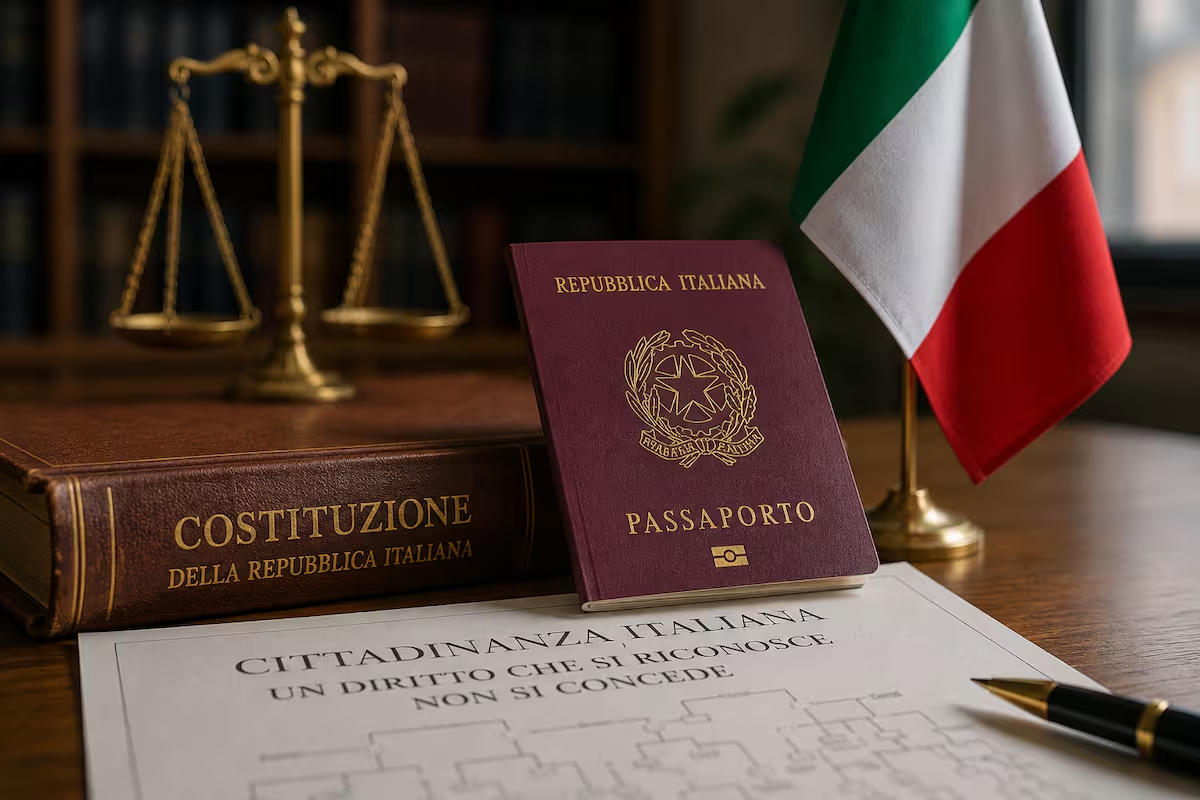
ROME (AP) — Italy’s highest court has ruled that a child born with both Italian citizenship and citizenship in another country does not automatically lose Italian citizenship when a parent later naturalizes abroad. The decision is expected to strengthen citizenship claims by descendants of Italian emigrants worldwide.The ruling resolves a long-running legal dispute known as the “Minor Issue,” which has affected thousands of ancestry-based citizenship cases involving families who left Italy in the late 19th and early 20th centuries, experts say. The ruling — dated Sunday but published Wednesday — was made by the Court of Cassation’s highest-level panel for resolving conflicting legal interpretations.At the center of the dispute was whether children automatically lost Italian citizenship when an Italian parent later acquired a foreign nationality while the children were still minors. Under a restrictive interpretation adopted in a series of court decisions beginning in 2023, many applications by later generations were rejected because authorities considered the line of citizenship transmission to have been interrupted.
What the court decidedIn its new ruling, the court said that under Italy’s historical citizenship laws, children who were already Italian citizens by birth under the principle of “iure sanguinis,” or citizenship by bloodline, did not automatically lose their Italian citizenship when a parent became a citizen of another country.