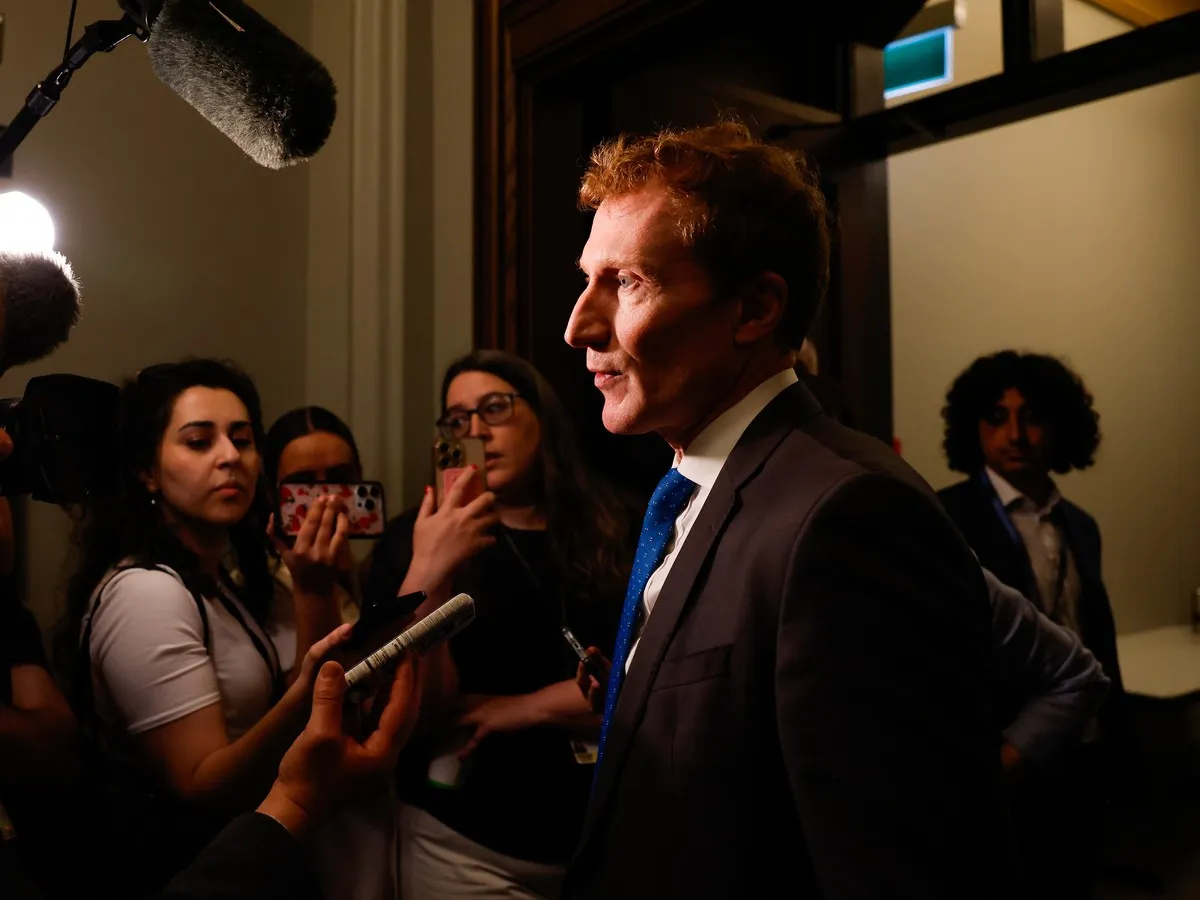
Skip to Content Subscribe Our Offers My Account Manage My Subscriptions FAQ Newsletters Canada Canadian True Crime Canadian Politics Health World Israel & Middle East Financial Post NP Comment Longreads Puzzmo Diversions Comics NP News Quiz New York Times Crossword Horoscopes Life Eating & Drinking Style Sponsored Play for Ontario Travel Travel Canada Travel USA Travel International Cruises Travel Essentials Culture Books Celebrity Movies Music Theatre Television Business Essentials Advice Lives Told Tails Told Shopping Buy Canadian Home Living Outdoor Living Kitchen & Dining Tech Style & Beauty Personal Care Entertainment & Hobbies Gift Guide Travel Guide Amazon Prime Day Deals Savings National Post Store More Sports Hockey Baseball Basketball Football Soccer Golf Tennis Driving Vehicle Research Reviews News Gear Guide Obituaries Place an Obituary Place an In Memoriam Classifieds Place an Ad Celebrations Working Business Ads Archives Healthing Epaper Manage Print Subscription Profile Settings My Subscriptions Saved Articles My Offers Newsletters Customer Service FAQ Newsletters Canada World Financial Post NP Comment Longreads Puzzmo Diversions Life Shopping Epaper Manage Print Subscription HomeNewsCanadian PoliticsOttawa to scrap base contribution requirement for large U.S. streamers and replace it with government fundingIn May, the CRTC announced that online streamers would have to pay a contribution of 15 per cent of their annual Canadian revenues towards Canadian and Indigenous contentLast updated 4 minutes ago You can save this article by registering for free here. Or sign-in if you have an account.Minister of Canadian Identity and Culture and Minister responsible for Official Languages Marc Miller at the foyer of the House of Commons at the West Block on Parliament Hill in Ottawa on Tuesday, June 16, 2026. Photo by HYUNGCHEOL PARK /PostmediaOTTAWA — The Liberal government is planning to direct its broadcasting and telecommunications regulator to “eliminate” the five per cent base contribution requirements for large U.S. streamers that has been tied up in court.Enjoy the latest local, national and international news.Exclusive articles by Conrad Black, Barbara Kay and others. Plus, special edition NP Platformed and First Reading newsletters and virtual events.Unlimited online access to National Post.National Post ePaper, an electronic replica of the print edition to view on any device, share and comment on.Daily puzzles including the New York Times Crossword.Support local journalism.Enjoy the latest local, national and international news.Exclusive articles by Conrad Black, Barbara Kay and others. Plus, special edition NP Platformed and First Reading newsletters and virtual events.Unlimited online access to National Post.National Post ePaper, an electronic replica of the print edition to view on any device, share and comment on.Daily puzzles including the New York Times Crossword.Support local journalism.Create an account or sign in to continue with your reading experience.Access articles from across Canada with one account.Share your thoughts and join the conversation in the comments.Enjoy additional articles per month.Get email updates from your favourite authors.Create an account or sign in to continue with your reading experience.Access articles from across Canada with one accountShare your thoughts and join the conversation in the commentsEnjoy additional articles per monthGet email updates from your favourite authorsSign In or Create an AccountorRecent correspondence from the Federal Court of Appeal, first revealed by The Wire Report, shed some light on the government’s intentions more than a month after it ordered the CRTC to review its recent decision to triple online streamers’ contribution from five to 15 per cent to fund Canadian content relative to their annual revenues.“We are instructed to inform the Court that the Government’s intention is to eliminate the base contribution requirement on streaming services and to provide government funding to replace those contributions,” wrote Michael H. Morris, senior general counsel for the attorney general of Canada, in a letter dated July 17.Morris adds that he expects the directive to be published for consultation in the Canada Gazette in the coming weeks and will provide the court with any developments that may impact the status of the ongoing litigation about the Online Streaming Act.Canadian Identity and Culture Minister Marc Miller’s spokesperson confirmed the news, adding that the directive to eliminate base contribution requirements would be for those that are “outside the audiovisual sector to the broader cultural ecosystems.”“At the same time, platforms will still be required to reinvest a percentage of their revenues in Canadian and Indigenous content,” press secretary Hermine Landry said.Miller’s director of communications Alisson Lévesque explained that while the five per cent base contribution will indeed be eliminated, the Canadian programming expenditure (CPE) requirements — aimed at supporting the production of Canadian and Indigenous content — will still apply to online streaming services.It is however unclear how the CPE contributions will be affected by the elimination of the five per cent base requirement or if the legal challenge is still moving ahead.For Tania Kontoyanni, president of l’Union des artistes which represents over 13,000 members of the cultural sector in Quebec, the elimination of a base contribution from large streamers to fund Canadian content is simply “catastrophic.”“I’m saying this without exaggeration: this is the worst news of the year,” she said.Kontoyanni said she is “extremely discouraged” that the federal government is coming to this conclusion after years of effort to support the Canadian cultural sector. She is also not reassured by the government’s intentions which, in her view, signal that large streamers could fund Canadian content at their discretion.“What we’re realizing today is that it is once again taxpayers who will have to pay for this — and those who make billions in profits won’t,” she said.Hélène Messier, Francophone Co-Chair of the Coalition for the Diversity of Cultural Expressions, said the government will have to permanently guarantee the funding that the cultural sector had every reason to expect under the base contribution requirement, which her organization estimates at no less than $200 million annually.“Simply replacing the amounts currently at stake will not be enough; this funding must also grow in step with the revenues of online streaming services. Without such a commitment, funding for the audiovisual and music sectors would gradually erode, even as the value generated by these platforms continues to increase,” she said.Messier said this directive also raises “serious concerns” about whether the objectives of the Online Streaming Act will be achieved. She said the government must not lose sight of its goal, which is ensuring equitable participation by all players in Canada’s broadcasting system.The Online Streaming Act, which came into force in 2023, made significant changes to the Broadcasting Act which, among other things, obliges large streaming services to invest a portion of their annual revenues in Canadian and Indigenous content.In 2024, the CRTC required them to pay a base contribution of five per cent of their annual revenues in Canada which led to Apple, Amazon, Spotify and the Motion Picture Association-Canada, which represents the largest American studios, challenging the order in federal court. It is that contribution that is now about to be eliminated.In May, the CRTC announced that online streamers would have to pay a contribution of 15 per cent of their annual Canadian revenues towards Canadian and Indigenous content which included the pre-existing five per cent base contribution. The government asked the regulator to review that decision for affordability reasons.Miller said last month the ongoing litigation in federal court had frozen the funds that were intended to support the cultural sector, and that is why the federal government was stepping in to help with an extra $600 million to help the cultural sector.“The reality is while we’re waiting for that money to come out — hundreds of millions of which are frozen in litigation — the industry is suffering,” he said.The decision to ask the CRTC to review its decision was however seen by critics as a concession to the United States, which have identified the Online Streaming Act as a trade irritant. But U.S. Trade Representative Jamieson Greer said earlier this month that Canada doesn’t “really get credit for doing something bad and then undoing it.”During an unrelated press conference in Alberta on Wednesday, Prime Minister Mark Carney was asked whether the choice to scrap the five per cent base contribution was another trade concession to try to get to a new trade deal with Washington at a time when it is threatening new tariffs.“Not at all,” he said in French. “The federal government is relentlessly focused on affordability and the (prospect of a) sharp increase in fees for streamers was not acceptable in this situation, even if we’ve made progress.”Carney said the government will make its policy known more clearly in the next few weeks.“So, this is not news.”National Post calevesque@postmedia.comOur website is the place for the latest breaking news, exclusive scoops, longreads and provocative commentary. Please bookmark nationalpost.com and sign up for our newsletters here. Join the Conversation This website uses cookies to personalize your content (including ads), and allows us to analyze our traffic. Read more about cookies here. By continuing to use our site, you agree to our Terms of Use and Privacy Policy.
Ottawa to scrap base contribution requirement for large U.S. streamers and replace it with government funding
Recent correspondence from the Federal Court of Appeal shed some light on the government’s intentions about the Online Streaming Act.
1,482 words~7 min read