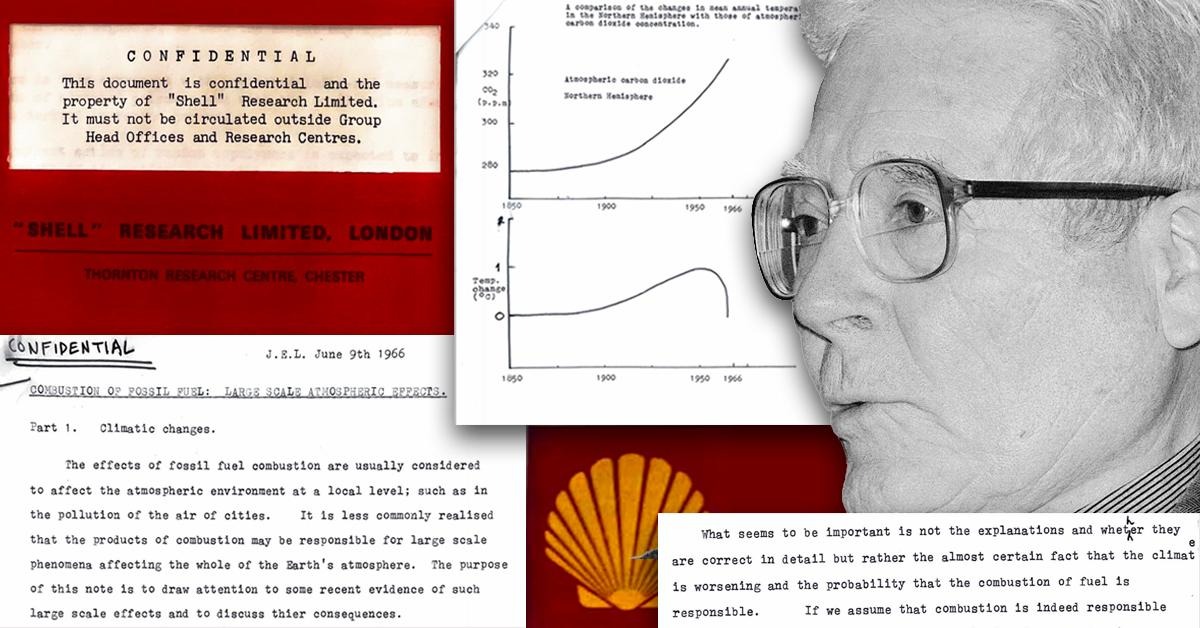
“What seems to be important,” wrote the visionary British scientist, James Lovelock, in June 1966, is “the almost certain fact that the climate is worsening and the probability that the combustion of fuel is responsible.”
Commissioned by Shell, the memo was the first in a series of secret reports by Lovelock for the UK oil giant exploring the “large scale atmospheric effects” of burning fossil fuels.
Sixty years later, evidence of Shell’s early knowledge of the climate impacts of its activities is being thrown into the spotlight by a first-of-its kind civil lawsuit, filed last December at the Royal Court of Justice in London. Lawyers are due to make a further filing against Shell, known as “the particulars” of the case, on Friday.
The lawsuit is being brought by UK law firm Hausfeld on behalf of the victims of Typhoon Rai, a 2021 Category 5 cyclone that devastated parts of the Philippines, killing over 400 people and causing more than $900 million in damages. It alleges that Shell helped to make the typhoon more destructive through the company’s contribution to historic greenhouse gas emissions and funding of climate denial — despite knowing since at least the mid 1960s that the burning of fossil fuels was the primary cause of climate change.