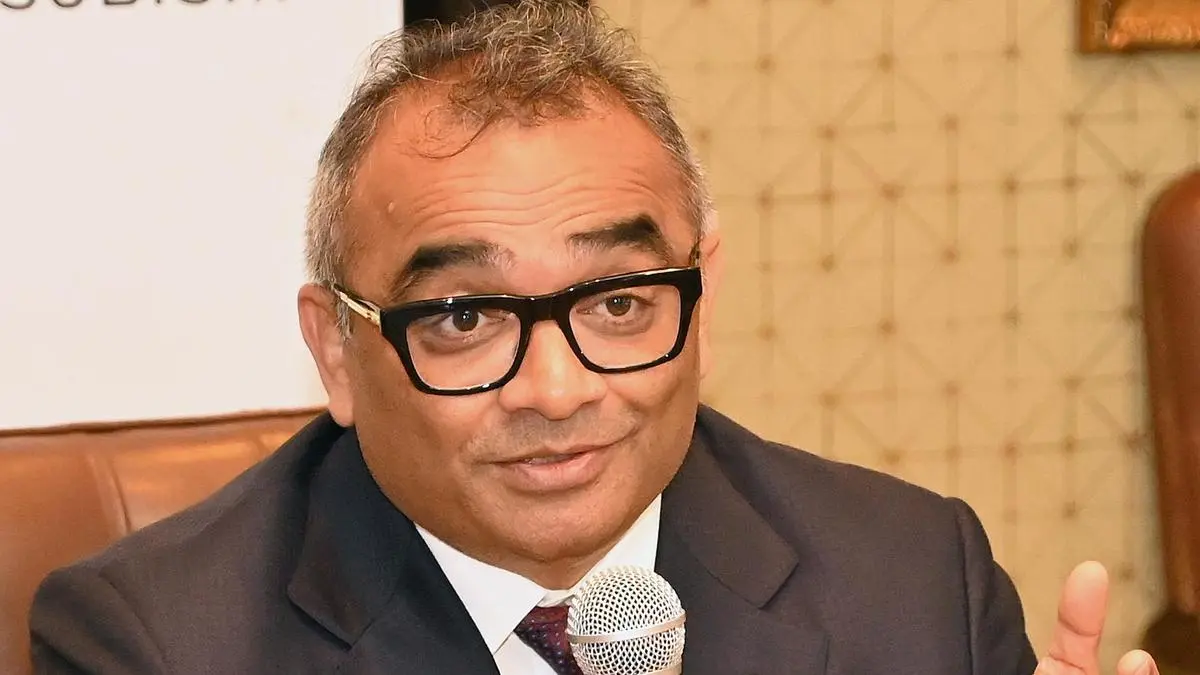
File picture: Ashwani Gupta, CEO, APSEZ
| Photo Credit:
Ahmedabad, July 29Adani Ports and Special Economic Zone (APSEZ) believes it is high time to plan the next phase of its global expansion, with the company scouting for opportunities along key maritime trade corridors such as the Mediterranean and East-West routes, said CEO Ashwani Gupta.Gupta said APSEZ is evaluating multiple international acquisition opportunities as it looks to build a larger global port network, but any deal will have to meet strict strategic and financial filters. The company is not looking at expansion for scale alone, but at assets that can strengthen both revenue growth and profitability. “We are studying a lot of assets around the world because it is high time for us to plan the APSEZ’s next step in terms of expansion. However, those assets will only be acquired if they are meaningful and if they tick the boxes,” Gupta told investors after the company’s results on Wednesday.He said the location of an asset on global trade routes will be a key consideration. APSEZ is focused on the East-West corridor, where it already has a presence across Australia, India, Africa and Israel, as well as the Mediterranean route, which Gupta said accounts for a significant portion of global trade flows. “The asset should be located on the trade route. We have one trade route from East to West, where we already have Australia, India, Africa and Israel. Another route is North to South — Panama — where we are not interested and we are not ready to go there. The third route is Mediterranean, which takes care of one-third of the global routes,” he said.cash flowsGupta said APSEZ will continue to prioritise acquisitions of existing operating assets over greenfield projects, as they provide immediate cash flows and allow the company to start generating returns from the first day of ownership. “The first rule is that the asset should bring contribution to both the top line and bottom line. That is why greenfield is a second priority, while first priority is existing business because I start getting returns from the first day,” he said.The company will also assess potential acquisitions based on the ability to finance the asset in local currency, the strength of the country’s macroeconomic and geopolitical environment, availability of local partners and the expected return profile. Gupta said any acquisition will have to deliver returns at or above APSEZ’s existing average. “The return from that asset should be at or more than the average APSEZ. This is what we proved in our acquisition in Australia,” he said.eyes acquisitionWhile Gupta did not comment on any specific transaction, his remarks come amid reports that APSEZ is exploring the acquisition of a port asset in the UK. He said the company will remain disciplined and pursue only those opportunities that add strategic value and fit within its global trade corridor strategy.APSEZ’s confidence in expanding its global footprint comes as its international ports portfolio is moving from a scale-building phase to a value-creation phase. In the June quarter, the company’s international ports business delivered record quarterly performance, with revenue rising 80 per cent year-on-year to ₹1,747 crore and EBITDA surging 256 per cent to ₹730 crore. The strong performance was led by Australia and Colombo, with the overseas portfolio benefiting from the consolidation of NQXT Australia and the continued ramp-up of operations at Colombo.International ports handled 22.8 million tonnes of cargo during the quarter, compared with 7.7 million tonnes in the year-ago period. Australia contributed 10 million tonnes of cargo, followed by Colombo at 6.9 million tonnes, Tanzania at 3.7 million tonnes and Israel at 2.2 million tonnes. The company said the inclusion of higher-margin Australia operations and improving scale at Colombo helped expand EBITDA margins in the international ports business to 41.8 per cent in Q1 FY27 from 21.1 per cent a year earlier.APSEZ currently operates four international ports across Australia, Colombo, Israel and Tanzania, and the management has indicated that these assets provide the platform for the next phase of global expansion, as the company evaluates acquisition opportunities across strategic trade corridors.Published on July 29, 2026