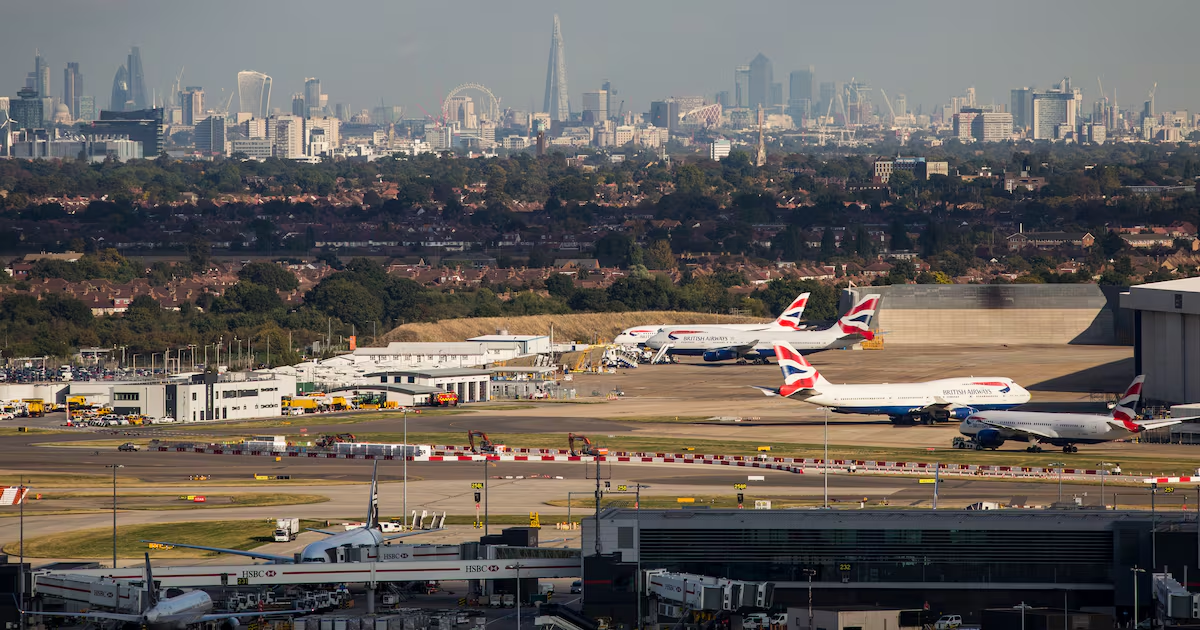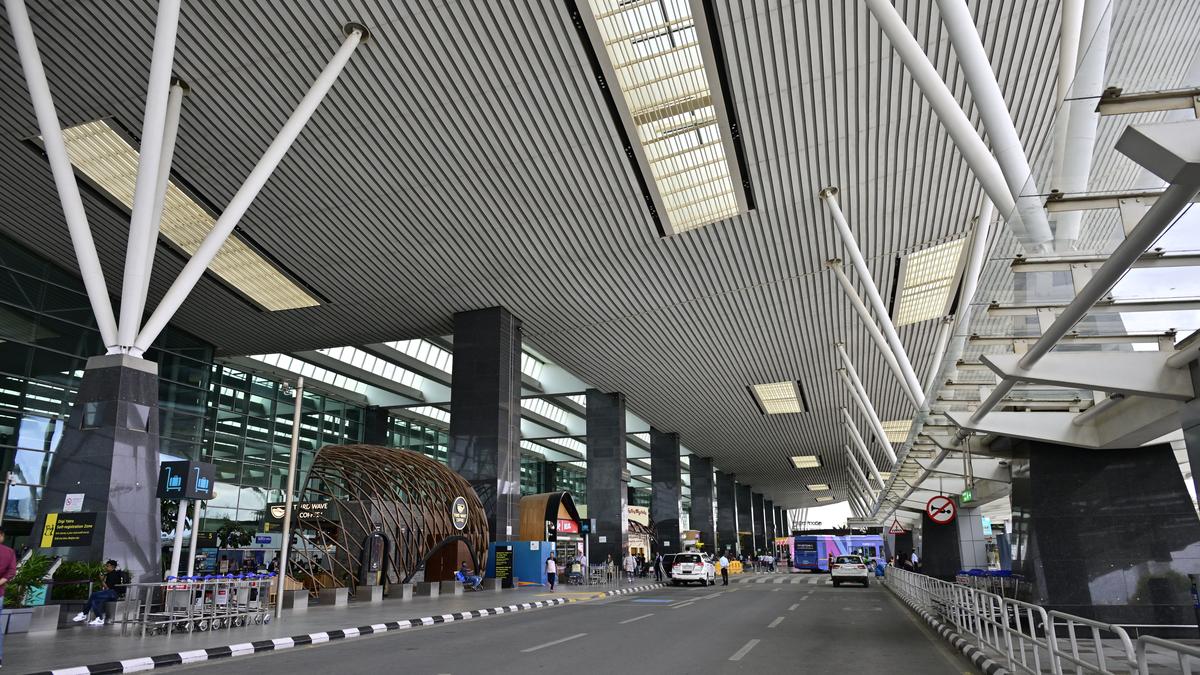
This shift could lead to a notable decrease in user development fees and other charges for travellers
The Airports Economic Regulatory Authority (AERA) has proposed increasing the utilisation of non-aeronautical revenue (NAR) to offset airport charges in a move that could substantially reduce user development fee (UDF) and other aeronautical charges paid by passengers, sources told businessline.These recommendations have been made by AERA to the Ministry of Civil Aviation.AERA has called for a review of the National Civil Aviation Policy (NCAP) 2016 provisions governing airport tariff determination, stating that the existing hybrid till mechanism, which allows only 30 per cent of non-aeronautical revenue to be used for cross-subsidising airport charges, may no longer be appropriate given the maturity of India’s airport sector and its stronger long-term growth prospects.Cross-subsidisationSources said increasing the share of non-aeronautical revenue used for cross-subsidisation would reduce the aeronautical revenue requirement (ARR) of airport operators, thereby lowering airport charges recovered from airlines and passengers.The authority said that if non-aeronautical revenue equals or exceeds an airport operator’s entitled revenue requirement, UDF and other aeronautical charges could potentially become negligible or decline significantly.Initially, a single till model for airport tariff regulation was being followed in India before adopting the hybrid till framework under the National Civil Aviation Policy, 2016, to provide a uniform regulatory framework while encouraging private investment in airport infrastructure.Under the existing framework, only 30 per cent of revenue generated from commercial activities such as retail outlets, food and beverage services, advertising and vehicle parking is used to subsidise aeronautical charges, while the balance is retained by airport operators.Traffic growthHowever, AERA, has observed that the airport sector has evolved considerably since the introduction of the hybrid till mechanism, with lower business risks and improved traffic growth prospects.Besides, the regulator has recommended that the government revisit the existing policy and either adopt a single till mechanism under which 100 per cent of non-aeronautical revenue is used to offset airport charges or, alternatively, increase cross-subsidisation to around 70 per cent under the existing hybrid till framework.Furthermore, sources cited international practices, noting that countries such as the United Kingdom, France and Spain follow the single till mechanism, under which the entire non-aeronautical revenue is used to offset airport charges.More than 50 per cent of nearly 240 airports globally operate under the single till model, resulting in lower airport tariffs than those following the hybrid till framework.These recommendations, sources said, form part of AERA’s broader review of the airport economic regulatory framework and would require changes to the National Civil Aviation Policy before any revised tariff mechanism can be implemented.Published on July 29, 2026