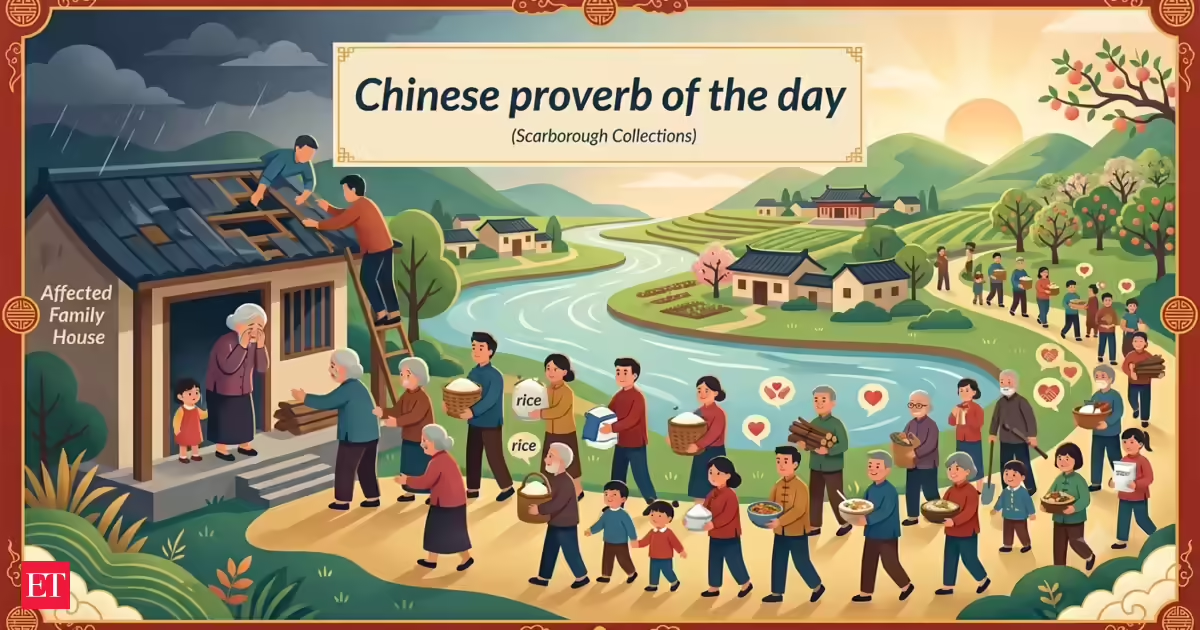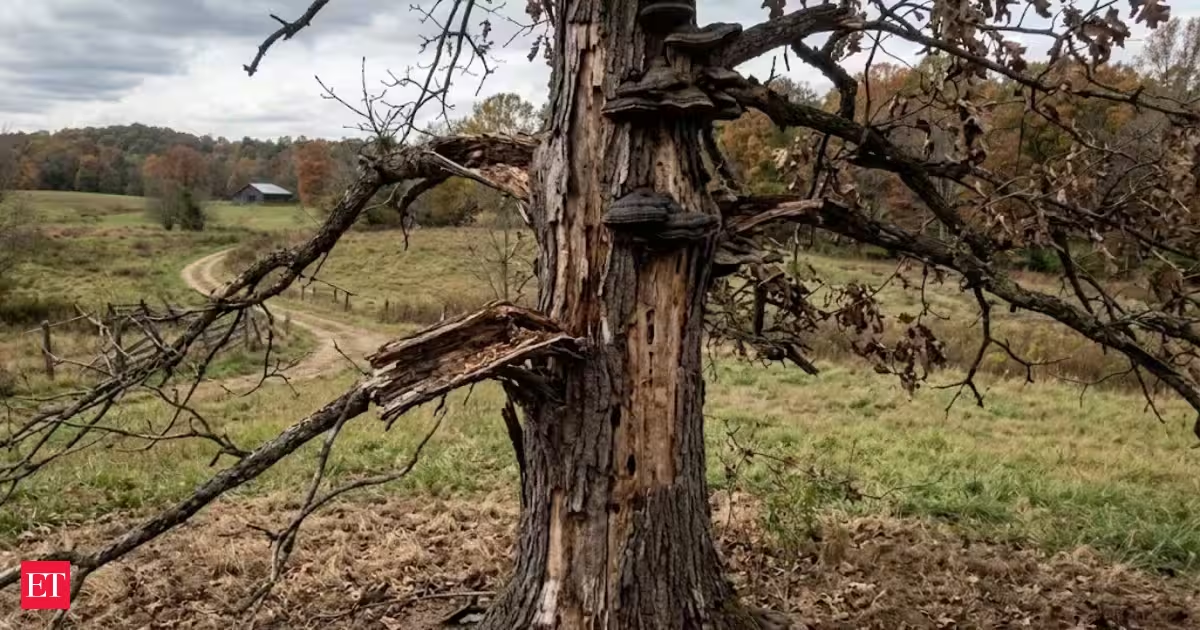
Chinese proverb of the day focuses on the saying, "When the tree dies, the grass underneath withers." This proverb comes from China and explains how people and groups often depend on one another. It uses the image of a tree and the grass growing beneath it to describe the relationship between leaders and followers, parents and children, or providers and dependents. When the source of strength disappears, those depending on it may also struggle. The proverb continues to be discussed because it explains leadership, family support, workplace relationships and the importance of building stability for individuals and communities.The proverb is, "When the tree dies, the grass underneath withers." It comes from China. It uses a simple example from nature to explain how people are connected to one another. Just as grass depends on a tree for shade, protection and support, people often depend on parents, leaders, teachers, employers or other important figures.The proverb explains that when the central source of support disappears, those who rely on it may also face problems. It reminds people that no individual exists in complete isolation. Families, workplaces and societies all function because people support one another. This message has remained meaningful across generations because it reflects situations that people continue to experience today.You Might Also Like:Understanding the meaning behind the proverbThe proverb contains two important symbols.The treeThe tree represents someone or something that provides strength and stability. It may represent:A parentA leaderA providerA teacherThe head of a familyThe foundation of an organisationThe tree stands as the main source of protection and guidance.The grassThe grass represents those who depend on that support. It may include:ChildrenFamily membersEmployeesFollowersStudentsCommunity membersThe grass grows beneath the tree because it benefits from the tree's presence. When the tree disappears, the grass also suffers because its environment changes.Life lessons from the proverbThe proverb teaches several lessons that remain useful in everyday life.Relationships are interconnectedPeople depend on each other in many ways. Families support one another emotionally and financially. Teams depend on every member to complete shared goals. Communities grow stronger when individuals work together. The proverb reminds people that the success or failure of one person can influence many others.Leadership affects everyoneA leader often shapes the direction of a family, business or organisation. When leadership becomes weak or disappears, the people who depend on that leadership may experience uncertainty.This lesson applies to:FamiliesSchoolsBusinessesGovernmentsCommunity organisationsStrong leadership creates stability, while its absence may affect everyone connected to it.Dependence has risksThe proverb also teaches that complete dependence can become a weakness. If people rely entirely on one person or one source of support, they may struggle when circumstances change. Building personal skills, knowledge and confidence helps people become more prepared for unexpected situations.Support systems matterEvery society depends on systems that provide security and guidance. Parents support children. Teachers guide students. Employers provide opportunities. Communities help individuals during difficult times.The proverb explains that when an important support system breaks down, many people may experience challenges together.Why this proverb remains relevant today?Although the proverb was created many years ago, its message continues to apply in modern life.In families, parents often serve as providers and guides. Their role influences the lives of children and other family members.In workplaces, managers and business owners make decisions that affect employees.In schools, teachers influence students' learning and development.In communities, responsible leadership helps maintain stability.The proverb reminds people that every role carries responsibility because many others may depend upon it. At the same time, it encourages individuals to become capable of standing on their own so they can face future challenges.The proverb in Chinese cultureThe proverb belongs to China and has appeared in cultural discussions and literature. It is commonly used as a metaphor to explain what happens when the central source of support disappears.The saying highlights the importance of family, leadership, heritage and shared responsibility. It also reflects the belief that society functions through cooperation and mutual dependence rather than individual effort alone.English equivalent and related expressionsSeveral English sayings express ideas similar to this Chinese proverb.Some related expressions include:"United we stand, divided we fall.""A chain is only as strong as its weakest link.""When the foundation is weak, the structure cannot stand.""No man is an island."Although the wording differs, each expression highlights the importance of support, cooperation and shared responsibility.Inspiring Chinese proverbs you should knowMany Chinese proverbs continue to offer practical guidance for daily life.Some well-known examples include:"A journey of a thousand miles begins with a single step.""Teachers open the door, but you must enter by yourself.""Learning is a treasure that will follow its owner everywhere.""The best time to plant a tree was twenty years ago. The second best time is now.""Patience is power."These sayings encourage learning, persistence, responsibility and continuous personal growth.What people can learn today?The proverb reminds people to appreciate those who provide guidance and support. It also encourages everyone to become more independent. People can strengthen relationships while preparing themselves for future changes.The saying teaches that families, organisations and communities become stronger when support is shared instead of depending on only one individual. Its message remains meaningful because leadership, cooperation and resilience continue to shape daily life across the world.
Chinese proverb of the day: 'When the tree dies, the grass...' Life lessons from motivational proverb on interconnectedness, leadership dependence, vulnerability and systemic support
Chinese proverb of the day highlights the meaning of the saying, "When the tree dies, the grass underneath withers." The proverb explains how people, families and communities depend on strong support systems. It also teaches lessons about leadership, interconnectedness, vulnerability and self-reliance. The saying remains relevant because it reminds people to value relationships, build resilience and understand how the loss of one important source of support can affect many others.
849 words~4 min read