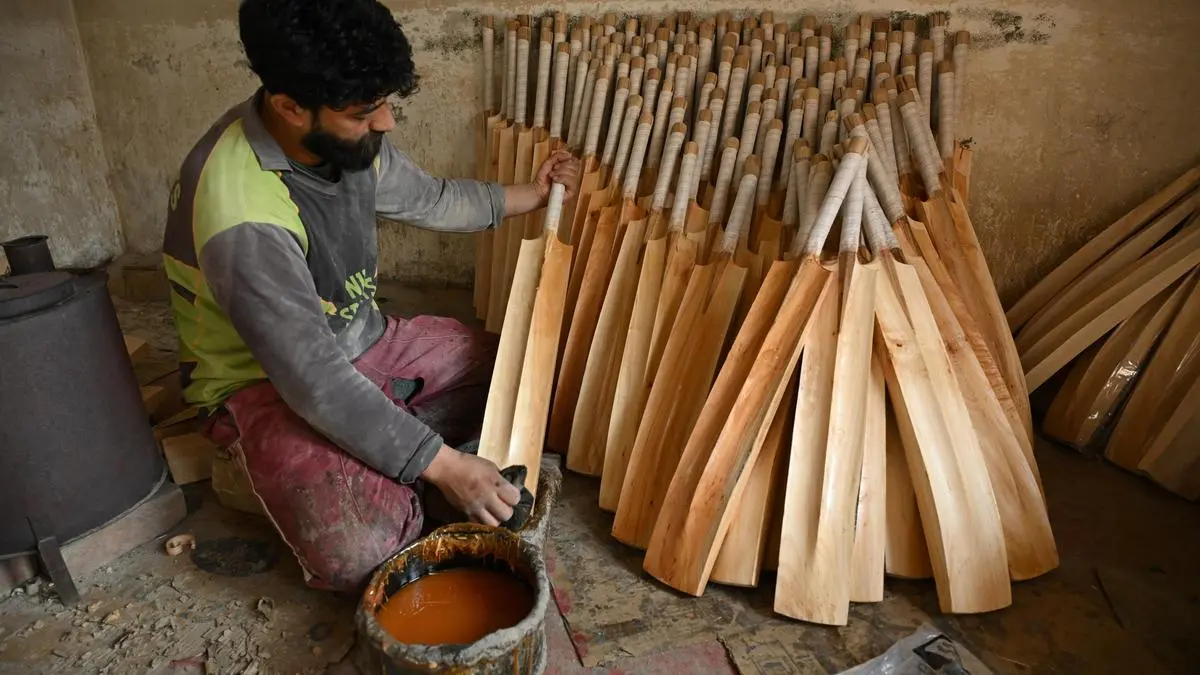
Industry representatives say the shortage of willow, the raw material used to make cricket bats, has emerged as one of the biggest challenges
| Photo Credit:
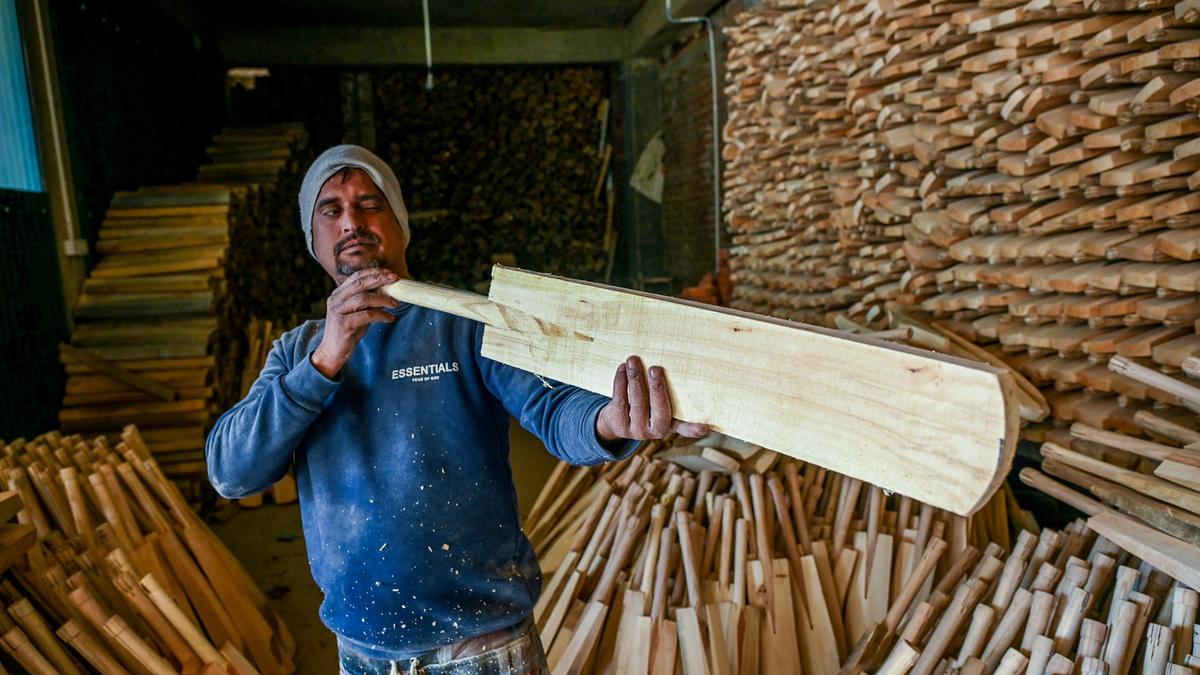
For years, cricket bat manufacturers in Kashmir have raised concerns over the declining number of willow trees and the smuggling of willow clefts out of the Valley, saying both have hurt the industry’s growth.However, a recent meeting between industry representatives and Chief Minister Omar Abdullah, followed by his visit to the manufacturing units, has rekindled hope for the struggling sector.“The Chief Minister has directed the Forest Department to take measures for the replantation of willow trees,” says Fawzul Kabir, a young entrepreneur and founder of GR8 Sports Willow Bat Industry.Kashmir is India’s only source of the willow wood used to manufacture cricket bats, making the region the country’s hub for bat production. Around 400-450 manufacturing units, most of which are located in south Kashmir’s Anantnag district, produce nearly 1.5 million bats every year. The industry, estimated to be worth about ₹ 700 crore, employs thousands of people involved in willow cultivation, bat manufacturing, and allied trade.Industry representatives say the shortage of willow, the raw material used to make cricket bats, has emerged as one of the biggest challenges facing manufacturers. They attribute the decline to the felling of mature trees without adequate replanting and to the diversion of willow clefts to markets outside Jammu and Kashmir.Manufacturers say the growing smuggling of willow clefts out of the Valley has reduced the availability of raw material for local units, forcing many to procure wood at higher prices and affecting production.In 2005, the Jammu and Kashmir government imposed a complete ban on the transport and export of Kashmir willow clefts outside the Union Territory to safeguard the local cricket bat industry. The move followed a partial restriction introduced in 1999, under which the government prohibited the movement of Kashmir willow to other states but allowed the export of up to two lakh clefts annually under a quota system.However, according to bat makers, they illegally transport 10 to 15 lakh willow clefts outside Jammu and Kashmir every year.Kabir said the industry has urged the government to completely implement the ban on the movement of willow clefts outside the region, expand plantations, and ensure a steady supply of quality wood to local manufacturers.“The Chief Minister assured the industry that the government would examine its concerns and take steps to strengthen the sector, including measures regarding willow replantation,” he said.Kabir added that industry representatives are scheduled to meet the Chief Conservator of Forests on August 6 to take the discussion forward.Published on July 29, 2026