OpenEvidence, founded in 2021, is a free, ad-supported AI search engine for doctors that pulls answers straight from peer-reviewed medical journals at the point of care and labels how strong the evidence is. It’s become somewhat of the poster child of the medical AI boom.
In February, a Sequoia-led round valued the company at $1 billion. In the following months, that number grew to $3.5 billion by July with GV and Kleiner Perkins co-leading, $6 billion in October to $12 billion this January, in a round co-led by Thrive Capital and DST Global. That’s roughly $700 million raised in about a year.
Meanwhile, competitor Doximity has taken an enterprise approach. Best known as a professional networking platform for physicians, it now sells an AI assistant called Ask that helps doctors summarize patient notes, check drug interactions, and draft documentation. Ask is folded into paid, enterprise contracts with more than 150 health systems. Every answer runs through a human-review layer called PeerCheck, where physicians check AI output against the original sources it’s citing. Doximity posted $145.4 million in quarterly revenue this spring, up 5% year over year.
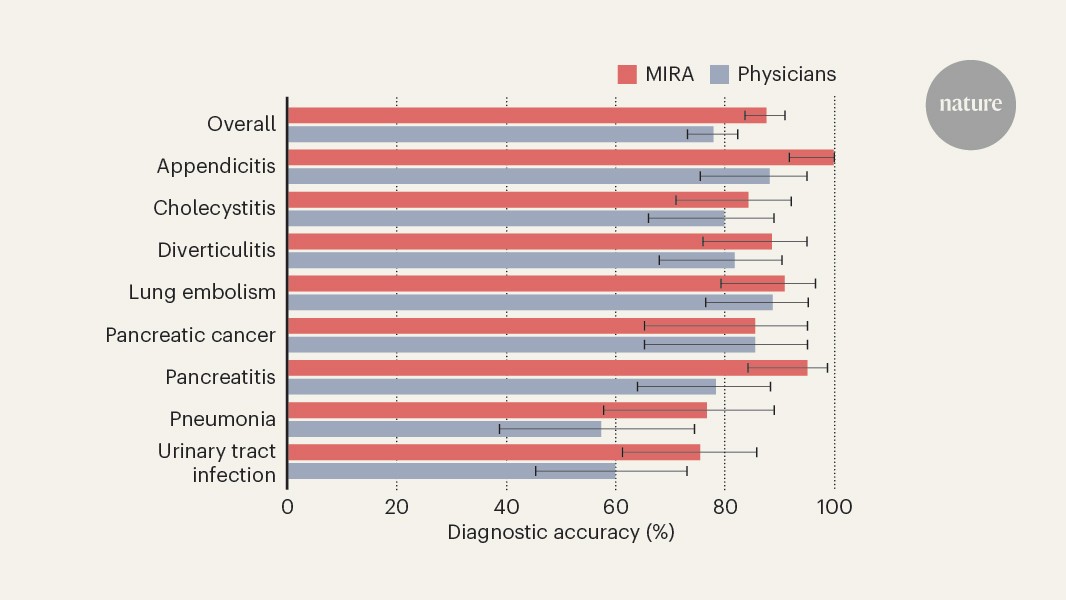
In mid-July, a new independent benchmark called NOHARM put both Doximity and OpenEvidence’s AI tools to the test, alongside OpenAI’s GPT-5.6 Sol and Anthropic’s Claude Fable 5. Built by researchers at Stanford, Harvard, and the ARISE network, it ran 1,100 real clinical cases through each model and collected roughly 13,000 physician annotations to score for patient harm. Doximity Ask came out on top. OpenEvidence contested the accuracy of Doximity’s score, however.