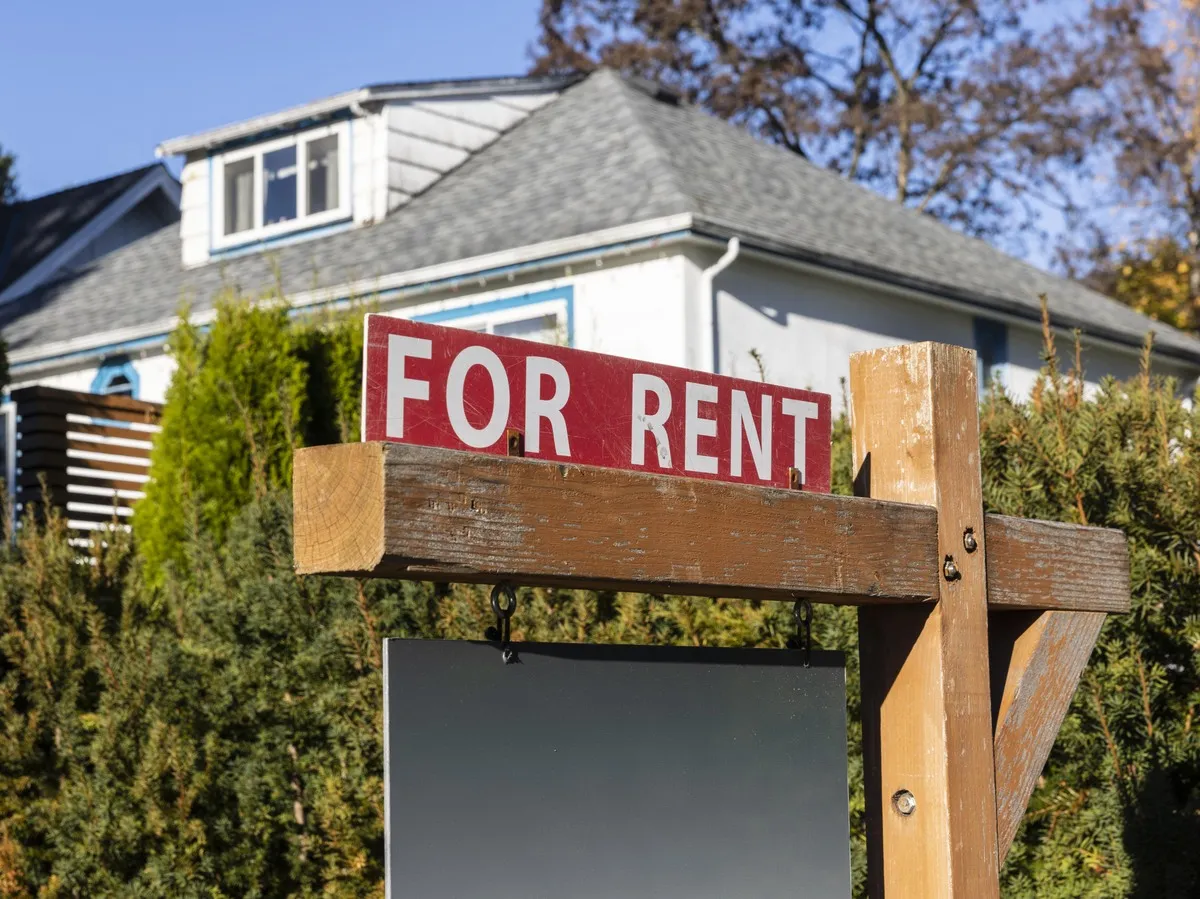
Skip to Content News Archives Economy Energy Oil & Gas Renewables Electric Vehicles Mining Commodities Agriculture Real Estate Mortgages Mortgage Rates Finance Banking Insurance Fintech Cryptocurrency Work Wealth Smart Money Wealth Management Investor Personal Finance Family Finance Retirement Taxes High Net Worth FP Comment Executive Women Puzzmo Newsletters Financial Times Business Essentials More Innovation Information Technology FP500 Podcasts Small Business Lives Told Tails Told Shopping Financial Post Store Obituaries Place a Notice Advertising Advertising With Us Advertising Solutions Postmedia Ad Manager Sponsorship Requests Classifieds Place a Classifieds ad Working Profile Settings My Subscriptions Saved Articles My Offers Newsletters Customer Service FAQ News Economy Energy Mining Real Estate Finance Work Wealth Investor FP Comment Executive Women Puzzmo Newsletters Financial Times Business Essentials HomeFP CommentOpinion: Corporations renting out single-family homes? No problemLots of families who can't afford to buy a house might still want to live in one. Why would anyone want to make that impossible for them?Last updated 58 minutes ago You can save this article by registering for free here. Or sign-in if you have an account.Allowing corporations to enter the rental housing market could provide hard-pressed Canadian households with a viable new route to living in the single-family house of their dreams. Photo by Jason Payne/PostmediaThe Toronto Star and United States President Donald Trump don’t agree on much. That corporations shouldn’t rent out single-family houses is one of those rare things.Subscribe now to read the latest news in your city and across Canada.Exclusive articles from Barbara Shecter, Joe O'Connor, Gabriel Friedman, and others.Daily content from Financial Times, the world's leading global business publication.Unlimited online access to read articles from Financial Post, National Post and 15 news sites across Canada with one account.National Post ePaper, an electronic replica of the print edition to view on any device, share and comment on.Daily puzzles, including the New York Times Crossword.Subscribe now to read the latest news in your city and across Canada.Exclusive articles from Barbara Shecter, Joe O'Connor, Gabriel Friedman and others.Daily content from Financial Times, the world's leading global business publication.Unlimited online access to read articles from Financial Post, National Post and 15 news sites across Canada with one account.National Post ePaper, an electronic replica of the print edition to view on any device, share and comment on.Daily puzzles, including the New York Times Crossword.Create an account or sign in to continue with your reading experience.Access articles from across Canada with one account.Share your thoughts and join the conversation in the comments.Enjoy additional articles per month.Get email updates from your favourite authors.Create an account or sign in to continue with your reading experience.Access articles from across Canada with one accountShare your thoughts and join the conversation in the commentsEnjoy additional articles per monthGet email updates from your favourite authorsSign In or Create an AccountorIn 2021, a Toronto condo developer announced plans to buy 4,000 houses and convert them into rental properties as a solution to Canada’s housing affordability crisis. “It’s wrong on all possible levels” screamed a Star headline the very next day. The plan never came to fruition, partly due to loud and angry denunciations from media and politicians.Fast forward to Trump’s January 2026 appearance at the World Economic Forum. “Homes are built for people, not for corporations,” he thundered in Davos. “America will not become a nation of renters.” This summer, Congress passed a housing bill with huge bipartisan support that similarly cracks down on the corporate rental sector.Get the latest headlines, breaking news and columns.By signing up you consent to receive the above newsletter from Postmedia Network Inc.A welcome email is on its way. If you don't see it, please check your junk folder.The next issue of Top Stories will soon be in your inbox.We encountered an issue signing you up. Please try againBoth the left and right say they oppose corporations renting out single-family houses. And on both sides of the border. About the only group not on board with this crusade are folks eager to rent those houses. Who speaks for them?In the wake of the 2007-08 U.S. sub-prime mortgage crisis, institutional investors began buying up foreclosed houses and turning them into rental properties. “Homes were selling for below replacement value,” recalls Edward Pinto, co-director of the American Enterprise Institute Housing Center. “And Wall Street money realized they could buy up these houses at a very low cost and rent them out.”While single-family homes have always been available for rent, until the financial crisis the owners were usually small-time investors with a handful of houses who lived nearby — what’s called the “Mom-and-Pop” sector. By applying sophisticated management practices, Wall Street quickly figured out how to make a profit renting houses at scale, particularly in the Sunbelt states. The concept was a winner, with many firms boasting occupancy rates in the high 90 per cent range.In their search for new ways to make money, corporate investors had stumbled upon a large, under-served market: families keen to live in a house but unable to come up with the downpayment. Pinto says low-to-medium-income working households stuck in cramped one- or two-bedroom high-rise apartments are a key demographic. “If you have children, a three-bedroom house offers a lot more space,” Pinto observes. Offering single-family houses for rent provides “a service for people who cannot afford to buy these homes on their own.”As the supply of foreclosed houses dried up, U.S. investors later pivoted to building brand-new houses to rent out. The “build-to-rent” segment now constitutes seven per cent of all new home construction in the U.S. Despite these innovations, however, the institutional rental segment remains quite small; large investors currently own less than one per cent of all single-family homes in the U.S.But that doesn’t stop populists such as Trump from blaming corporations for everything that’s gone wrong with real estate. “You’ve driven up housing prices by purchasing hundreds of thousands of single-family homes,” he scolded investors in Davos. “It’s just not fair to the public.”In fact, academic research shows the entry of corporate money typically provides a net benefit to the public. While corporate buying does raise housing prices by a small amount, it has a much bigger downward impact on rents. And again, the biggest beneficiaries are low-to-middle-income families. The recent U.S. housing bill seems to acknowledge this truth, as it contains numerous carve-outs and exemptions aimed at quietly keeping the rental market healthy, despite all the political bluster.Here in Canada, plenty of evidence shows that Canadians of all ages overwhelmingly prefer to live in detached or semi-detached ground-level housing. Unfortunately, the spike in prices in recent decades has made owning a house a near-impossibility, especially for many younger families.“For 20- and 30-year-olds who are just embarking on having a family, renting a house now makes a lot of sense,” says Carl Gomez, chief economist at Toronto-based Centurion Asset Management. These couples haven’t given up on the idea of living in a house, he points out, just of owning one. Considering these pressures, Gomez agrees that the creation of a U.S.-style corporate rental market in Canada “makes 100 per cent sense,” at least on paper.Unfortunately, that same problems that have pushed housing prices sky high — rising land and labour costs, onerous taxes, Greenbelts, zoning restrictions, lengthy approval delays and assorted regulations and restrictions — are also standing in the way of building new homes to rent.But rental houses face an additional political problem. In 2024, federal finance minister Chrystia Freeland announced a nationwide consultation on “ways to restrict the purchase and acquisition of existing single-family homes by very large corporate investors.” This is in addition to the Federal Housing Advocate’s relentless campaign against “financialization” in the housing market. But banning corporations from this segment will ensure that struggling Canadian families never enjoy the greater choice and lower rents their American counterparts have experienced over the past 15 years.Mike Moffat is head of the Missing Middle Initiative, a think-tank that advocates for ways to make single-family homes more attainable for young families. He argues that the current crusade against corporate rentals fails on logic alone. If renting houses for profit is so bad, he asks, how come the Mom-and-Pop sector hasn’t been villainized as well? According to recent Statistics Canada data, of the four million homes in Ontario, a mere 84,000 are owned by for-profit corporate entities; the Mom-and-Pop sector accounts for 538,000 homes — more than six times that. Why do small investors get a free pass?“It’s easier to go after a faceless corporation than it is to criticize your neighbour who owns a couple of rental homes down the street,” Moffat observes. Yet dealing with an institutional investor is often the preferred option. “A corporate landlord is never going to kick you out because they want their cousin to move in,” he quips.Canada needs more housing options. As U.S. experience shows, allowing corporations to enter the rental housing market could provide hard-pressed Canadian households with a viable new route to living in the single-family house of their dreams. Why would anyone want to stand in the way of that?Peter Shawn Taylor is senior features editor at C2C Journal, where a longer version of this story first appeared. Join the Conversation This website uses cookies to personalize your content (including ads), and allows us to analyze our traffic. Read more about cookies here. By continuing to use our site, you agree to our Terms of Use and Privacy Policy.
Opinion: Corporations renting out single-family homes? No problem
Lots of families who can't afford to buy a house still want to live in one. Why would anyone want to make that impossible for them? Read on
1,563 words~7 min read