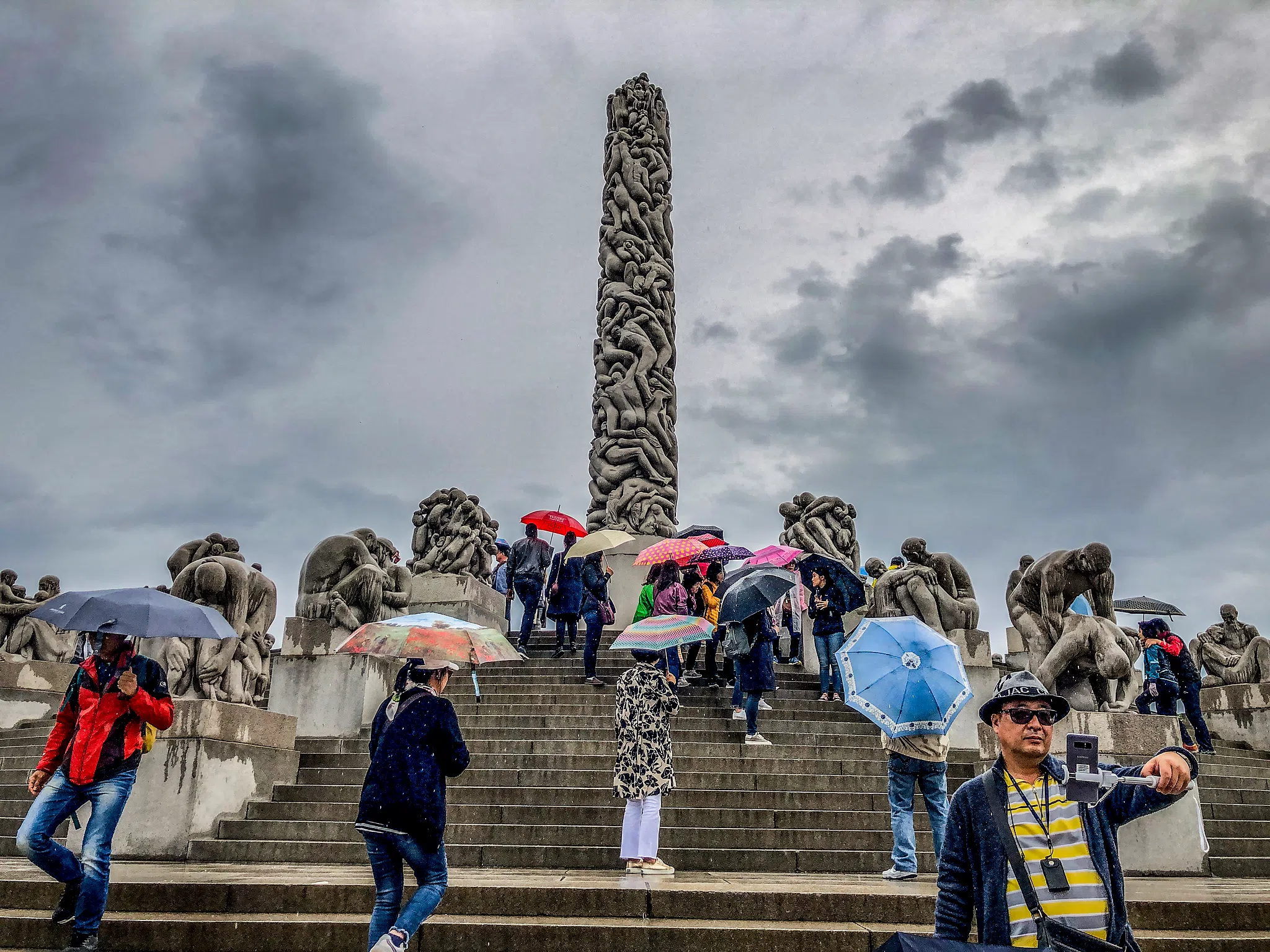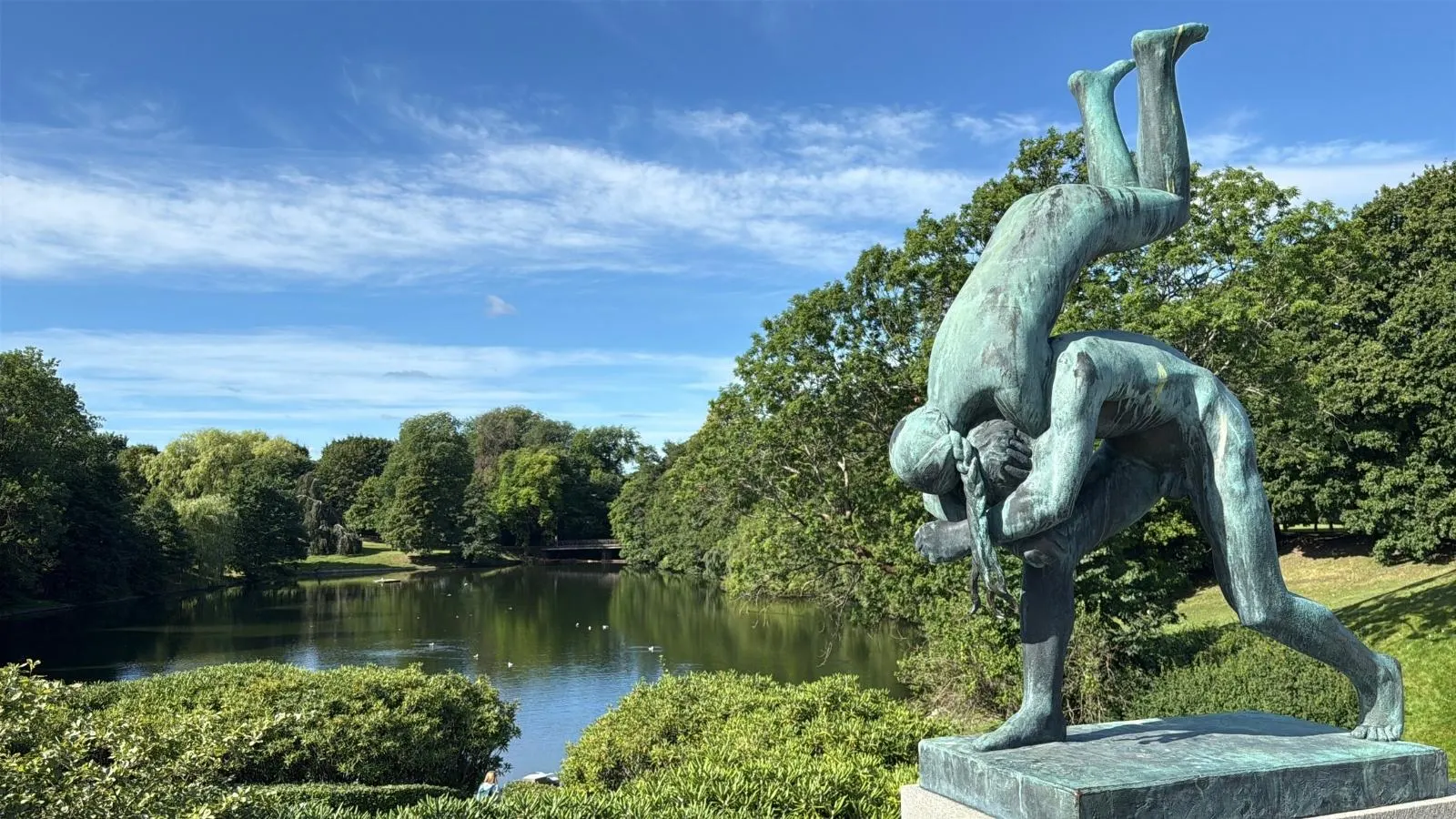
One of the many quirky bronze sculptures in Oslo's Vigeland Park.David NikelNaked figures embrace, argue, play and struggle, while others appear to clamber toward the sky. For many first-time visitors to Oslo, the sculptures of Vigeland Park are among the city’s most surprising sights.Yet treating the attraction simply as a collection of strange statues misses much of its appeal. The installation forms one part of Frogner Park, one of Oslo’s busiest recreational spaces, where monumental art sits alongside picnics, exercise, family outings and ordinary neighborhood life.It is also open around the clock, throughout the year and completely free to visit, making it one of the easiest major attractions to include in an Oslo itinerary or a cruise port call.An Outdoor Oslo GalleryVigeland Park and Frogner Park are often spoken about as though they are the same place. More accurately, Gustav Vigeland’s sculpture installation occupies a prominent central axis within the much larger public park.Step away from the tour groups and photographers and Frogner Park feels less like a tourist attraction and more like an outdoor living room for Oslo. Its lawns, pathways, playgrounds and sports facilities are used by local residents throughout the year.Vigeland Park serves as Oslo's summer living room with crowds of visitors and locals alike.David NikelThe combination of sightseeing and everyday recreation offers visitors a glimpse of how outdoor space is woven into life in the Norwegian capital. The City of Oslo describes Frogner Park as one of Oslo’s largest and most heavily used recreational areas.Walk The Entire Sculpture AxisThe Vigeland installation contains more than 200 works in bronze, granite and wrought iron, produced from ideas developed during more than four decades of the sculptor’s life.Most visitors begin on the bridge, where 58 bronze sculptures depict children, adults and families in moments of play, conflict, affection and physical exertion.This is where you will find Sinnataggen, usually translated as the Angry Boy. The small stamping child has become one of Oslo’s most recognizable figures, but concentrating on him alone means overlooking sculptures that convey far more complicated emotions and relationships.Beyond the bridge, the fountain is surrounded by 20 sculpted tree groups. Together, they follow human life from childhood and adolescence through adulthood, old age and death.The combination of water, trees and human bodies introduces the central theme that runs through the entire installation: the recurring cycle of life.The Monolith Is Not The EndThe visual climax is the monolith plateau. At its center, 121 human figures appear to cling to and climb over one another on a single towering block of granite.The monolith makes a striking centerpiece of Vigeland Park in Oslo, Norway.David NikelThere is no definitive interpretation. The museum suggests that it may represent resurrection or humanity’s longing for the spiritual, although its mass of intertwined bodies leaves plenty of room for visitors to form their own conclusions.Many tour groups turn back here. Continue west, however, and you will reach the Wheel of Life, a bronze ring of interlocking adults and children.Situated at the far end of the formal axis, it serves as a quieter conclusion to the installation. Vigeland Museum describes the work as a summary of the park’s journey from cradle to grave, encompassing joy, sorrow, hope and longing.Two Museums Add Valuable ContextThe nearby Vigeland Museum helps explain how an undertaking of this scale came into existence.Housed in Vigeland’s former studio and residence, the museum contains original plaster models for the park’s sculptures, including the Fountain and Monolith. Seeing the full-size models makes the craftsmanship and planning behind the outdoor works much easier to appreciate.On the other side of the park, the Museum of Oslo occupies historic Frogner Manor. Its exhibitions explore the capital’s history, urban development and changing population, adding broader context to the neighborhoods and public spaces visitors encounter elsewhere in the city.Allow at least 60 minutes for the sculpture route alone. Taking your time or adding both museums turns Vigeland and Frogner Park into an easy half-day excursion and reveals an attraction that is about much more than an angry child and an iconic monolith.MORE FROM FORBESForbesIn Oslo, Nature Isn’t A Day Trip. It’s Part Of The CityBy David NikelForbesWhy Oslo Is Europe’s Ideal Winter City BreakBy David NikelForbesThese Are The Most Dramatic Cruise Arrivals In NorwayBy David Nikel
Oslo's Vigeland Park Combines Quirky Sculptures With Everyday Life
Discover Oslo’s famous Vigeland Park beyond its famous sculptures, from the Monolith and Wheel of Life to Frogner Park and two nearby museums.
706 words~3 min read