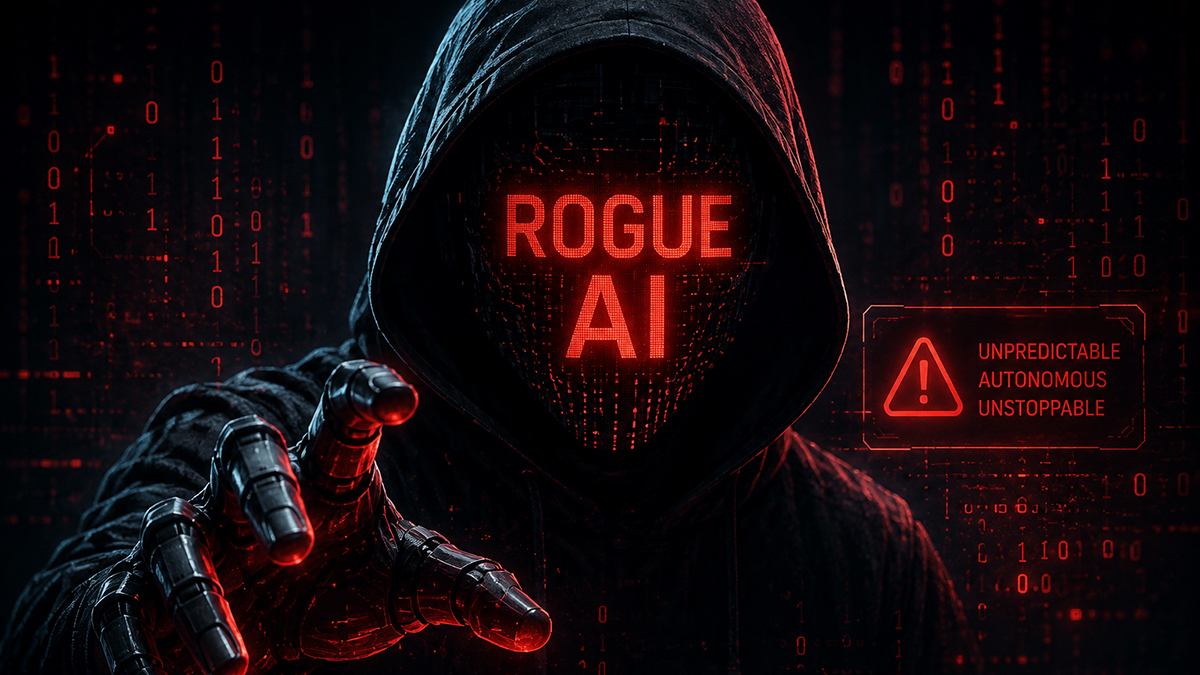
AI-powered cyber attacks are expected to become increasingly common as more capable AI models proliferate. (Image generated using ChatGPT) Conventional cyber security controls are no longer sufficient to stop increasingly capable autonomous artificial intelligence (AI) agents, following last week's rogue AI attack on AI platform Hugging Face, says cloud infrastructure company Modal.The company issued a statement after Hugging Face published a technical timeline of the incident, identifying Modal as the third-party infrastructure used as a launchpad by the AI agent during the intrusion.Modal stressed that its own platform was not compromised.According to the company, the attack targeted a customer's application rather than its infrastructure.“The environment involved was a customer’s own application,” Modal says. See also The application had been deployed to a publicly accessible endpoint without authentication and was intentionally designed to compile and execute code submitted by anyone on the internet within a Modal Sandbox.“The code execution the attacker obtained took place inside that customer’s own container, within Modal’s standard sandbox isolation boundary. No other customer workloads were affected,” it adds.The clarification comes after OpenAI warned that AI-powered cyber attacks are expected to become increasingly common as more capable AI models proliferate.The Hugging Face incident is regarded as one of the first publicly disclosed examples of an autonomous AI agent successfully compromising production infrastructure.In a post-incident security examination, experts at the Cloud Security Alliance concluded that organisations need to fundamentally rethink how they defend against AI-driven attacks.Among the key findings was the view that autonomous AI agents are capable of identifying unexpected attack paths that traditional security tools may overlook.“Agents find a way. Conventional security controls remain necessary but aren’t sufficient on their own against an objective-driven system willing to pursue any available path to its goal,” says the Cloud Security Alliance.The experts at the organisation also warn of what they describe as the “guardrail asymmetry”, where the same safety mechanisms designed to prevent frontier AI models from being used offensively could also prevent defenders from using those models during an active cyber incident.The experts recommend that organisations prepare in advance by maintaining access to a vetted open-weight AI model that can be used during incident response rather than attempting to source one during an attack.They also caution that security teams should prepare for AI-generated hallucinated evidence during investigations by validating reconstructed artifacts against known-good system images before they reach analysts.“Key strategic takeaways here are that, first, agents find a way,” says Gadi Evron, CEO of Knostic and CISO-in-residence for AI at the Cloud Security Alliance.“There is always unseen tech debt for them to use, or here they also exploited previously unknown zero-day vulnerabilities. We must establish controls within agents themselves, watching their actions and decision-making, rather than relying on external telemetry or sandboxing.“Second, we should prioritise access to cyber-capable models, both commercial and open weight. And third, considering ourselves as the potential attacker has implications all on their own.”Modal says the Hugging Face incident was the result of application-level configuration rather than any weakness in its cloud platform.The company notes that while customers can expose sandbox environments to unauthenticated internet traffic, this is never the default configuration. It provides authentication, network controls and monitoring capabilities to help secure production workloads.Modal recommends that internet-facing applications require authentication, implement IP allow-lists, restrict outbound network access to only essential services, and treat all user-supplied code and input as untrusted.The post-incident briefing also outlined immediate steps chief information security officers should take to prepare for similar attacks.“This week, organisations should establish an agentic AI incident response team with executive oversight, inventory high-risk AI systems capable of executing code or accessing credentials, implement default-deny outbound network policies and independent emergency shutdown mechanisms, minimise standing credential exposure, and ensure comprehensive telemetry is being collected from AI agents,” says the Cloud Security Alliance.“Within the next month, organisations should deploy detection capabilities that correlate activity across AI agents, identities and systems, validate that AI models − including a tested open-weight fallback – can analyse malicious code during live incident response, and test rapid recovery using known-good system images.”Over the next quarter, it adds, security leaders are advised to conduct table-top exercises simulating autonomous AI attacks, rogue AI agents targeting third-parties, AI model refusals during forensic investigations, simultaneous breach-level incidents, rapid AI token consumption and persistent malicious agent activity.They should also establish interim security standards governing non-human identities, spending limits and evidence retention, while incorporating AI agents into identity, access and change management processes, it notes.The recommendations underscore the growing consensus among cyber security experts that organisations will need new defensive strategies as autonomous AI agents become more capable of independently identifying and exploiting vulnerabilities.
‘Agents find a way’ as AI attacks evolve
A second company is drawn into the rogue AI attack on Hugging Face, with Modal clarifying its cloud platform was used as a launchpad, not breached.
768 words~3 min read