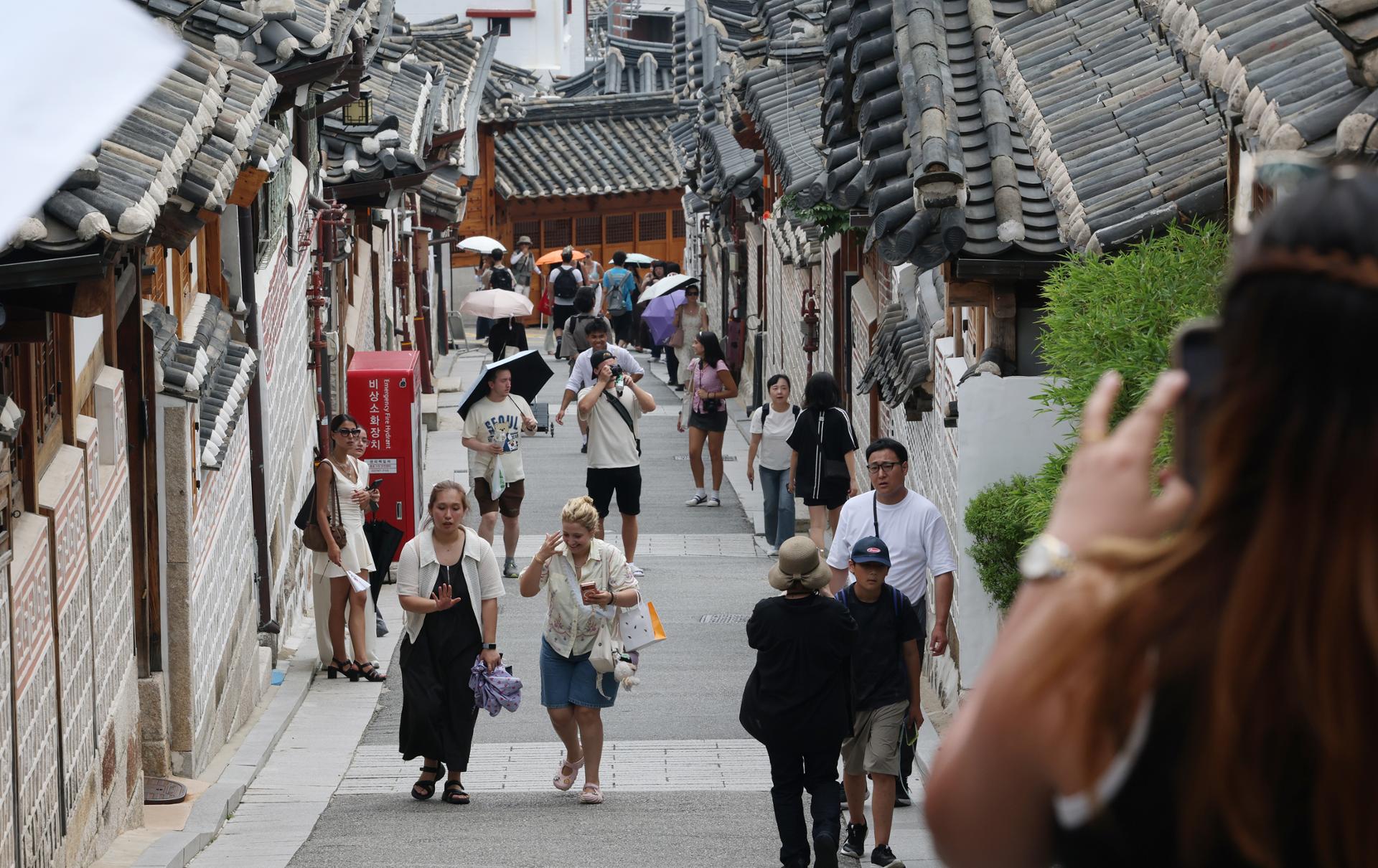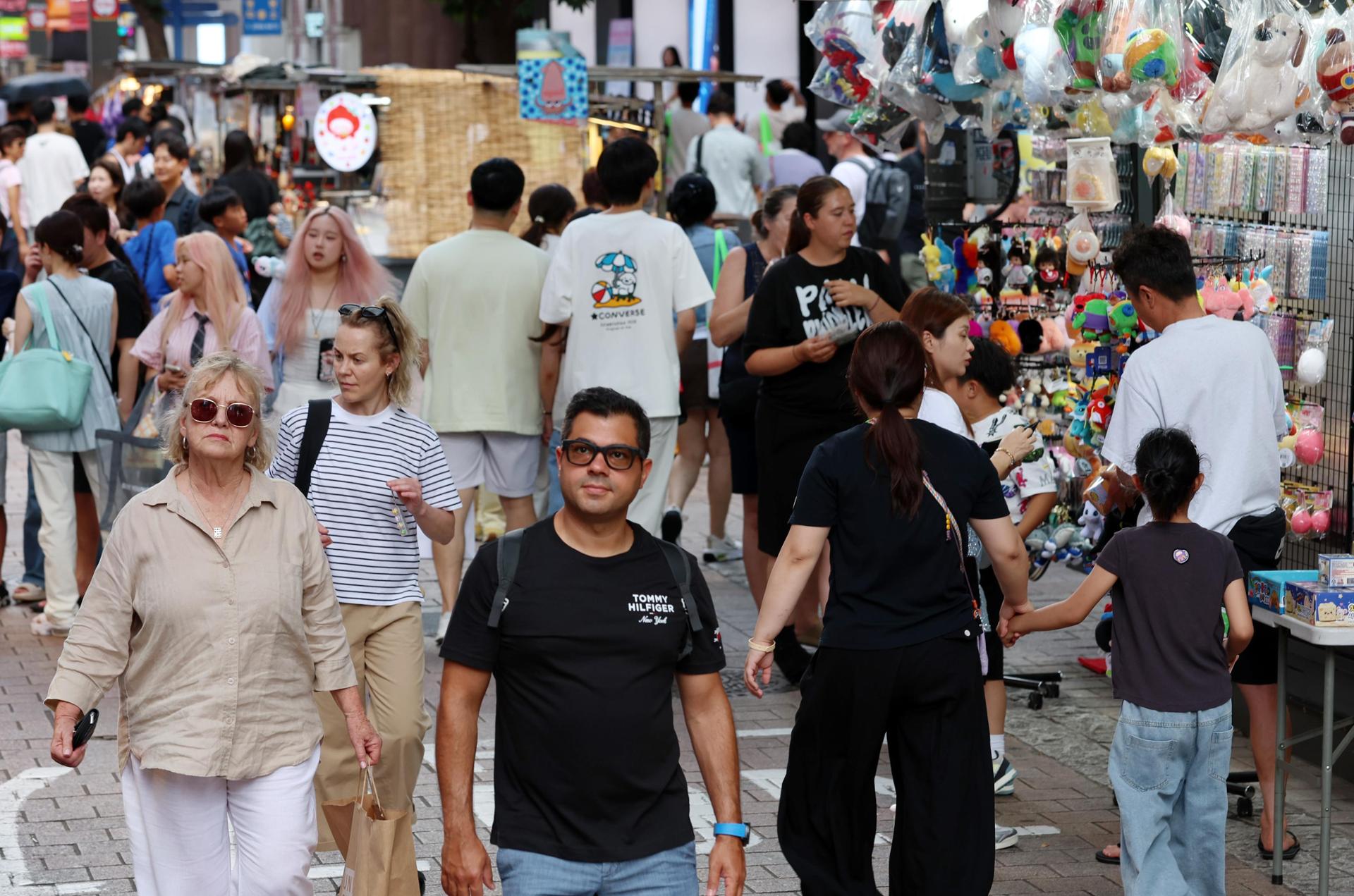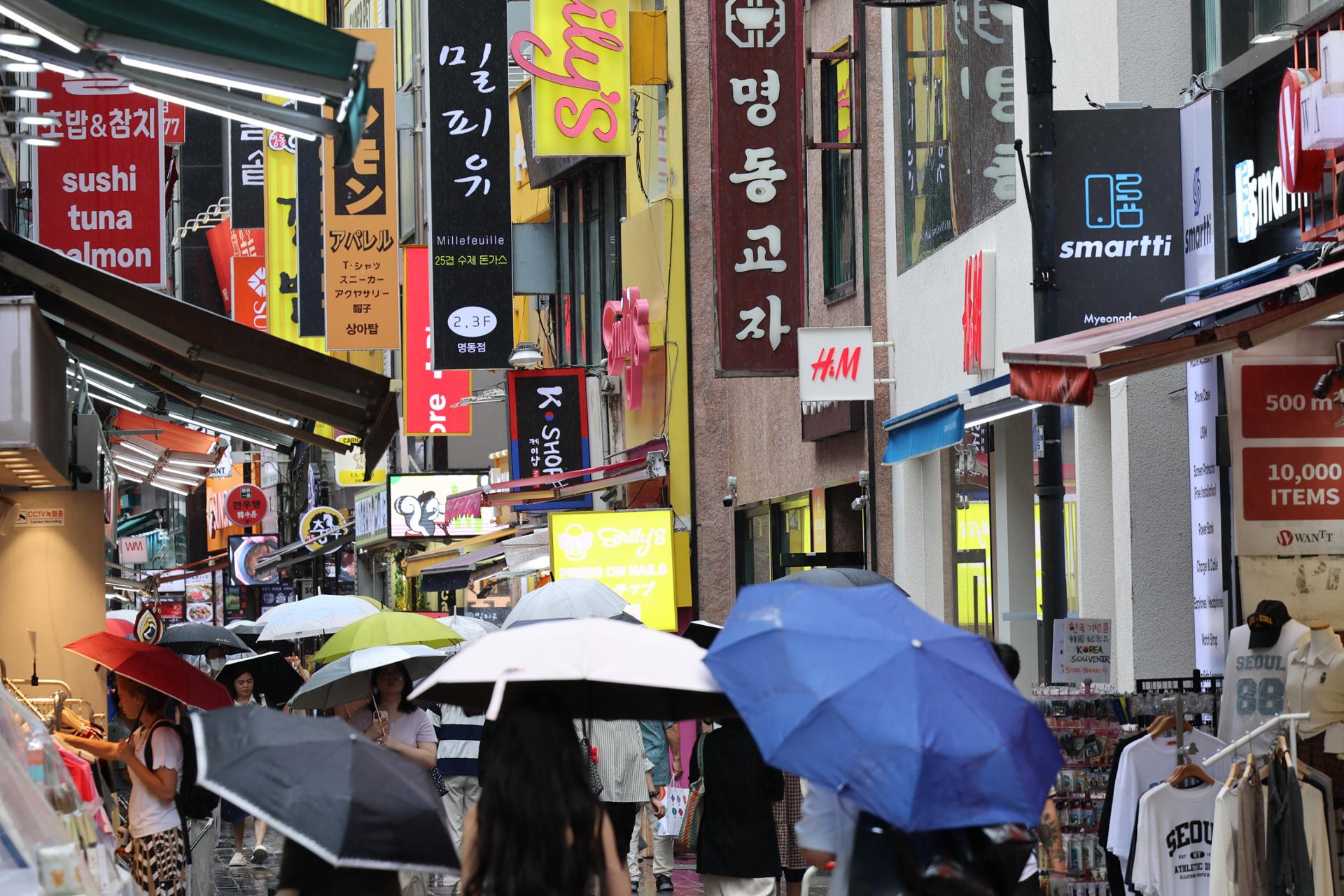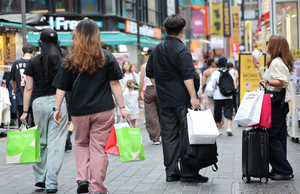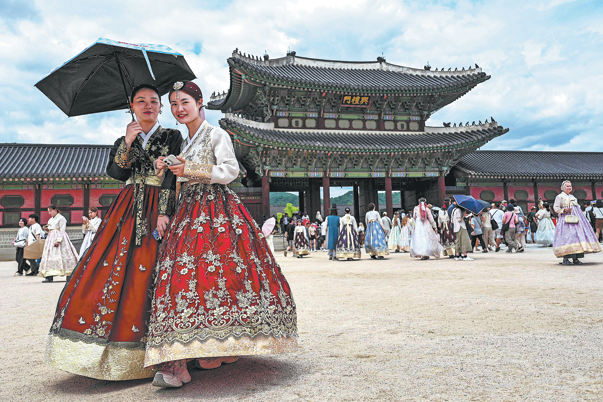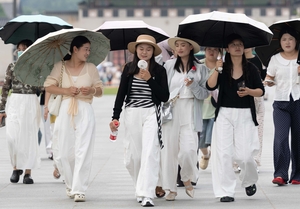
Overseas card spending tops 10 trillion won for first time Tourists visiting Gyeongbokgung in central Seoul use parasols to shield themselves from the heat on Wednesday afternoon. (Yoon Chang-bin/The Korea Herald) Tourist arrivals to Korea surpassed 10.71 million in the first half of this year, an all-time high.Seoul alone accounted for 8.32 million — about 78 percent of the national total — underscoring the city's outsized role in the country's tourism boom. Spending on foreign credit cards topped 10 trillion won in the first half for the first time.According to the Ministry of Culture, Sports and Tourism and the Seoul Metropolitan Government on Wednesday, nationwide arrivals from January to June rose 21.3 percent year-on-year to 10.71 million, with June alone bringing 1.99 million visitors.Visitors from China led with 3.21 million arrivals in the first half (up 27.1 percent on-year), followed by those from Japan with 1.95 million (20.4 percent), Taiwan with 1.15 million (33.4 percent), the Americas with 1.08 million (12.7 percent), Europe with 740,000 (20.2 percent) and Hong Kong with 340,000 (17.2 percent). Other regions, including major Southeast Asian markets, added 2.24 million (14.5 percent), reflecting continued diversification.Arrivals through regional airports such as those in Gimhae, Daegu, Jeju and Cheongju grew especially fast, up 42.1 percent to 1.96 million in the first half, far outpacing the 17.3 percent growth seen at airports in Greater Seoul, which includes Incheon and Gyeonggi Province.Spending outpaced arrivals nationwide, too. First-half spending on foreign cards hit 10.0389 trillion won, up 50.8 percent, crossing 10 trillion about three months earlier than last year's pace. MCST's second-quarter Foreign Visitor Survey also showed travel satisfaction rising from 89.8 to 90.5 points. The share of visitors traveling outside the capital climbed from 31.4 percent to 34.2 percent. Shoppers browse goods at Lotte Duty Free in Myeong-dong, central Seoul, on Tuesday afternoon. (Yoon Chang-bin/The Korea Herald) Seoul sits at the center of that growth. The city recorded 8.32 million foreign visitors in the first half, up 21.3 percent and an all-time high, led by China (2.47 million), Japan (1.5 million), Taiwan (880,000) and the United States (620,000). Card spending in Seoul reached 5.6172 trillion won, up 56.8 percent -- more than double the growth rate in visitor numbers -- and stayed above 1 trillion won a month from April through June.Shopping drew the largest share of spending at 46.4 percent, followed by medical and wellness services (24.4 percent), food and beverage (13.1 percent) and lodging (10.7 percent). Three districts — Gangnam-gu (29.3 percent), Jung-gu (28.4 percent) and Mapo-gu (7.3 percent) — accounted for 65.0 percent of all foreign card spending. The city credits the trend to visitors increasingly experiencing everyday Seoul — K-content, festivals, the Han River, food, beauty and wellness — rather than just touring landmarks, extending both stay length and spending. The Han River Spring Festival 2026 drew 7.06 million visitors, including 1.17 million foreigners, and sales at Han River ferry-terminal businesses jumped 257 percent. Looking to the second half, Seoul plans to expand nighttime tourism along the Han River and downtown as part of a "night-time economy" push, and to link major attractions with nearby dining, shopping and local commercial districts to extend stays.It also plans a one-stop entry platform linking medical care, visas, lodging and tourism; a tenfold expansion of medical tourism interpreter-coordinators, from 108 to 1,000; and more "bleisure" (business leisure) programs for conference attendees. MCST said it would keep supporting the growth in regional-airport arrivals and spending.
Seoul draws 8.3M of Korea's record 10.7M foreign visitors in H1
Tourist arrivals to Korea surpassed 10.71 million in the first half of this year, an all-time high. Seoul alone accounted for 8.32 million — about 78 percent of
575 words~3 min read