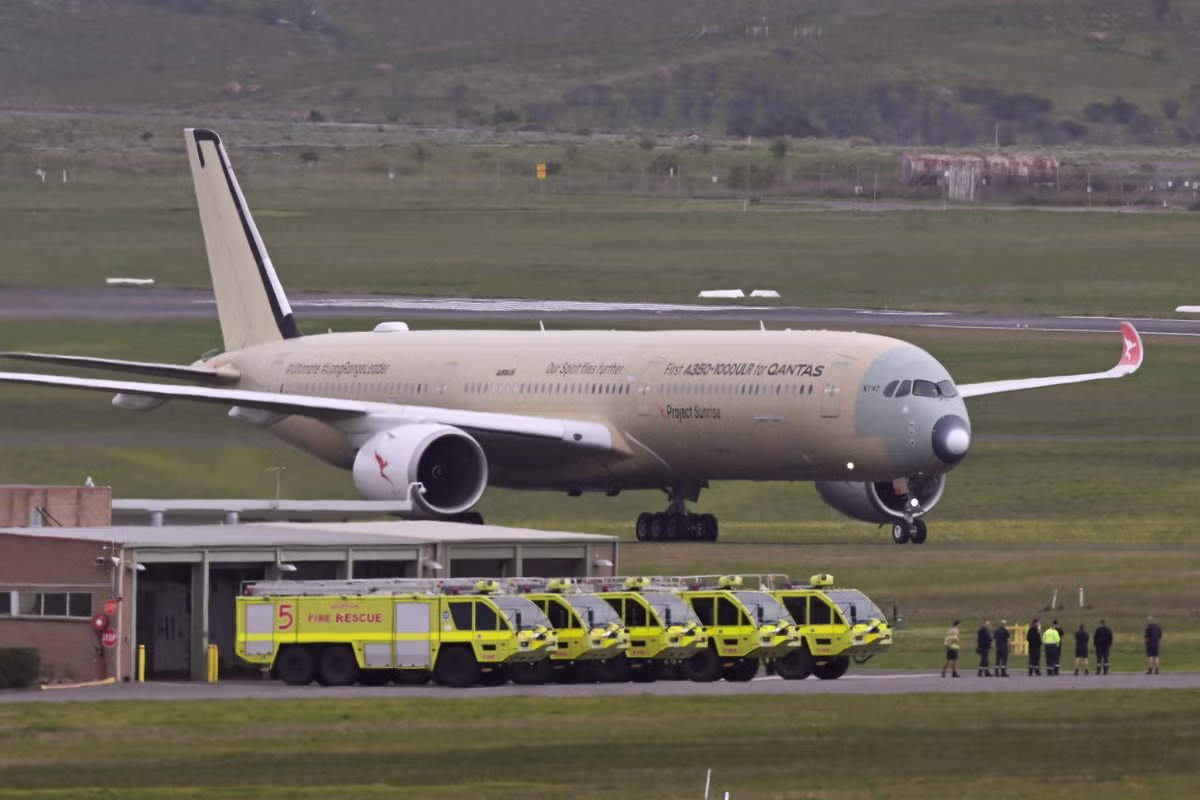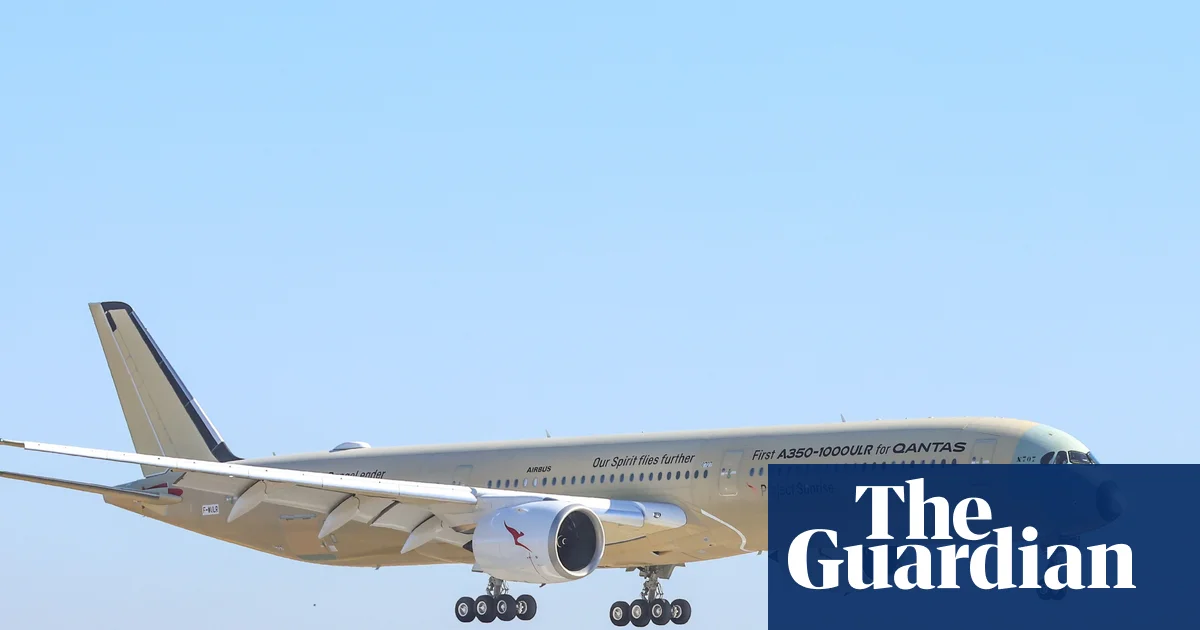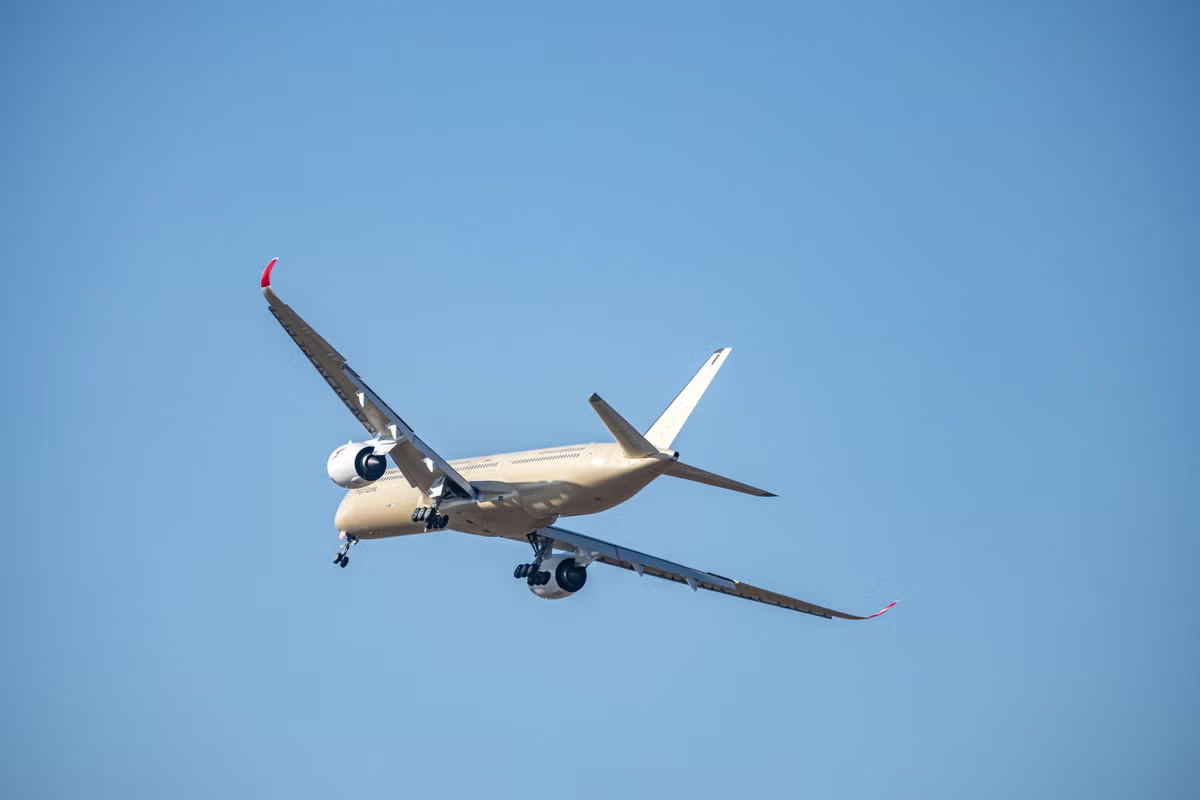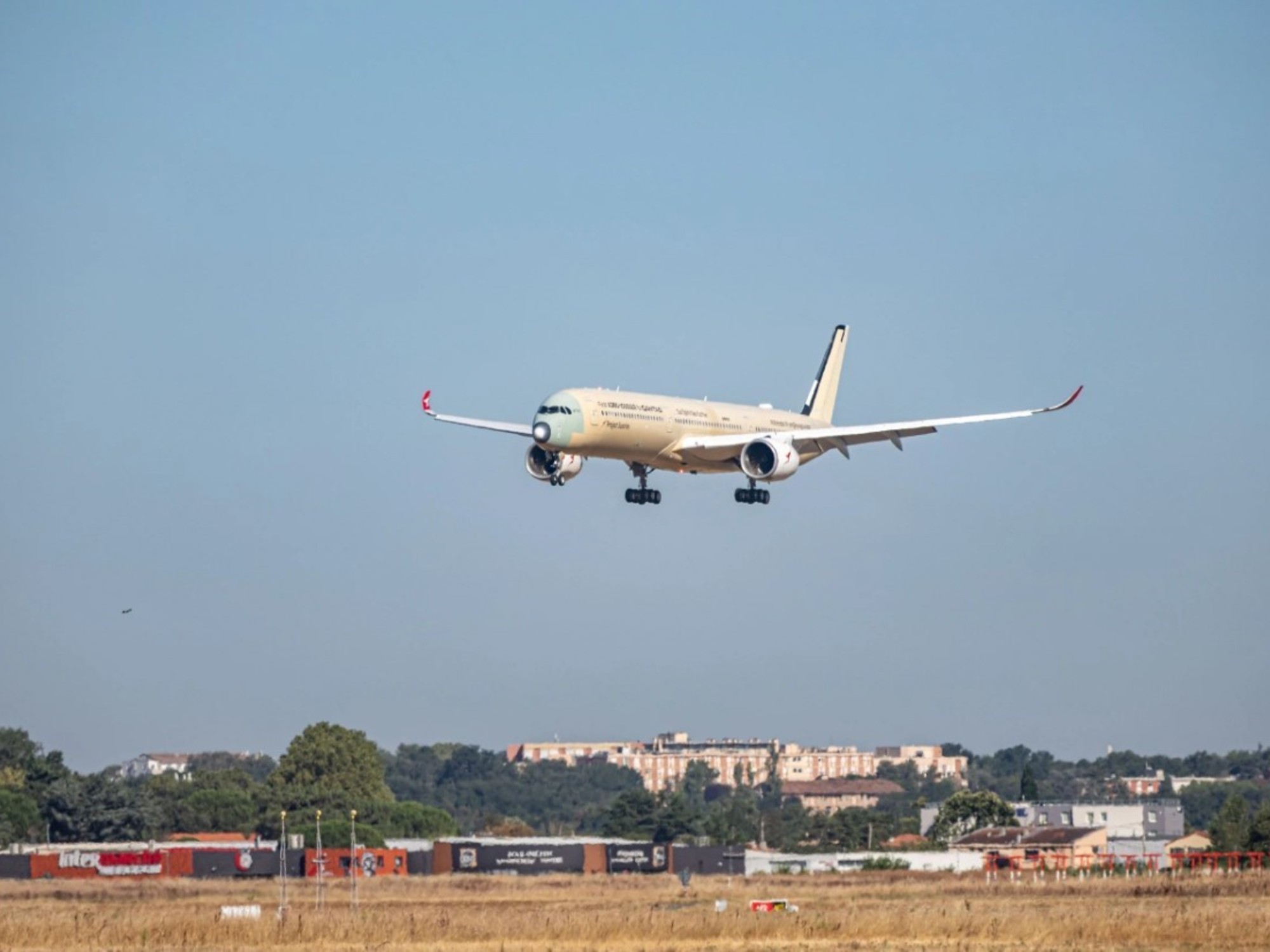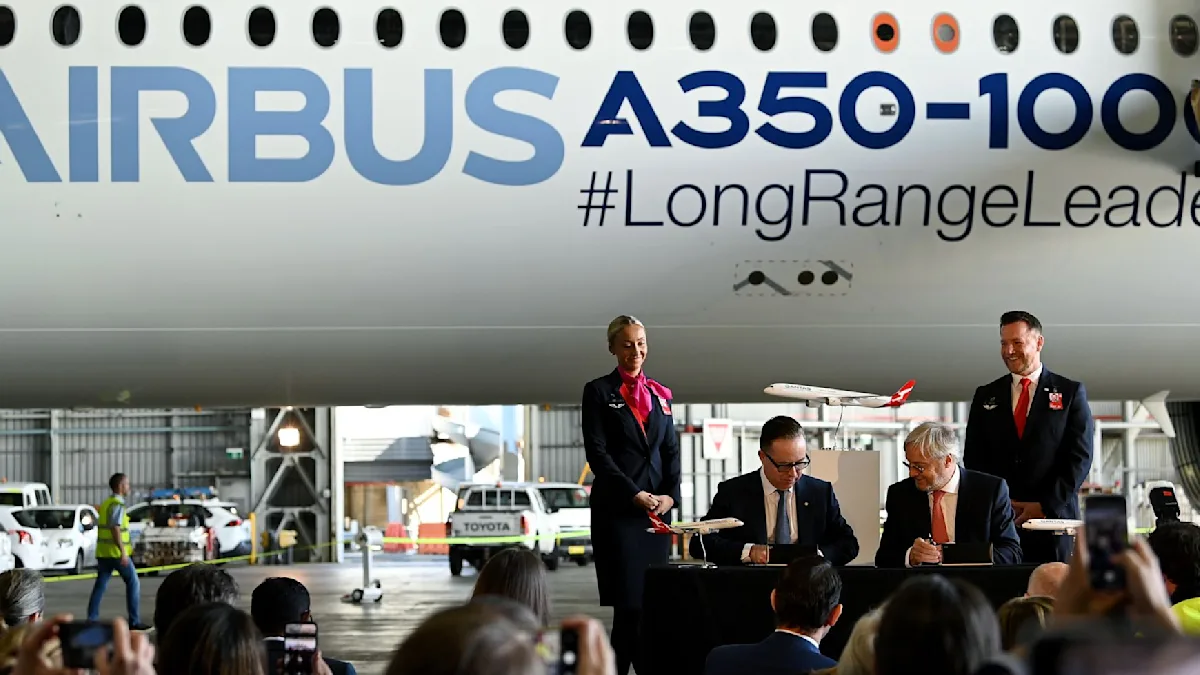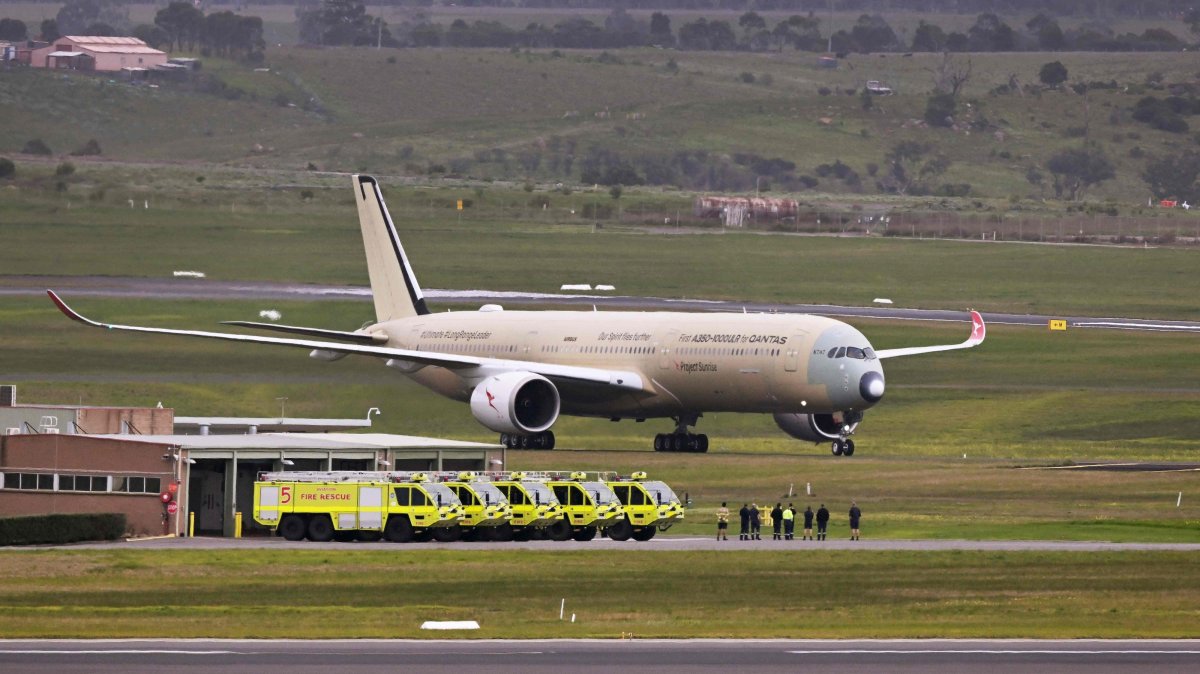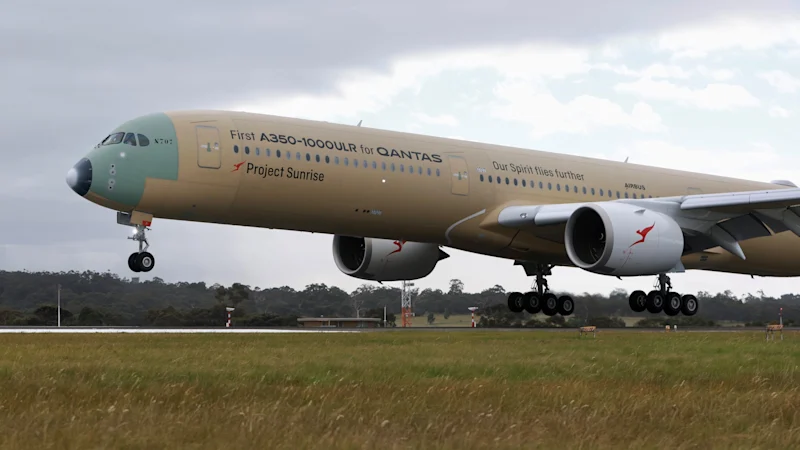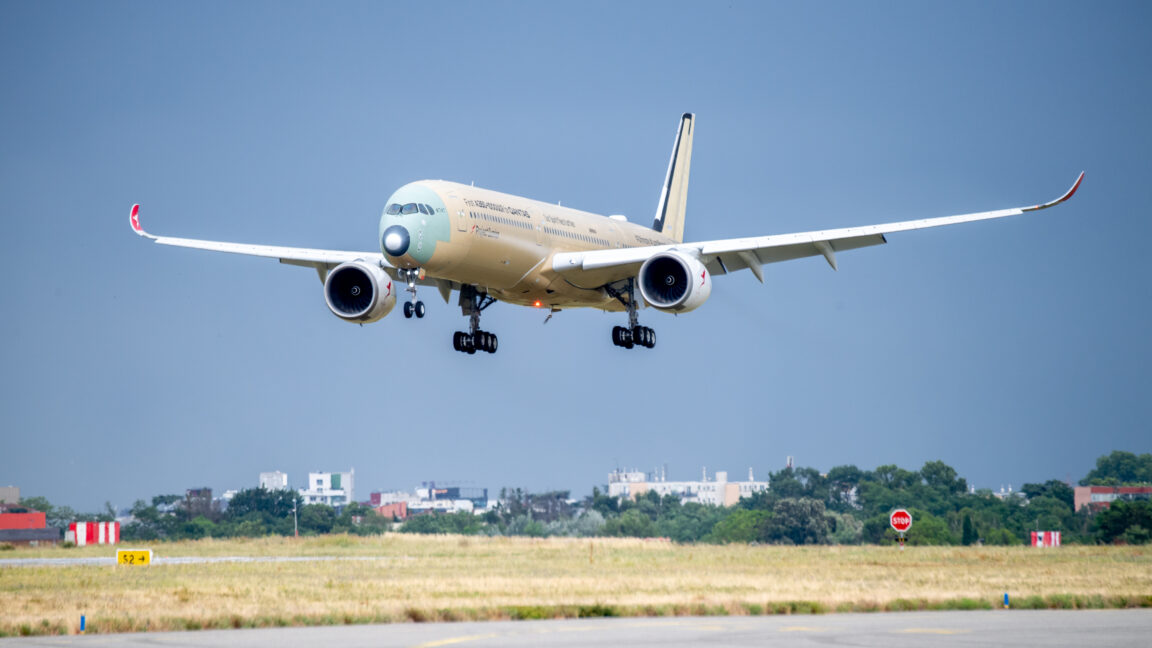
In briefA record-breaking Qantas flight has flown for more than 24 hours as part of the airline's bid to offer nonstop flights to London.But experts say the ultra-long-haul flight isn't necessarily a replacement for flights with stopovers.A record-breaking test flight lasting more than 24 hours has touched down in France from Melbourne — and experts say Australia could be leading the world on the new technology use.Qantas' specially adapted Airbus A350-1000ULR landed in France on Tuesday after a marathon 24 hours and 24 minutes in the air, covering 23,057km without stopping — the longest direct flight ever attempted by a commercial aircraft.The flight is part of a two-month test campaign as part of Qantas' Project Sunrise, which aims to launch the world's longest commercial passenger flight and reshape long-haul travel by offering direct flights from Australia's east coast to London and New York.The previous record belonged to a Boeing 777-200LR, which flew 21,601.7km from Hong Kong to London in 22 hours and 42 minutes back in 2005.Qantas has ordered 12 of the modified A350 aircraft, each fitted with an extra 20,000-litre fuel tank and configured to seat 238 passengers.News that makes senseYour trusted source for staying up-to-date with the world around you. Get free daily news updates and analysis, straight to your inbox.The first is due for delivery in April 2027, with daily non-stop flights between Sydney and London planned from October that year — turning what was once a five-day journey in 1947 on the old 'Kangaroo Route' into a single hop of 19 to 21 hours, depending on winds and routing. The airline has said a Sydney-New York route will follow shortly after the launch of the London route.Could stopovers become a thing of the past?The test flight's success has cast eyes towards the future of air travel, with some wondering whether stopovers in Singapore, Dubai or Los Angeles may be a thing of the past.But that's not quite where we're headed, experts say.Justin Brownjohn from RMIT University's Aviation Academy says non-stop routes will keep becoming more viable as aircraft range improves and fuel use falls — but that doesn't make them a replacement for one-stop flying."Airlines have historically competed on network and frequency, but Project Sunrise competes on time," he said."Cutting up to four hours off the journey from Sydney to London and removing the connection entirely is a different product, not an improved version of the existing one."These services won't replace one-stop flying, they'll sit alongside it."Brownjohn expects the strongest demand for the ultra-long-haul services to come from business and premium leisure travellers willing to pay more for the time saved — and says the wider effect may be felt most by the Middle Eastern and Asian hub airports that have built their business models around the layover.'A different physiological event'Spending over 20 hours in the air also raises real questions about passenger wellbeing."Twenty hours is not a longer flight, it is a different physiological event," Brownjohn said. "On this flight comfort has stopped being a luxury feature and become the thing being sold."Peter Cistulli, professor of sleep medicine at the University of Sydney's Charles Perkins Centre, worked with Qantas on the physiological side of the aircraft's design.Qantas' Project Sunrise envisions nonstop long-haul flights. Source: AAP / James Ross"Project Sunrise takes ultra-long-haul flights to a whole new level," Cistulli told SBS News. "It's arguably the final frontier of travel on Earth, so it brings a whole lot of additional challenges, including the biological challenge of crossing so many time zones over a short period and how that can influence your health and wellbeing."Cistulli, who also worked with the airline on its long-haul Dreamliner aircraft, said compressing so many time zones into one flight leaves the body's circadian system less time to adjust.He says researchers' input on elements including lighting, meal timing, and in-flight exercise is intended to help passengers adapt to their destination time zone faster. The aircraft has what Qantas describes as the lowest seat density of any comparable jet, with more than 40 per cent of the 238 seats allocated to premium cabins.A wellness zone will also offer stretch handles, refreshments, and a guided, video-led movement program.But Cistulli is also candid about the risk of deep vein thrombosis (DVT), with long periods of immobility already proven to raise DVT risk. While he says the baseline risk on any flight is already low at under 1 per cent, those with "heightened risk" of DVT may not be suitable for the ultra-long-haul flight.For the average person, however, concerns about the lengthy flight can be mitigated by adequate physical activity on board. He says that opting for stopovers has both its pros and cons when it comes to health. Being able to get off a flight and move around in an airport is a benefit, he says, but that also adds to the journey and can increase fatigue."Of course, not everybody would choose to be cooped up in a plane for 20-plus hours — the stopover options will always remain there. Passengers will have their choice."Australia's shrinking distance problemCistulli sees Project Sunrise as part of Australia's long fight against the "tyranny of distance" it's grappled with as a geographically isolated nation."This is the ultimate frontier, in that we're bringing the world closer to Australia and Australia closer to the world," he says. "It's a really fantastic story for Australia, and it's no surprise that an Australian airline would go to the trouble of solving this problem."Whether Qantas holds onto the bragging rights is another question.Singapore Airlines already operates the world's longest scheduled commercial route — a roughly 19-hour service between Singapore and New York."I think it will be interesting to see what the competition do," he says. "This will definitely give Qantas a competitive advantage, but whether that's long-lived, time will tell."The extended range also opens up more than just one route. With planes capable of covering these distances, almost any city pairing becomes commercially viable if there's demand for it.It also gives Qantas more flexibility to route around trouble spots, including current airspace restrictions due to the war in the Middle East, opening up options such as flying to London over the North Pole instead.Cistulli is careful to frame Project Sunrise as an addition to the market, not a replacement for it."I think it's all about choice, and tailoring the opportunity for particular customer needs," he said. "This just adds a new option for people who do need to get somewhere in a hurry, so to speak — and I think that's a great addition."— With additional reporting by the Australian Associated Press.For the latest from SBS News, download our app and subscribe to our newsletter.
The 'final frontier' of travelling is here. But one ritual is far from over
A test flight has landed after 24 hours non-stop — so what does it mean for stopovers?
1,110 words~5 min read