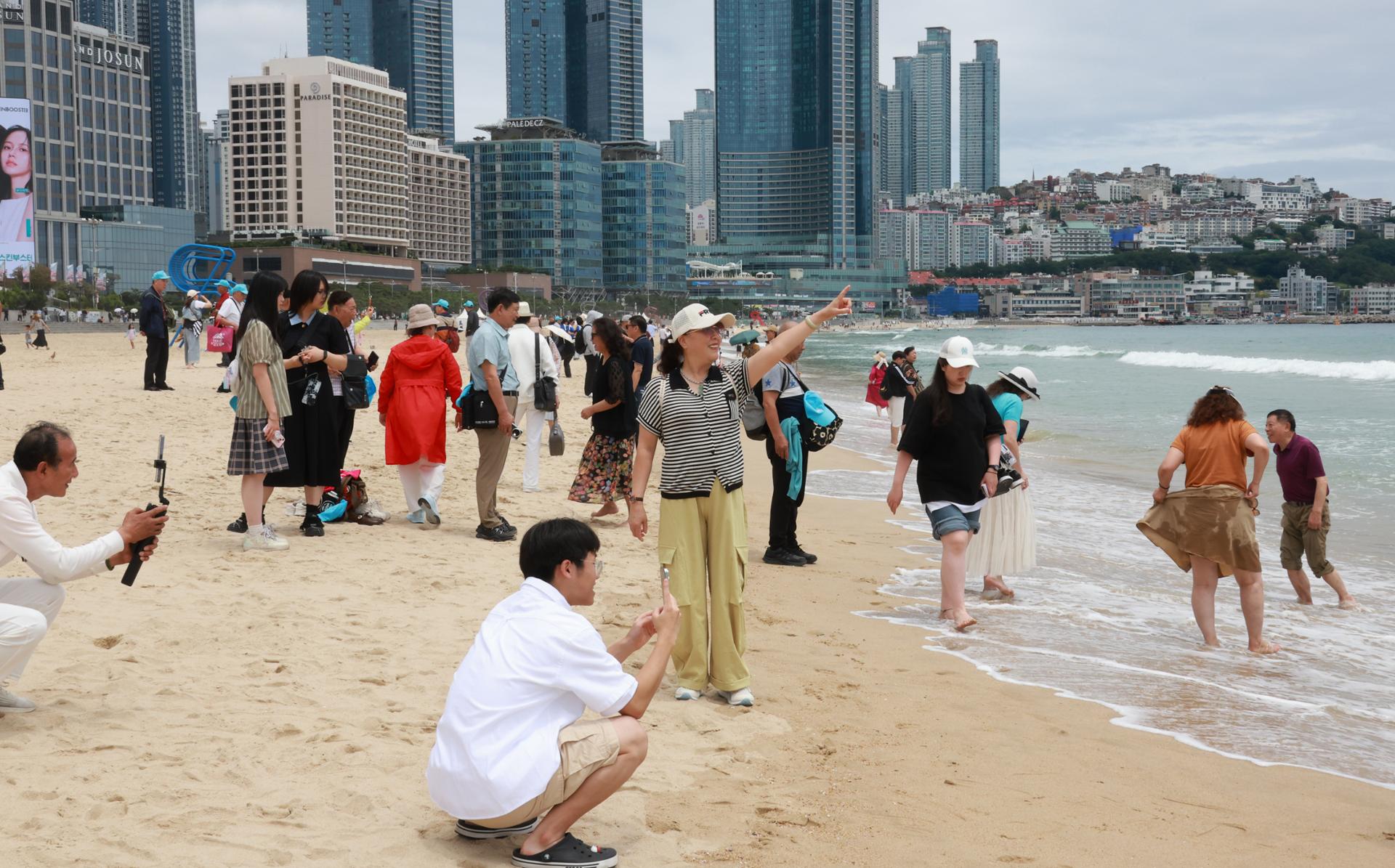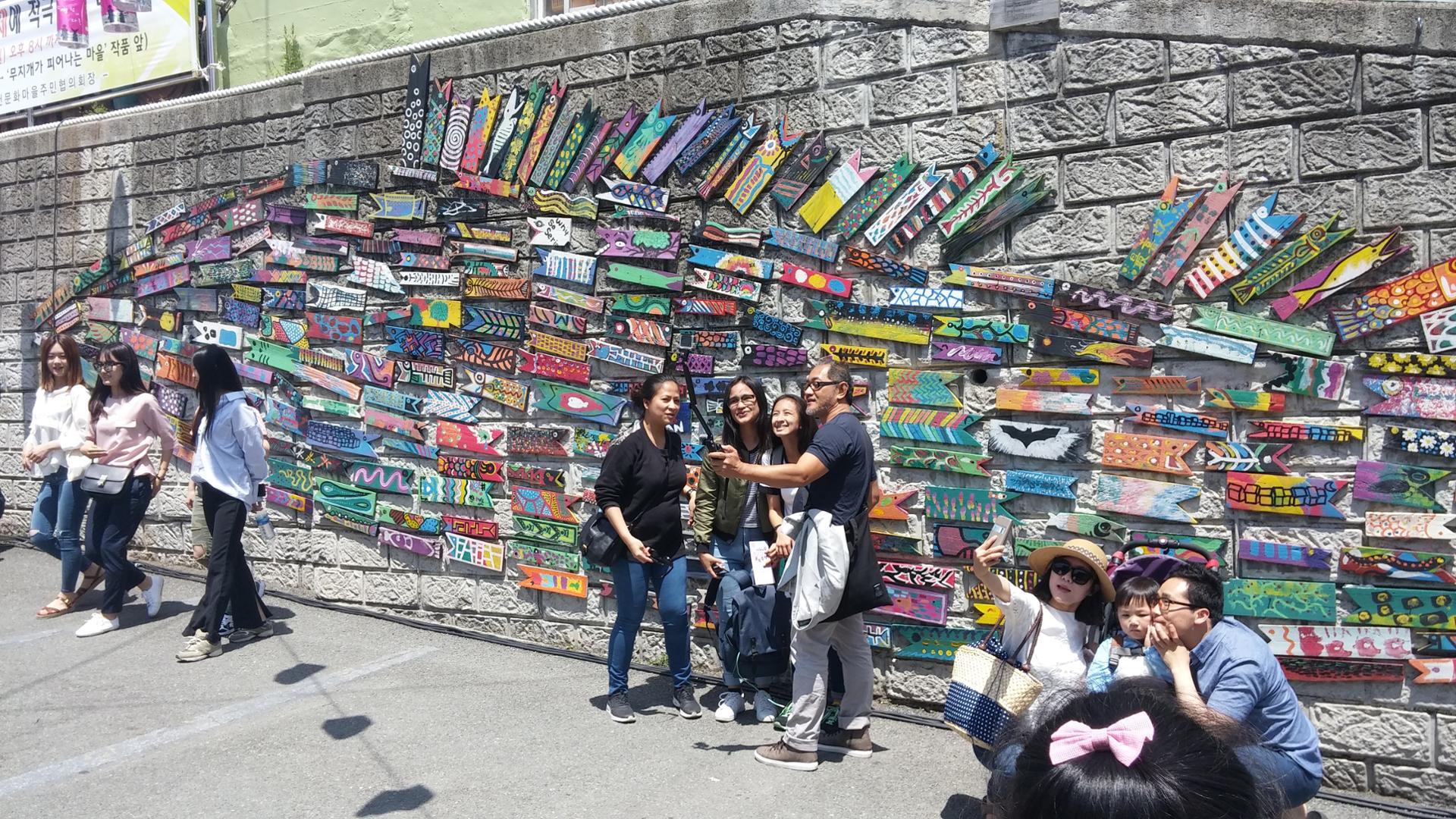
International visitors take photos at Gamcheon Culture Village in Busan's Saha District. Courtesy of Busan Metropolitan Government
As international tourism rebounds and the number of foreign residents increase across Korea’s bustling maritime hub, officials in Busan have issued a citywide operational playbook aimed at closing a critical vulnerability during urban emergencies by addressing the language barriers and bureaucratic gaps that leave foreign populations vulnerable when disaster strikes.
Municipal leaders in the southern port city published the "Disaster Relief and Support Operational Guide for Foreign Residents and Visitors," Wednesday, the first systematic protocol developed by a Korean metropolitan government to institutionalize emergency care for non-citizens. The manual creates binding administrative procedures for municipal agencies, district offices and frontline emergency responders during every phase of a crisis, spanning from real-time alert broadcasts to long-term financial recovery.
The initiative responds directly to shifting demographics in Korea's second-largest city.
Busan recorded over 88,000 registered foreign residents in late 2024 and welcomed more than 3.6 million international travelers in 2025. However, during crises such as severe typhoons, urban fires or industrial accidents, foreign nationals frequently face delays and difficulties receiving life-saving evacuation notices, locating temporary shelters and accessing emergency medical care due to language barriers and unfamiliarity with local administrative systems.