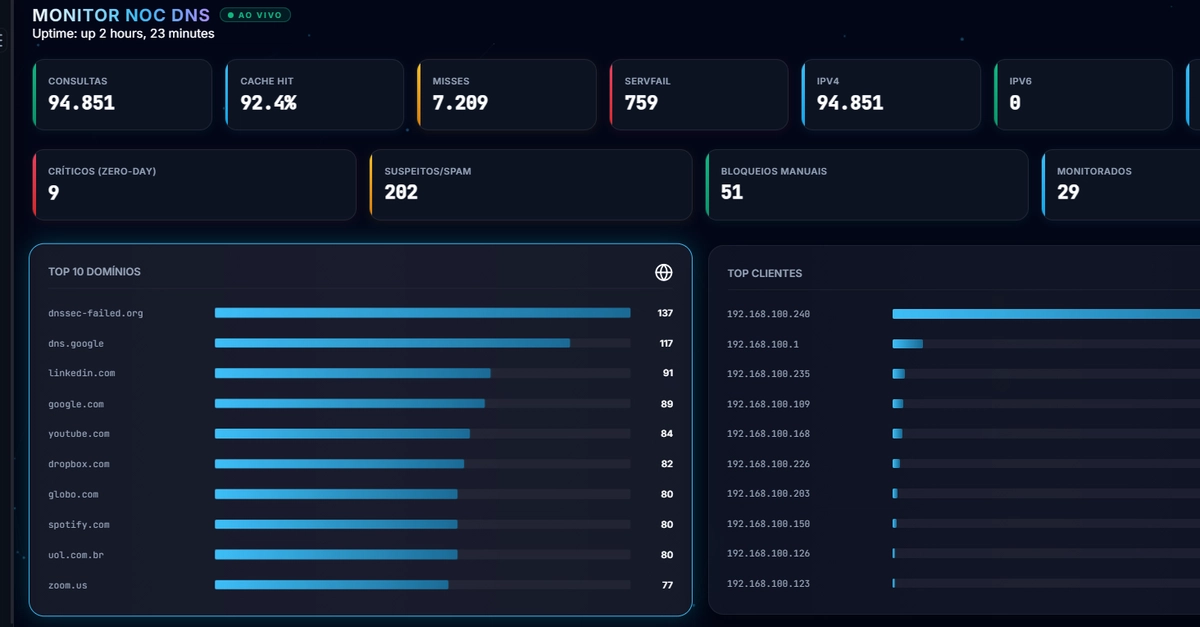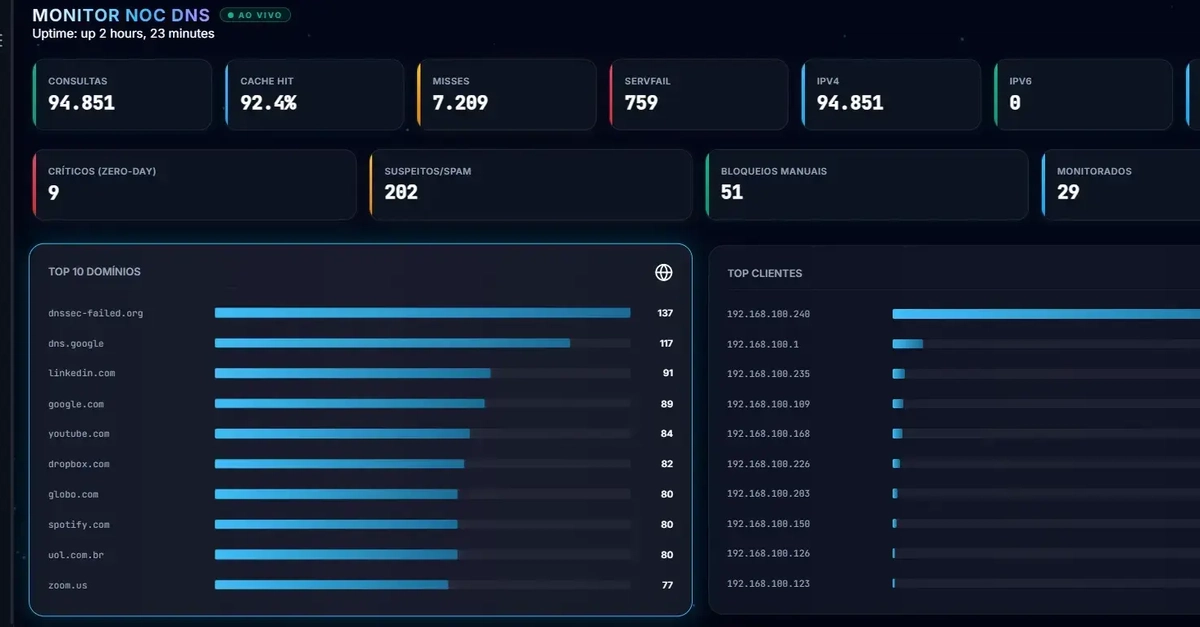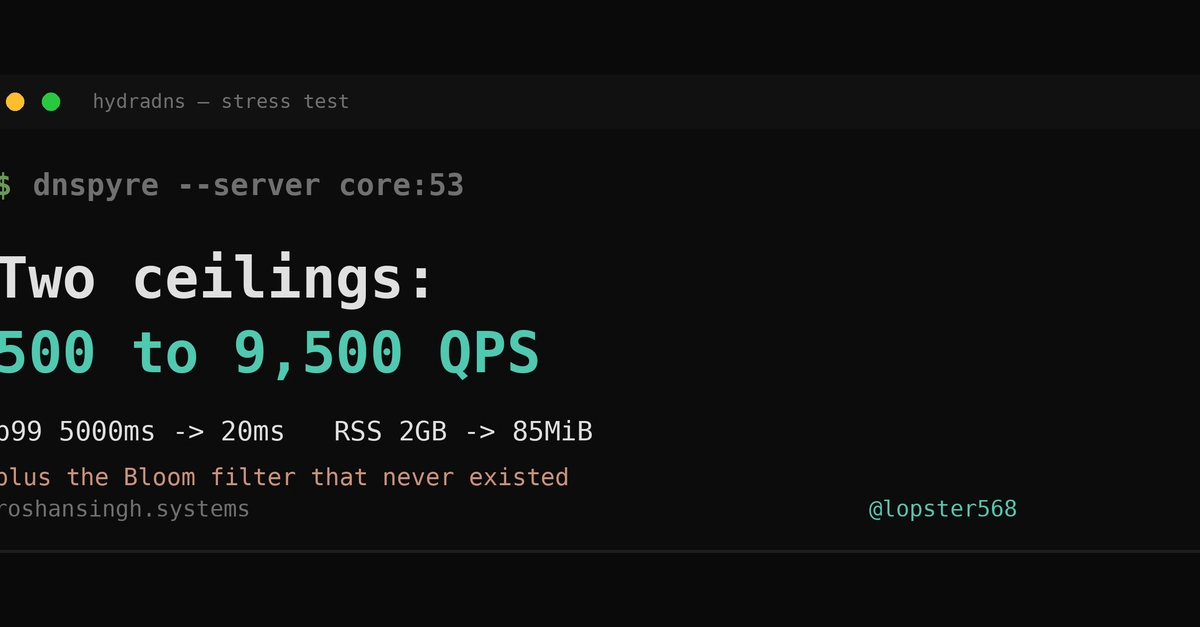
I run HydraDNS, an open-source DNS security gateway in Go. Last month I sat down to find out what one box could actually handle before I put it on anyone else's network. The plan had a rule I'd written for myself: every number we discover becomes either a sales claim or a fix ticket. No number, no claim.
I expected to find one bottleneck. I found two, stacked on top of each other, and a third thing I wasn't looking for: a data structure in our own documentation that had never existed in the code.
Everything below was measured on a 22-core dev machine with load generated inside the container, using dnspyre, so docker-proxy and host networking stay out of the numbers. It's not appliance hardware and I'm not making appliance claims. The shapes are what matter.
The first ceiling: ~500 QPS, and it didn't care what I threw at it
The first redline run capped at roughly 500 queries per second. Fine, servers have limits. What made it interesting was that the cap didn't move. Blocked queries: ~500. Cached queries that never touch upstream: ~500. Two code paths that do completely different work, hitting the same wall, with the CPU sitting under 30% of 22 cores.