For most of Nigeria’s oil-producing history, resource benefits flowed to the federal government while the communities living with wells, pipelines, spills and flares received little in return. Extra-statutory arrangements, such as corporate social responsibility initiatives and Memoranda of Understanding tried to bridge the gap. Still, they carried no legal backing and were deployed at the discretion of oil companies. The Petroleum Industry Act (PIA) 2021 changed that calculus.
Chapter Three of the Act introduced the Host Community Development Trust (HCDT), Nigeria’s first legally binding mechanism, which compels oil and gas settlors to fund development directly in the communities where they operate, at 3% of their annual operating expenditure.
Five years on, the HCDT tells two stories at once: one of real, measurable progress, and another of persistent structural weakness that echoes the failures of the benefit-transfer mechanisms it was designed to replace.
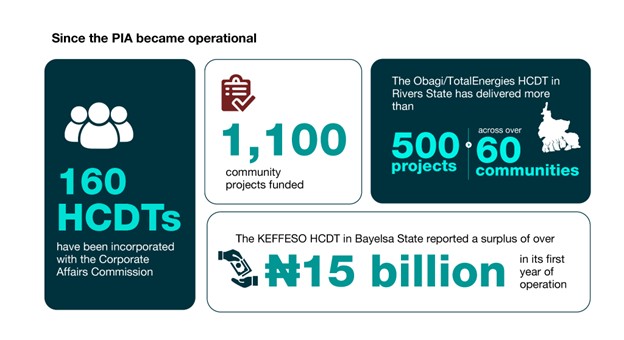
Since the PIA became operational, more than 160 HCDTs have been incorporated with the Corporate Affairs Commission. By October 2025, cumulative contributions to the trusts had exceeded N373 billion, funding more than 1,100 community projects. Individual trusts illustrate what the model can achieve when it works. The Obagi/TotalEnergies HCDT in Rivers State has delivered more than 500 projects across over 60 communities, including a two-storey classroom block, a remodelled cottage hospital, road pavements and a water bottling factory.