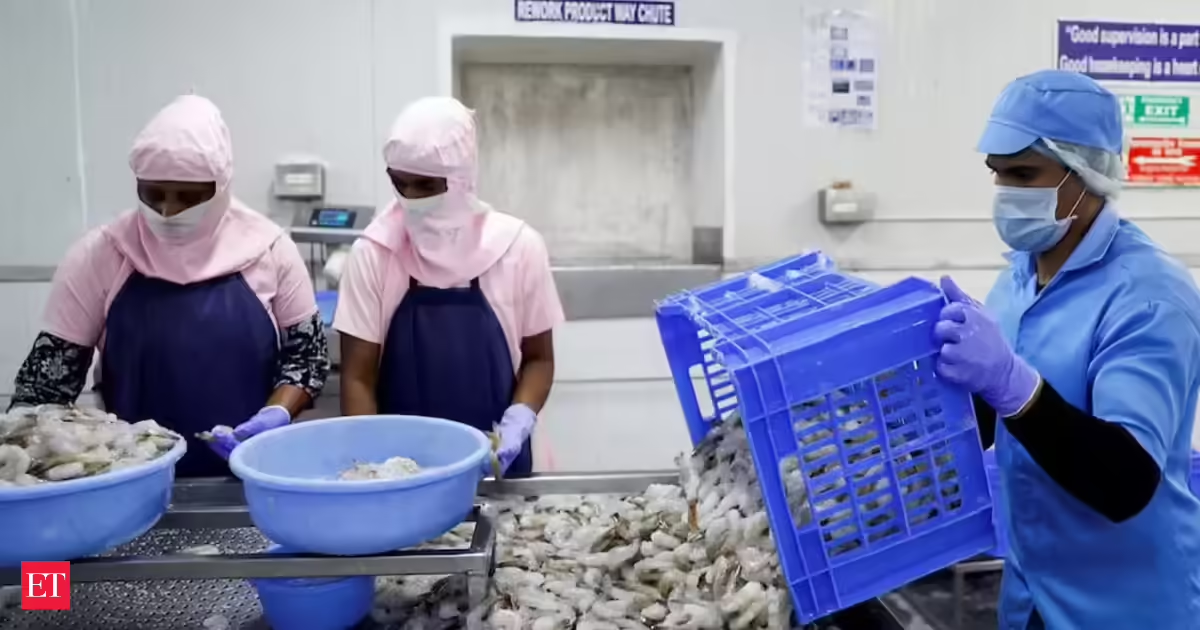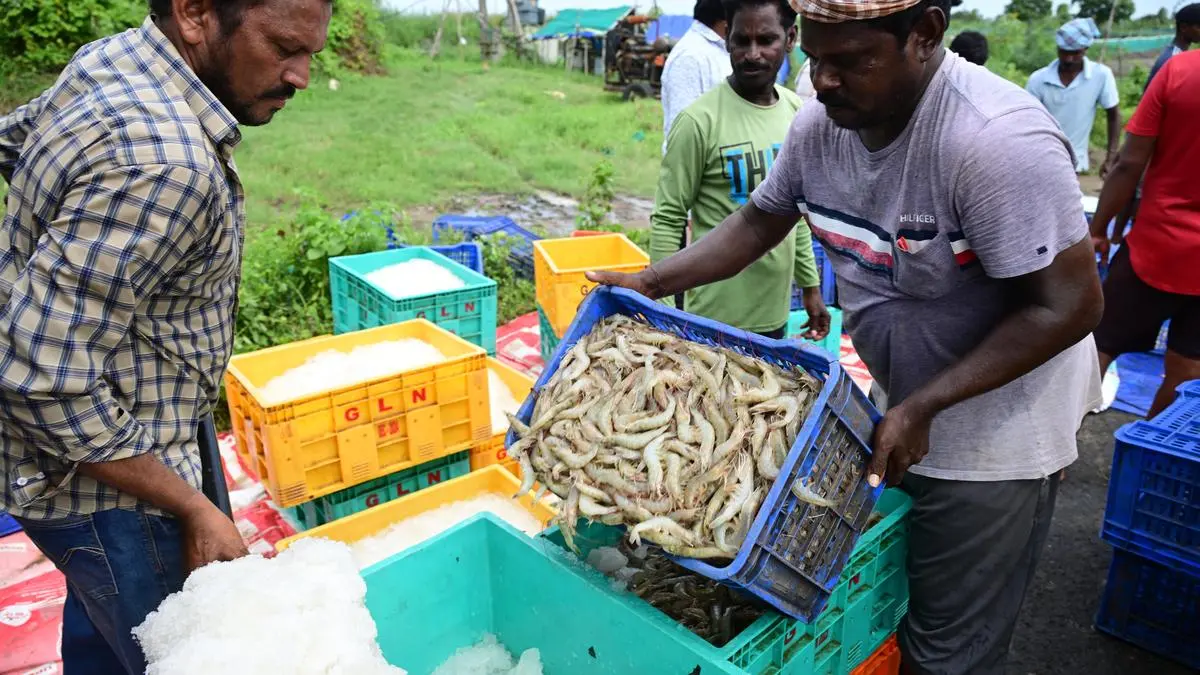
The Union Ministry of Commerce and Industry has rolled out a nationwide app-based enrolment mechanism, “Aqua Trace”, for aquaculture farms and hatcheries to establish a robust traceability system and strengthen compliance with international food safety and sustainability standards.Replying to a question in the Lok Sabha raised by Kanimozhi Karunanidhi on the rejection of shrimp consignments exported from India during 2018-26, Minister of State for Commerce and Industry Jitin Prasada said only a small proportion of consignments were rejected due to reasons such as antibiotic residues, bacteriological contamination, unhygienic handling and poor time-temperature control.The average rejection rate of shrimp consignments exported from India during 2018-26 stood at just 0.13 per cent of total exports. The major importing markets reporting rejections were the United States, the European Union and Japan.During 2026, a total of 17 shrimp consignments were rejected by these countries, resulting in an estimated financial loss of ₹7.45 crore. Of these, only nine consignments were rejected for antibiotic residues, compared with 27 in the previous year.Stepping up capacity building initiativesConsignments rejected for reasons other than antibiotic residues are permitted to be reprocessed and re-exported after clearance from the Export Inspection Council through its Export Inspection Agencies. Permission for domestic sale can also be obtained from the Food Safety and Standards Authority of India after mandatory testing in approved laboratories.To address losses arising from antibiotic-related rejections, the government has notified a series of regulations in 2025 in line with national and international standards for aquaculture products. These include a ban on the import, manufacture, distribution and sale of Chloramphenicol and Nitrofuran for use in food-producing animal rearing systems, prohibition of 37 antimicrobials reserved for human use in shrimp, prawn, fish and fisheries production, and restrictions on 34 listed antimicrobial veterinary medicinal products.The government has also stepped up capacity-building initiatives for shrimp farmers and processing workers, including antibiotic awareness programmes, Best Aquaculture Practices (BAP) training, hygiene and HACCP training, and the formulation of a National Framework for Traceability Systems in fisheries and aquaculture, the Minister said.Meanwhile, industry sources said that the US is planning to implement Food Traceability List under Food Safety Modernisation Act (FSMA) from January 2028 onwards. This will call for mandatory traceability requirements for all seafood consignments reaching USA. Hence this measure by Government is a step in the right directionPublished on July 29, 2026
Aqua Trace app launched to boost shrimp traceability, curb export rejections
The Aqua Trace app enhances shrimp traceability, addressing export rejections and ensuring compliance with food safety standards.
386 words~2 min read