Wednesday 29 July 2026 5:25 am
| Updated:
Tuesday 28 July 2026 1:41 pm
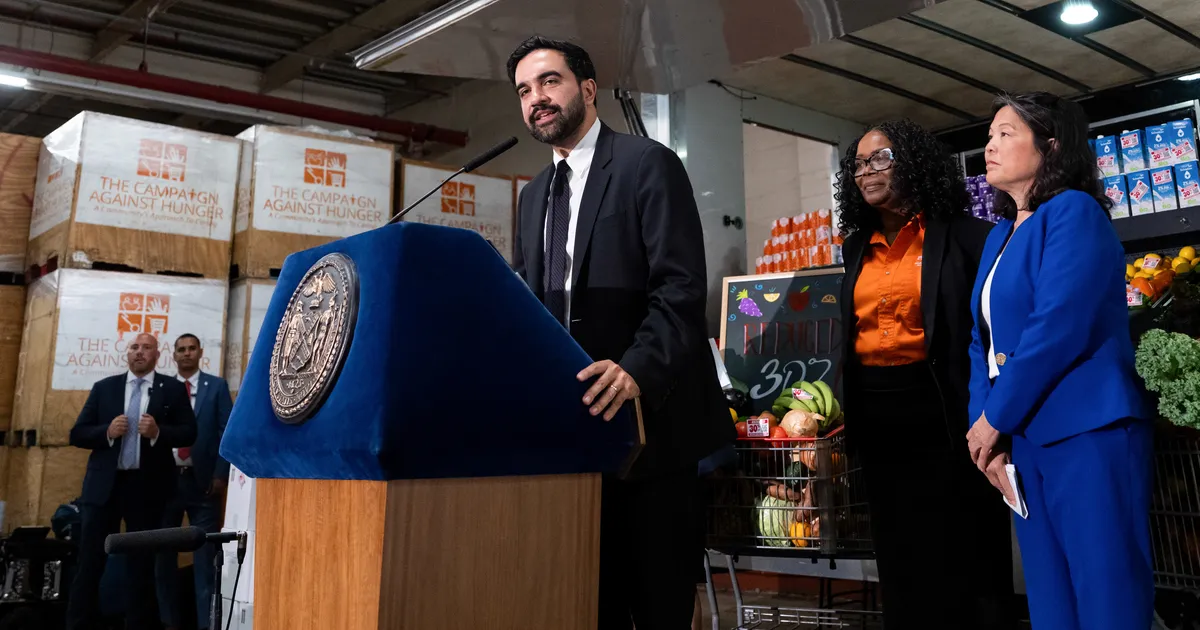
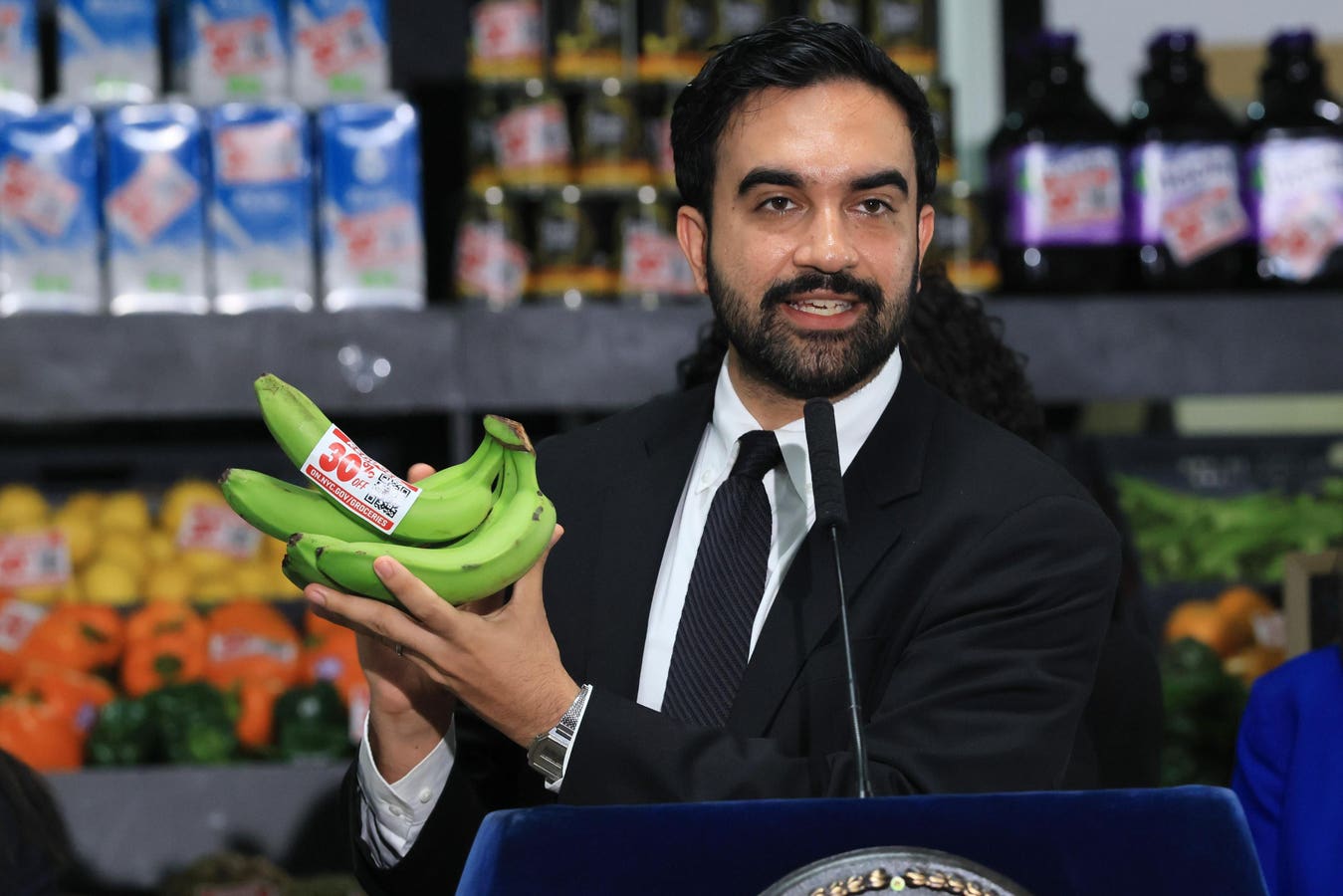
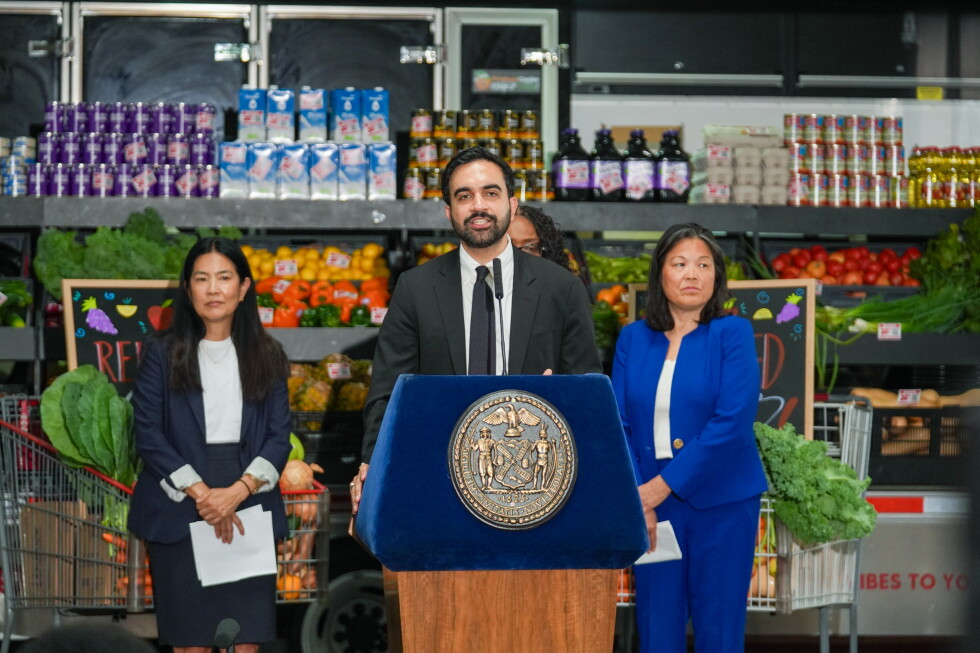
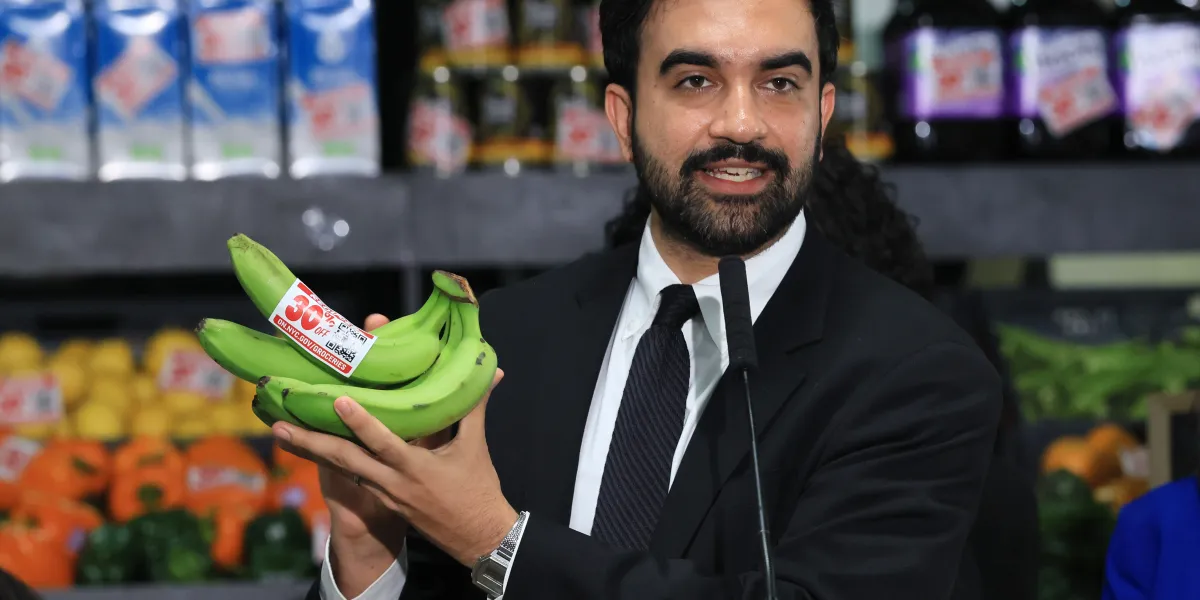
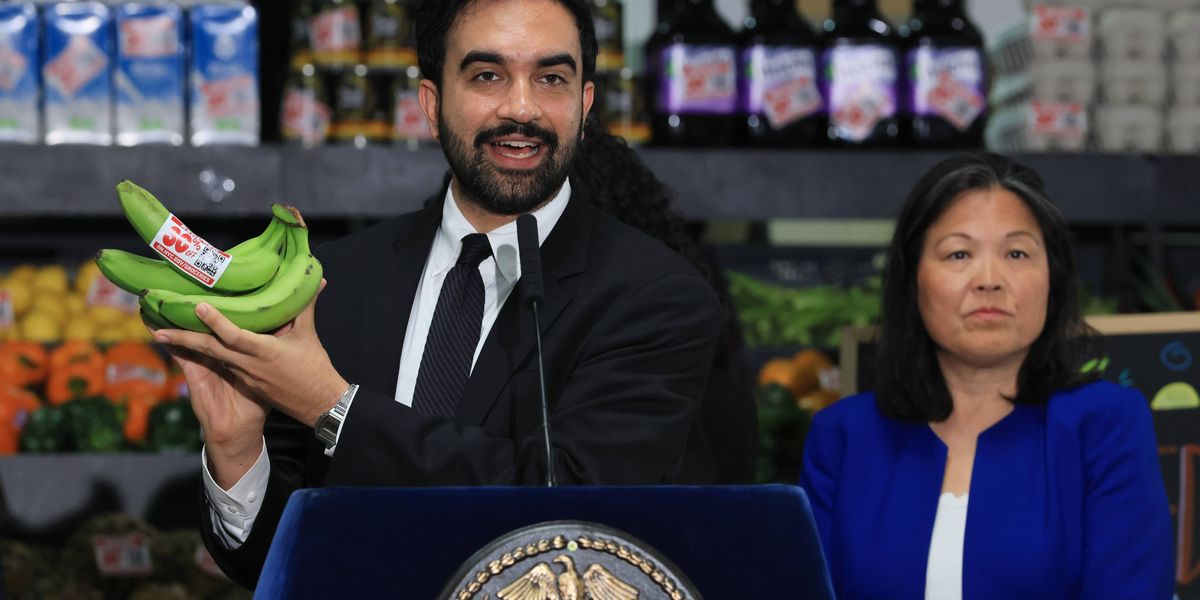
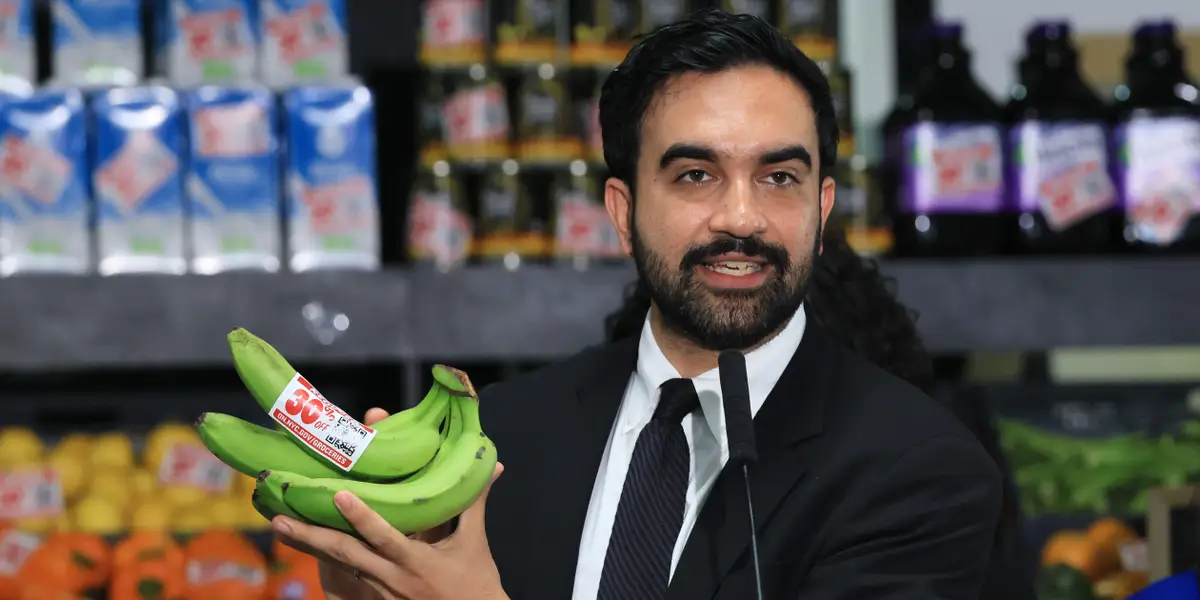
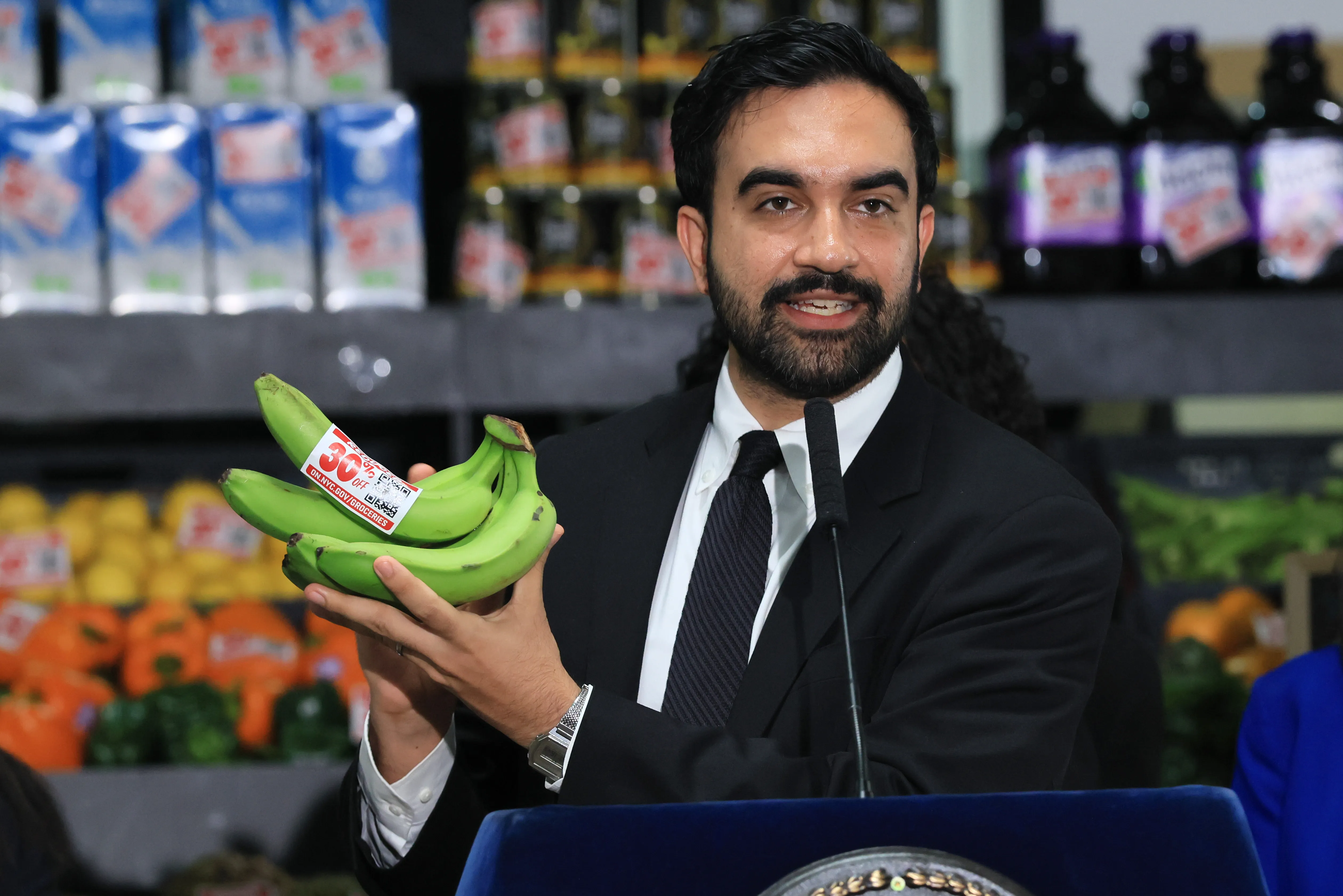
New York City Mayor Zohran Mamdani holds up bananas as he speaks at a food distribution center on July 27, 2026 in the Brooklyn borough of New York City. Mamdani announced that the five upcoming city-owned grocery stores will offer a 30 percent discount on produce, meat, bread, and milk when they begin to open next year. The discount on essential items will potentially save shoppers an estimated $90 a month, or roughly $1,000 a year, as prices for food and other items continue to rise throughout the country. The mayor has pledged one community grocery store for each borough. (Photo by Spencer Platt/Getty Images)
Zohran Mamdani’s plan to open five state=owned shops with subsidised groceries will make little to no difference to the lives of New Yorkers, so why are you reading about it? Ask Kristian NiemietzNew York City has a population of over 8.5m people, or close to 20m if we include the wider metropolitan area, and tens of thousands of retail units. In one sense, Mayor Zohran Mamdani’s plan to open five state-owned retail stores with discounted prices is a complete non-story, which will make little difference to anything. It is neither going to deliver ‘Socialism in One City’, nor is it going to bankrupt New York. My guess is that it will turn out to be a useless gimmick, but then, I say this about lots of policies, and New York is rich enough to be able to afford a few useless gimmicks. Nonetheless – the fact that Mamdani’s grocery store plan is being reported internationally is telling us something. This is unusual. How often do you read about New York (or, for that matter, any city, other than maybe the one you live in) setting up some new municipal agency? Under what circumstances would you care about that? The reason why Mamdani’s plan attracts so much attention is that sometimes, a policy is not just a policy. It is also a communication device. It tells a story. It encapsulates assumptions about economic life. The Gary Stevenson effectWe have several domestic examples. Britain may never get a wealth tax, but via their advocacy of it, Gary Stevenson and Zack Polanski have successfully convinced the country that wealth inequality is spiralling out of control, and that the wealthy do not pay taxes. (Neither is remotely true.) Britain may never get full-fat rent controls again, but via their advocacy of them, activists have successfully convinced millions that Britain’s high housing costs are a product of ‘landlordism’, as opposed to supply shortages. Mamdani’s grocery store plan fulfils a similar function. It is not just a policy. It is a story. It is a product of – and further entrenches – the fashionable ‘greedflation’ narrative, the idea that the inflation spikes we have seen in recent years are a product of corporate greed and profiteering. Mamdani is not the only one peddling that idea. The socialist economist Isabella Weber has become a minor public figure on the basis of her advocacy of that idea, and in the UK, James Meadway, another socialist economist, is trying to jump on the same bandwagon. The reason why it works is that, in this anti-capitalist day and age, most people vastly overestimate profit margins across the economy. The IEA commissioned a poll on this earlier this year, and found that the average respondent thinks profit margins in the retail sector are around 50 per cent: they think half of their grocery bill is someone’s profit. The true figure is two to four per cent (in the UK; figures for the US are similar). Retail is a fiercely competitive sector, and even if all retailers decided to become charities and forego their profits, it would barely make a difference to our shopping bills.