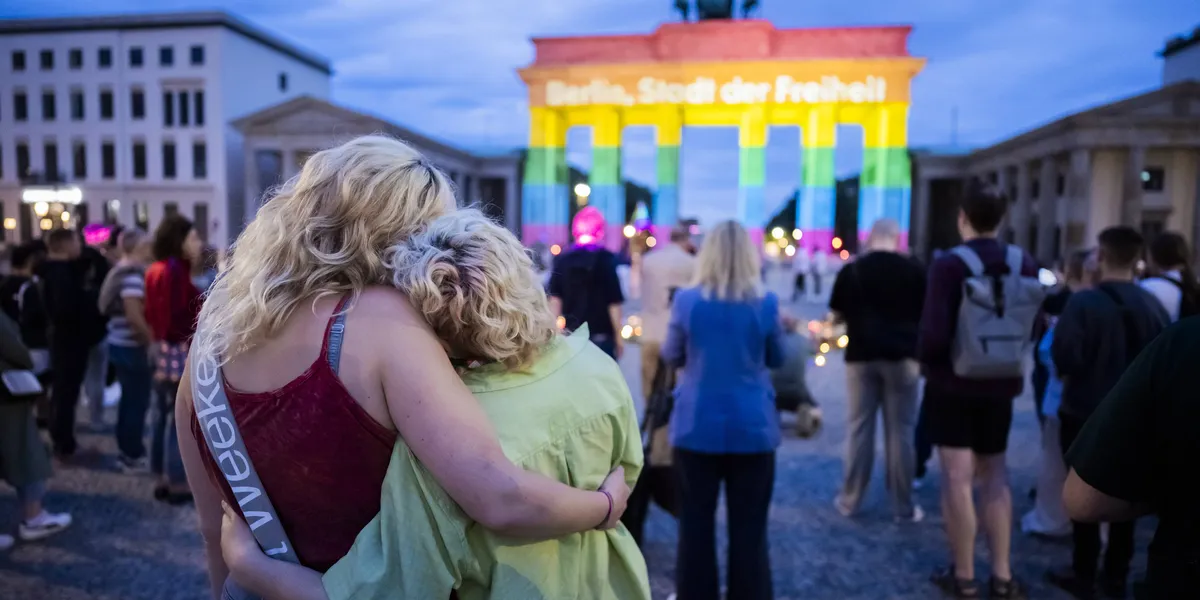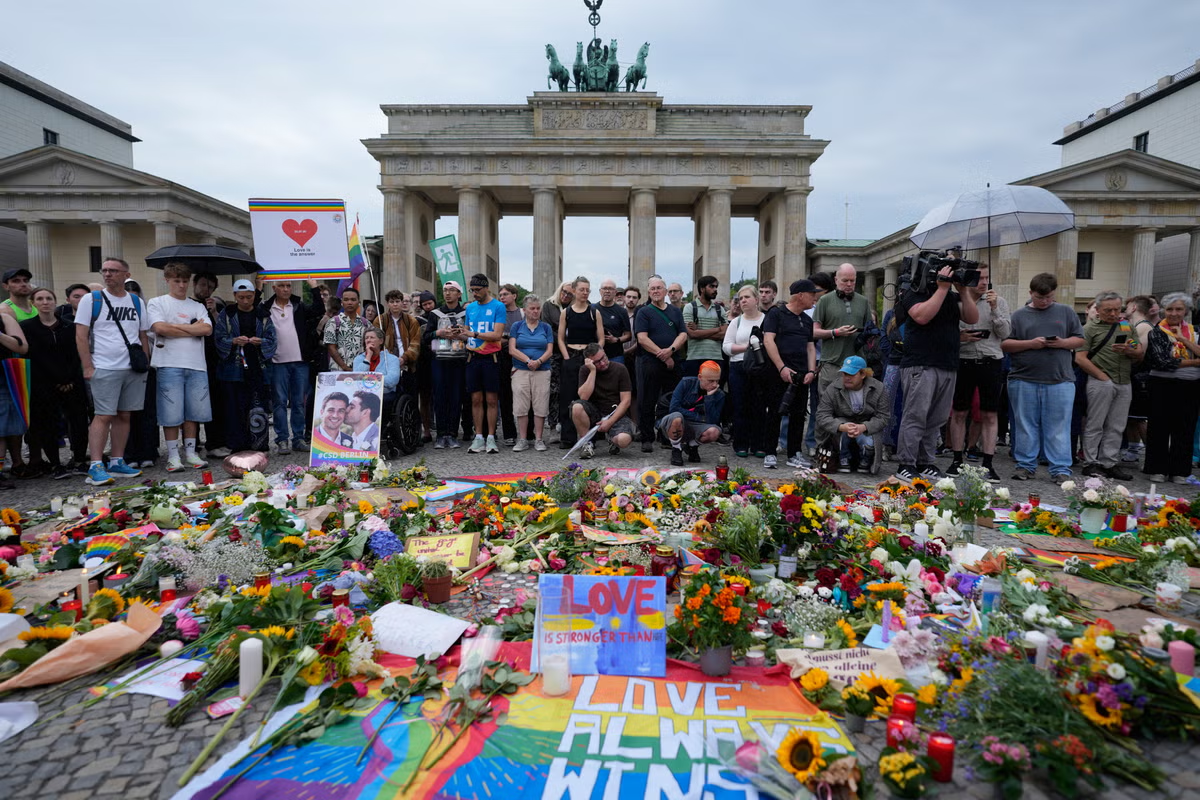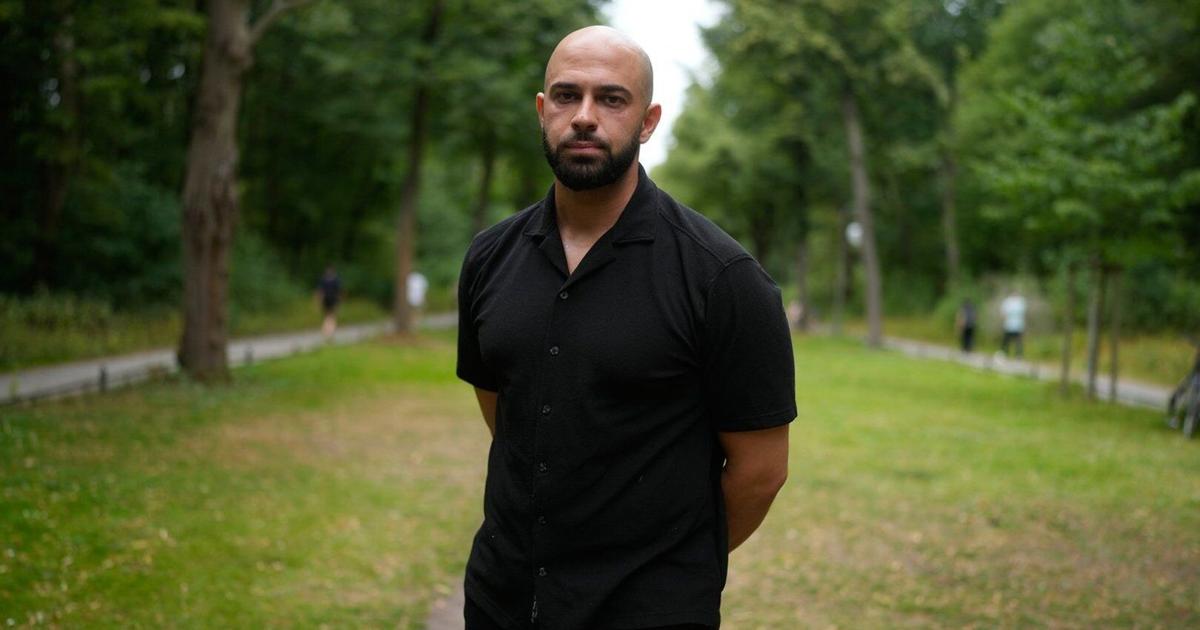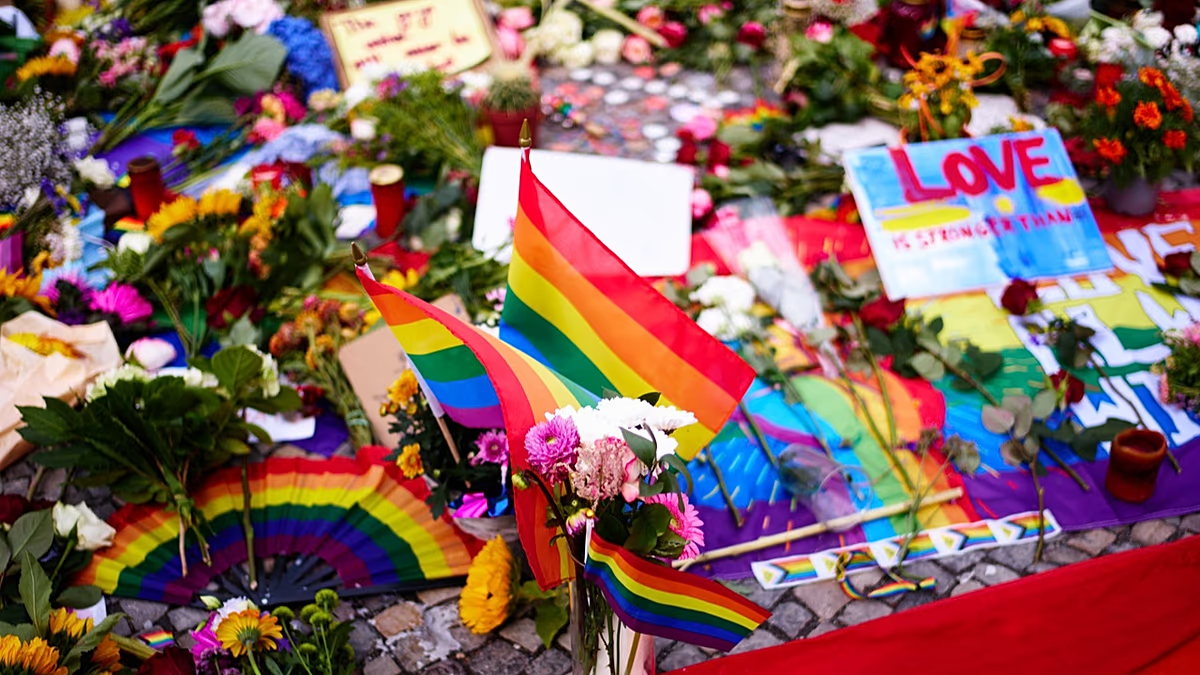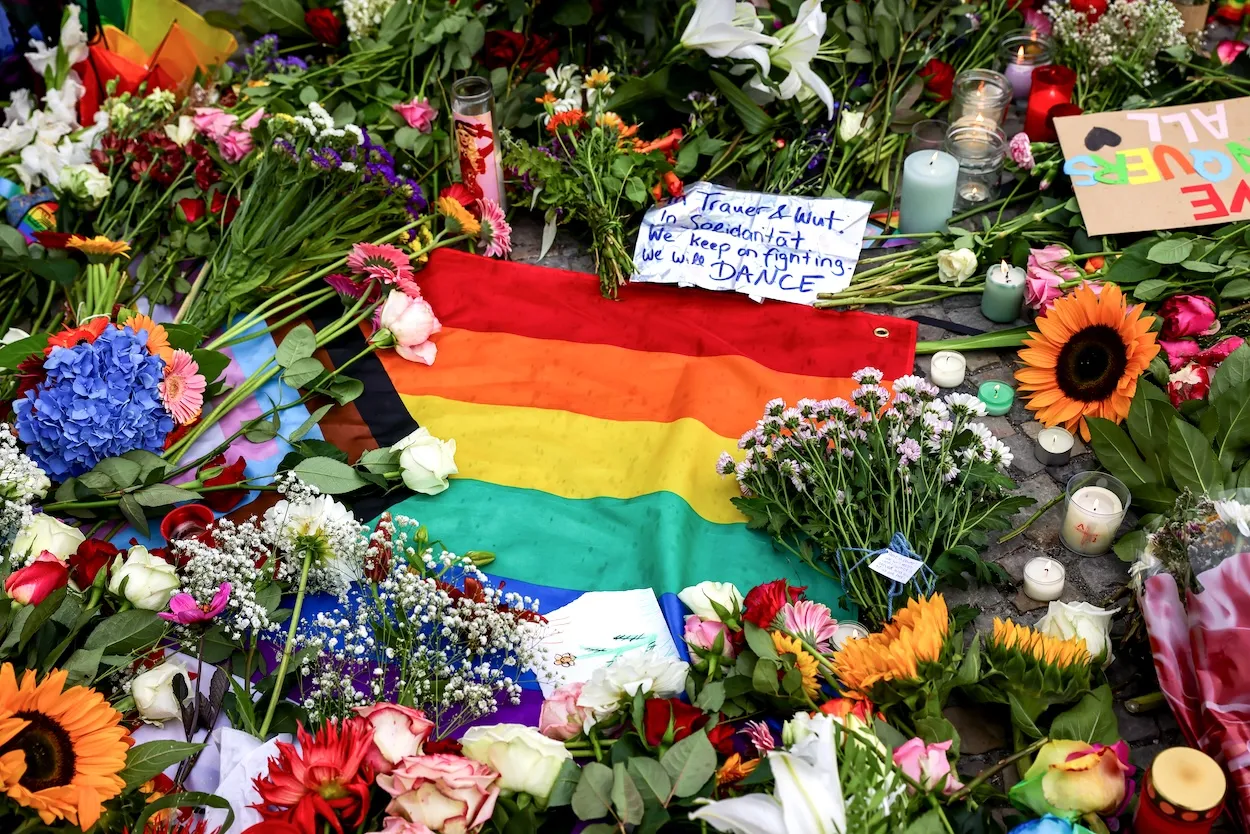
It feels like a well-rehearsed script. First come the flowers, then the pious statements. One after another, mainstream German politicians have lined up to claim that the attack on Berlin Pride last weekend was an attack on “all of us”, “our values” and “our society”.Except it was not. This atrocity in which a van was rammed into the crowd was, first and foremost, an attack on queer people. A vulnerable community that has been fighting for its rights for many decades; that, in recent years and all over the world, has increasingly been targeted by conservative forces.But, of course, the script is comfortable, because it requires nothing, least of all memory. In Germany, under the centre-right coalition led by the conservative chancellor, Friedrich Merz, the queer community has lost more and more resources, spaces and protection, due to decisions made by the very same people who are now expressing solidarity in public.When Merz made the statement on Sunday that Pride-goers should not be intimidated, and that this attack was intended to divide our society, many queer people and allies wondered: is this the same Friedrich Merz who rejected the suggestion to fly a rainbow flag from the Bundestag during last year’s Pride, with the remark, “The Bundestag is not a circus tent”?Then there is Karin Prien, the federal minister for education and family affairs, who sees the brutal assault as an attack on diversity and therefore, on “the heart of our democracy”. Is this the same Karin Prien who as education minister banned gender-inclusive language from her ministry and cancelled “diversity” as a funding criterion for democracy projects, only a few months ago?The list of Christian-Democrat hypocrites goes on and on. Their opportunism is so obvious that you might in fact mistake the Bundestag for a circus, if the occasion wasn’t so horrendous. The victims (one person was killed and 29 injured, some in life-threatening ways) had simply gathered with their community on a warm day to celebrate visibly and joyfully in the centre of Berlin. This is what should drive the national conversation, before the grief of those directly affected is drowned out by the din of competing political narratives.Friedrich Merz speaking at a memorial service for the victims of the Berlin Pride attack, St-Marien-Kirche, Berlin, 26 July 2026. Photograph: Christian Mang/ReutersThe most urgent question should be: what do queer people need now?Do they need more policing? I doubt it, and I’m a long way from being the only one who thinks that. “Given the amount of police we already have, adding more won’t increase security,” says Mohamed Amjahid, a journalist who has extensively researched police violence. Amjahid’s plea that authorities reexamine the concept of security as they investigate the Pride attack, rather than hand police more access to citizens’ personal data, resonates with me.How about also restoring funding for projects such as Lambda, a queer youth organisation that, after 36 years, has had its government funding cut due to austerity measures? Organisations that can answer crisis hotlines, offer counselling, accompany traumatised young people and provide safe spaces, in rural areas too, are badly needed.Does the community need the government to ramp up deportations and enact more restrictive immigration laws? My answer to that would be: what about the countless asylum seekers who have had to flee their homes and families simply for being queer?The Berlin attacker, later shot dead by police, was an Islamist extremist. Islamist extremism is a real threat and this attack is not, unfortunately, the first in Germany to prove it. To pretend otherwise is not only dishonest, it’s a different form of hypocrisy against queer people who have to survive every day in autocratic Islamic regimes.skip past newsletter promotionafter newsletter promotionWhat is too easily forgotten, however, is that Christian conservatives and Islamists are quite similar when it comes to their stance on queerness. They may differ in their methods, projects and theological language. But not in their hostility. Both are rooted in rigid ideas about gender, sexuality and family.The far-right AfD is already exploiting this Pride attack to campaign for September elections in three federal states, accusing the government of “catastrophic migration politics”.But reducing this to a discussion about migration clearly misses the point. The attacker, who was later shot dead by the police, was a German citizen: a 21-year-old man, born and raised and radicalised in Germany. According to reports, he had recently participated in a deradicalisation programme. The more urgent question is why young men become susceptible to violent extremist ideologies in the first place, and how the government can justify cutting funding for extremism prevention.At the same time, Germany’s commitment to democratic values is questionable if those values become nothing more than rhetorical tools. The state’s commitment needs to be measured instead by the consistency of policy, domestic and foreign. But a government that courts authoritarians and Islamists such as the Syrian president, Ahmed al-Sharaa, must face difficult questions about the principles it now claims to defend.
Germany's leaders say the Berlin Pride attack targeted 'all of us'. What utter hypocrisy | Fatma Aydemir
The queer community has lost resources and protection due to decisions made by the people now mouthing solidarity in public, says Guardian Europe columnist Fatma Aydemir
878 words~4 min read